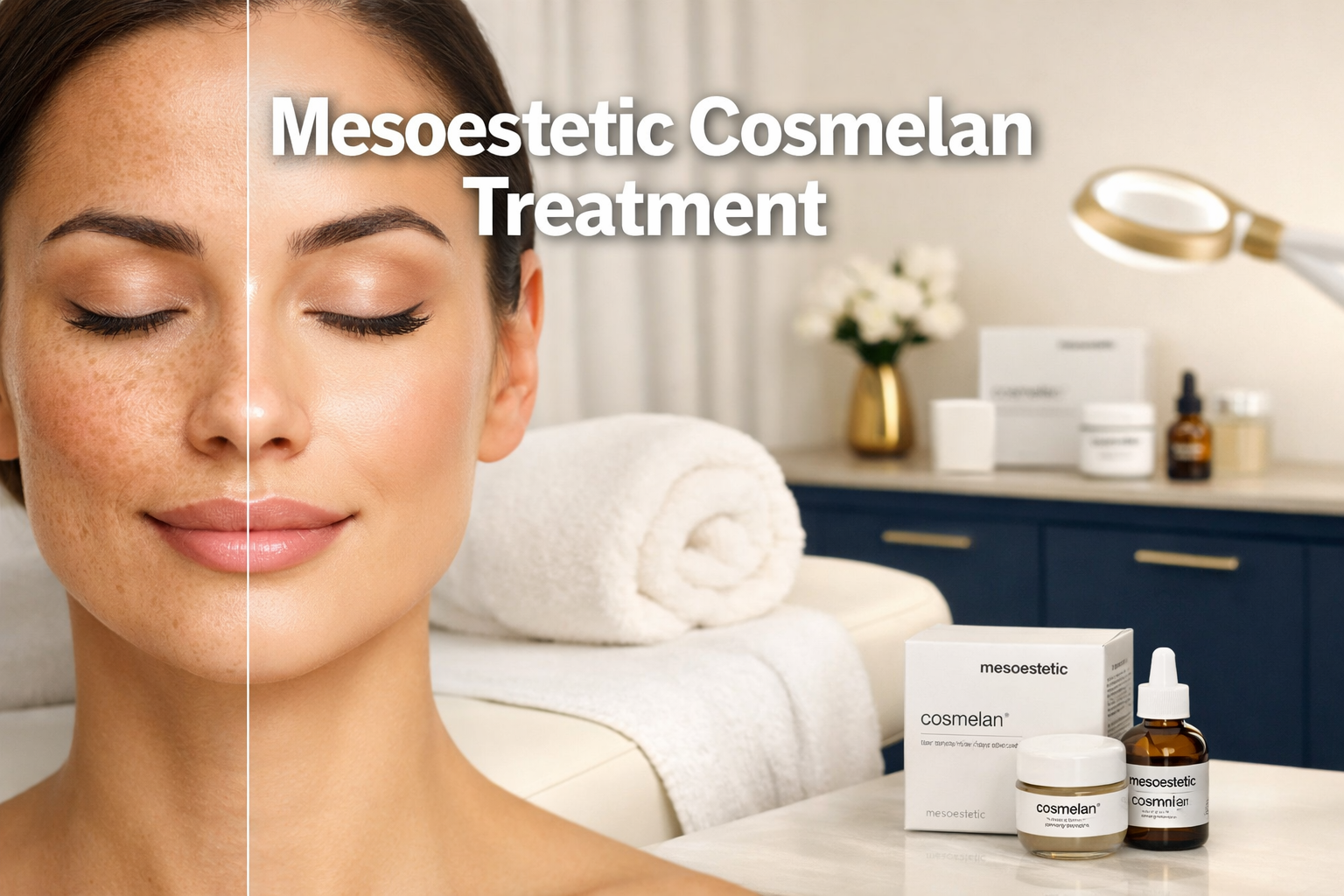
Last updated: March 12, 2026
Quick Answer: The mesoestetic cosmelan treatment is a clinically proven, professional depigmentation method that targets hyperpigmentation, melasma, and dark spots at their source. It works through a dual-action mechanism — correcting existing pigmentation while regulating melanin overproduction to prevent recurrence. The full protocol spans six months and is compatible with all skin types. At Dermacy Clinic in Doncaster, we offer this treatment as part of a personalised skin health plan.
Key Takeaways
- Cosmelan treats the root cause of hyperpigmentation by inhibiting the tyrosinase enzyme responsible for excess melanin production, not just masking surface discolouration.
- Visible results appear within the first week of treatment, with the most significant improvement seen in the weeks following the initial in-clinic mask application. [1]
- The full protocol is six months — one intensive in-office session followed by at-home maintenance phases using Cosmelan 2 depigmentation cream. [2]
- Compatible with all skin types, including darker skin tones that are more prone to post-inflammatory hyperpigmentation.
- Avoid combining with peels, microneedling, or exfoliation during at least the first three months, as this can trigger repigmentation. [2]
- Normal side effects include redness, peeling, and sensitivity — these are expected signs that the treatment is working.
- Cosmelan is an aesthetic treatment; Dermamelan is its medical-grade counterpart requiring doctor supervision. Both are available at Dermacy Clinic depending on your clinical assessment. [2]
- In 2026, cosmelan is increasingly paired with regenerative treatments such as exosomes and skin boosters for enhanced, customised results. [4]
- Professional guidance is essential — application schedules for the home maintenance phase vary by individual and must be directed by your treating clinician. [3]
What Is the Mesoestetic Cosmelan Treatment?
The mesoestetic cosmelan treatment is a professional-grade depigmentation system developed by the Spanish skincare company mesoestetic. It is one of the most widely used clinical methods for correcting hyperpigmentation, melasma, and uneven skin tone worldwide.
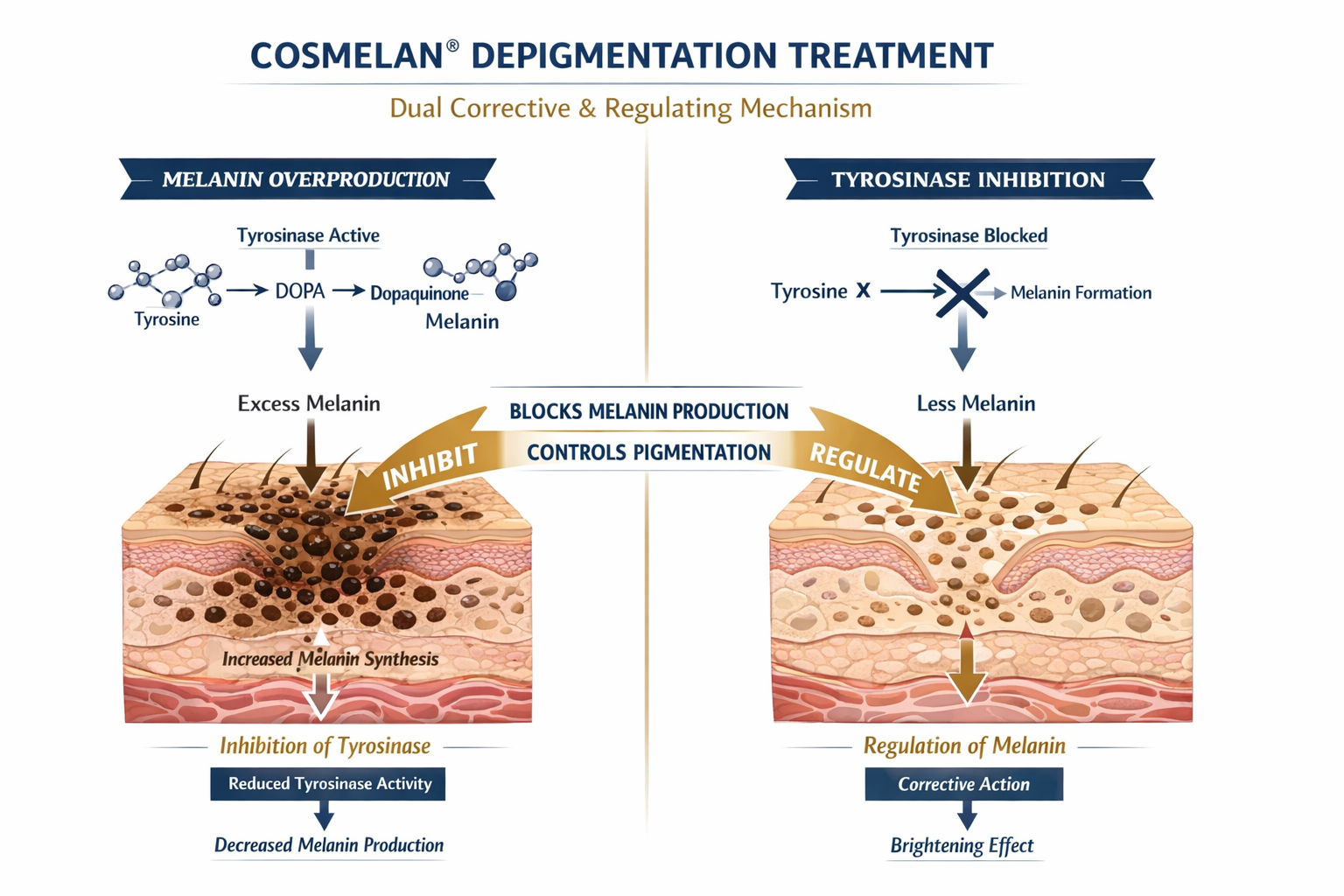
Unlike many topical brightening products available over the counter, cosmelan works at a cellular level. It targets the melanin production pathway directly, reducing the activity of tyrosinase — the key enzyme that triggers excess pigment formation. The result is a gradual, controlled reduction in dark spots combined with a more unified, luminous skin tone. [1]
At Dermacy Clinic in Doncaster, we use the mesoestetic cosmelan treatment as part of a comprehensive, personalised approach to hyperpigmentation — one that considers your skin type, pigmentation history, lifestyle, and long-term skin health goals.
How Does Cosmelan Actually Work? The Science Behind Skin Depigmentation
Cosmelan works through two distinct but complementary actions, supported by a third benefit that many patients don’t expect. [1]
1. Corrective Action The treatment visibly reduces and attenuates existing dark spots, melasma patches, and areas of uneven pigmentation. This is the visible, surface-level result most patients seek.
2. Regulating Action More importantly, cosmelan regulates the overproduction of melanin at the source — the melanocyte cells in the deeper layers of the skin. By blocking tyrosinase enzyme activity, it reduces the likelihood of pigmentation returning after treatment. [1]
3. Anti-Ageing Benefit A less commonly discussed advantage: cosmelan also stimulates the production of collagen and elastin, contributing to improved skin texture, firmness, and overall skin quality over time. [1]
Why Tyrosinase Inhibition Matters
Melanin is produced when the enzyme tyrosinase converts the amino acid tyrosine into pigment. In people with hyperpigmentation conditions — whether caused by sun damage, hormonal changes, post-inflammatory responses, or genetics — this process is overactive.
Most brightening products work on the surface. Cosmelan goes deeper, interrupting the enzymatic chain reaction before excess pigment is formed. This is why the treatment produces results that last, rather than simply lightening skin temporarily.
“The difference between a brightening serum and a clinical depigmentation treatment is the difference between painting over a stain and removing it from the wall entirely.”
Who Is the Mesoestetic Cosmelan Treatment For?
Cosmelan is suitable for adults experiencing any of the following:
- Melasma — hormonal pigmentation, often triggered by pregnancy or contraceptive use
- Sun-induced dark spots (solar lentigines)
- Post-inflammatory hyperpigmentation (PIH) — pigmentation left after acne, injury, or inflammation
- Uneven skin tone across the face, neck, décolletage, or hands
- General skin dullness related to melanin irregularity
Cosmelan is compatible with all skin types, including Fitzpatrick skin types IV–VI, which are more susceptible to PIH and often underserved by aggressive laser treatments. [2]
Who Should Approach with Caution?
Cosmelan may not be appropriate if you:
- Are pregnant or breastfeeding
- Have active skin infections or open wounds in the treatment area
- Are currently using certain prescription retinoids or photosensitising medications
- Have a history of severe allergic reactions to depigmenting agents
A professional skin consultation at Dermacy Clinic will determine whether cosmelan is the right fit for your skin — or whether an alternative such as Dermamelan (the medical-grade protocol) would be more appropriate for your level of pigmentation. [2]
What Are the Four Phases of the Cosmelan Treatment Protocol?
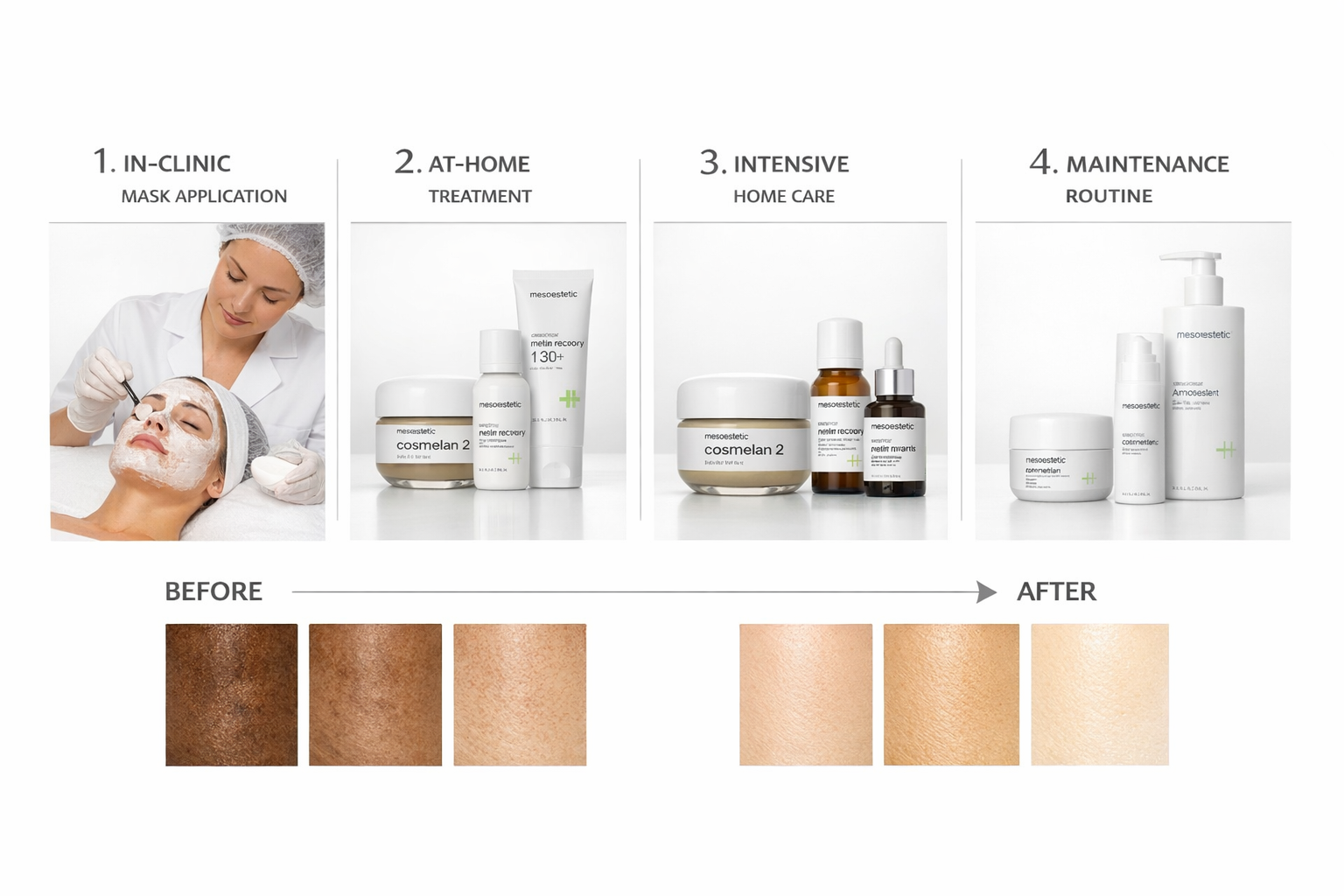
The cosmelan method is a structured, six-month protocol divided into four phases. [2] Each phase builds on the last, and skipping or rushing any stage compromises the overall result.
Phase 1: In-Clinic Mask Application (Day 1)
Your clinician applies the professional cosmelan 1 mask in clinic. This is a high-concentration depigmenting mask that is left on the skin for a specified period — typically between 6 and 10 hours depending on your skin type and sensitivity. You will leave the clinic with the mask on and remove it at home as instructed.
What to expect: Warmth, tingling, and mild redness during application. This is normal.
Phase 2: Intensive Home Care (Weeks 1–4)
Following the in-clinic session, you begin using Cosmelan 2 depigmentation cream at home. This 30g maintenance cream extends and deepens the depigmenting action of the professional mask. [3] Application frequency is personalised — your clinician at Dermacy Clinic will guide you on morning and evening usage based on your skin’s response.
What to expect: Redness, peeling, flaking, and sensitivity are all normal during this phase. [3] This is the skin actively responding to treatment. Do not panic — and do not stop.
Phase 3: Regulating Phase (Months 2–3)
Application frequency of Cosmelan 2 is gradually reduced as the skin stabilises. Sun protection is non-negotiable throughout this phase. A broad-spectrum SPF 50+ must be worn daily, even on cloudy days.
Important: During at least the first three months, do not combine cosmelan with peels, microneedling, laser treatments, or physical exfoliation. These can trigger repigmentation and undo progress. [2]
Phase 4: Maintenance (Months 4–6)
The final phase focuses on consolidating results and preventing recurrence. Your clinician may recommend complementary products or treatments at this stage. In 2026, many Dermacy Clinic patients choose to integrate regenerative add-ons such as skin boosters or exosome therapy during this phase for enhanced skin quality outcomes. [4]
What Results Can You Realistically Expect?
Visible results begin within the first week of treatment. The most dramatic changes typically appear in the weeks following the initial mask application, as the skin sheds and regenerates. [2]
By the end of the six-month protocol, most patients experience:
| Outcome | Typical Timeframe |
|---|---|
| Initial visible brightening | Week 1–2 |
| Significant dark spot reduction | Weeks 4–8 |
| Unified, even skin tone | Months 2–3 |
| Full depigmentation and maintenance | Months 4–6 |
| Improved skin texture and firmness | Ongoing (collagen benefit) |
Results vary based on the type and depth of pigmentation, skin type, sun exposure habits, and adherence to the home care protocol. Patients with superficial sun spots typically see faster results than those with deeper hormonal melasma.
Realistic expectation: Cosmelan significantly reduces hyperpigmentation and prevents recurrence when the full protocol is followed. It does not permanently eliminate the underlying tendency toward pigmentation — ongoing sun protection and maintenance remain essential.
How Does Cosmelan Compare to Alternative Treatments?
Choosing the right depigmentation treatment depends on the type and severity of your pigmentation, your skin type, and your lifestyle.
| Treatment | Best For | Supervision Required | Protocol Length |
|---|---|---|---|
| Cosmelan (mesoestetic) | Aesthetic-level hyperpigmentation, all skin types | Aesthetic professional | 6 months |
| Dermamelan (mesoestetic) | Medical-grade, deeper or resistant pigmentation | Doctor | 4 months |
| Laser pigmentation removal | Superficial, well-defined spots | Clinician | Variable |
| Chemical peels | Mild surface pigmentation | Clinician | Multiple sessions |
| Topical brightening serums | Prevention and mild maintenance | Self-directed | Ongoing |
Choose cosmelan if you have moderate-to-significant hyperpigmentation across a broader area, want a non-laser approach, or have a skin type where aggressive laser treatment carries risk. [2]
Choose Dermamelan if your pigmentation is more resistant, hormonally driven, or your clinician determines you need a stronger medical protocol with doctor oversight. [2]
At Dermacy Clinic, we assess both options during your initial consultation and recommend based on your individual clinical picture — not a one-size-fits-all approach.
What Are the Potential Side Effects and How Are They Managed?
Side effects during cosmelan treatment are expected and, in most cases, are signs that the treatment is working.
Common and expected reactions include: [3]
- Redness and warmth (particularly in the first week)
- Peeling and flaking skin
- Skin sensitivity and tightness
- Mild swelling around treated areas
How to manage them:
- Use only the products recommended by your clinician during treatment — no additional actives, retinoids, or exfoliants
- Apply SPF 50+ every morning without exception
- Keep the skin hydrated with a gentle, fragrance-free moisturiser
- Avoid direct sun exposure, especially during the first month
- Contact your clinic if reactions feel severe, prolonged, or unusual
Less common concerns:
- Temporary over-lightening in highly sensitive skin — this resolves as the protocol progresses
- Rebound pigmentation if the home care phase is not followed correctly or sun protection is neglected
The key to minimising side effects is professional guidance throughout the process. At Dermacy Clinic, we schedule follow-up check-ins during your treatment to monitor your skin’s response and adjust the protocol if needed.
What Does the Cosmelan Treatment Cost in Doncaster?
Treatment pricing for the mesoestetic cosmelan treatment in Doncaster varies depending on the clinic, the extent of treatment required, and whether any complementary treatments are included in the package.
At Dermacy Clinic, we provide transparent pricing during your consultation. The cost typically covers:
- The in-clinic mask application session
- The Cosmelan 2 home maintenance cream
- Follow-up appointments and protocol monitoring
- Personalised aftercare guidance
We recommend viewing the cosmelan protocol as a six-month investment in your skin health rather than a single treatment. When you consider the cost of ongoing topical products, repeated salon treatments, and the psychological impact of persistent hyperpigmentation, the value of a clinically structured, results-driven protocol becomes clear.
Book a skin assessment at Dermacy Clinic to receive a personalised quote and treatment plan tailored to your skin’s needs.
How to Maintain Results After Completing the Cosmelan Protocol
Long-term results depend on what you do after the six-month protocol ends.
Daily habits that protect your results:
- SPF 50+ every day — sun exposure is the primary trigger for melanin reactivation
- Avoid peak sun hours (10am–4pm) where possible
- Use a gentle, pigment-regulating maintenance product as recommended by your clinician
- Avoid hormonal triggers where possible — discuss contraceptive options with your GP if hormonal melasma is a concern
- Schedule annual skin reviews at Dermacy Clinic to monitor pigmentation and intervene early if needed
In 2026, many patients at Dermacy Clinic choose to pair their cosmelan maintenance phase with skin booster injections or exosome therapy — treatments that support skin regeneration and help sustain the luminosity achieved through depigmentation. [4]
Frequently Asked Questions
Q: How long does the mesoestetic cosmelan treatment take to show results? Visible brightening typically begins within the first week of treatment. The most significant changes in dark spots and skin tone occur between weeks four and eight, with full results evident by the end of the six-month protocol. [2]
Q: Is cosmelan treatment painful? Most patients experience warmth and tingling during the in-clinic mask application. The at-home phase can involve sensitivity and mild discomfort during peeling, but it is generally well tolerated. Severe pain is not expected and should be reported to your clinician.
Q: Can I wear makeup during cosmelan treatment? During the initial peeling phase (typically the first one to two weeks), it is best to avoid heavy makeup. Once the skin has stabilised, mineral-based, non-comedogenic makeup is generally acceptable. Your clinician will advise based on your skin’s progress.
Q: Is cosmelan safe for dark skin tones? Yes. Cosmelan is compatible with all skin types, including deeper Fitzpatrick skin types that are more prone to post-inflammatory hyperpigmentation. [2] In fact, it is often preferred over laser treatments for darker skin tones because it carries a lower risk of causing additional pigmentation.
Q: Can I combine cosmelan with other aesthetic treatments? Not during the first three months. Combining cosmelan with peels, microneedling, or exfoliating treatments during this period can cause repigmentation. [2] After the initial phases, your clinician may recommend complementary treatments to enhance results.
Q: How is cosmelan different from Dermamelan? Cosmelan is an aesthetic-level treatment applied by a trained aesthetic professional. Dermamelan is a stronger, medical-grade protocol that requires doctor supervision. Dermamelan also delivers results in approximately four months versus cosmelan’s six-month protocol. [2] Your clinician will recommend the appropriate option based on your clinical assessment.
Q: Will my pigmentation come back after treatment? Cosmelan regulates melanin overproduction, significantly reducing recurrence. However, it does not permanently alter your skin’s genetic tendency toward pigmentation. Ongoing sun protection and maintenance are essential to sustaining results.
Q: How do I know if my cosmelan product is authentic? The updated mesoestetic cosmelan formulation can be identified by a holographic “authentic depigmenting method” sticker on the top right corner of the box. Differences in colour or texture compared to older versions are normal and do not affect efficacy. [3]
Q: What should I avoid during cosmelan treatment? Avoid direct sun exposure, retinoids, exfoliating acids, physical scrubs, peels, and microneedling during at least the first three months. Stick strictly to the products recommended by your clinician. [2]
Q: Is cosmelan available at Dermacy Clinic in Doncaster? Yes. Dermacy Clinic offers the mesoestetic cosmelan treatment as part of a personalised hyperpigmentation management programme. Book a skin consultation to discuss whether cosmelan or an alternative protocol is right for your skin.
Conclusion: Is Cosmelan the Right Choice for Your Skin?
If you are living with melasma, post-inflammatory hyperpigmentation, or stubborn dark spots that have not responded to over-the-counter products, the mesoestetic cosmelan treatment offers a clinically structured, evidence-based path to clearer, more even skin.
The six-month protocol is a commitment — but it is one that works at the root of the problem rather than masking it. With a dual-action mechanism that corrects existing pigmentation and regulates future melanin overproduction, cosmelan delivers results that last when supported by proper aftercare and sun protection. [1]
At Dermacy Clinic in Doncaster, we believe that addressing hyperpigmentation is about more than aesthetics. Clear, even skin has a measurable impact on confidence, self-perception, and quality of life. Our approach combines the clinical precision of the mesoestetic cosmelan protocol with personalised care, professional monitoring, and a long-term skin health strategy tailored to you.
Your next step: Book a professional skin assessment at Dermacy Clinic. We will evaluate your pigmentation, discuss your treatment history, and recommend the most appropriate protocol — whether that is cosmelan, Dermamelan, or a combination approach that fits your skin and your life.
References
[1] Cosmelan Treatment – https://www.mesoestetic.com/cosmelan-treatment.html
[2] Cosmelan Pack – https://medestetics.com/products/cosmelan-pack
[3] Mesoestetic Cosmelan 2 Depigmentation Cream – https://us.facethefuture.store/products/mesoestetic-cosmelan-2-depigmentation-cream
[4] Treatment Trends For 2026 Whats Next In Aesthetics – https://www.harleystreetinjectables.com/blog/treatment-trends-for-2026-whats-next-in-aesthetics