Last updated: April 21, 2026
Quick Answer
Rosacea is a chronic inflammatory skin condition that causes persistent facial redness, visible blood vessels, and sometimes bumps or pustules — and it affects an estimated 1 in 10 people in the UK. At Dermacy Clinic in Armthorpe, Doncaster, we treat rosacea using medical-grade IPL (Intense Pulsed Light) technology combined with personalised treatment plans tailored to each patient’s skin type and severity. Most patients need 3–6 sessions spaced 4–6 weeks apart, with each session lasting 30–45 minutes and requiring minimal downtime [1][2].
Key Takeaways
Rosacea has no cure, but it can be effectively managed with the right combination of professional treatments and daily skincare.
IPL therapy is the gold-standard non-surgical treatment for rosacea-related redness and visible blood vessels in the Doncaster area [1][2].
Most patients need 3–6 IPL sessions spaced 4–6 weeks apart for best results [1][2].
Downtime is minimal — most people return to normal activities the same day [2].
A patch test and consultation are required before any IPL treatment to confirm suitability [1].
Results vary by individual: some see thread veins disappear completely, while others see significant reduction [1].
Maintenance sessions at 6–12 month intervals may be needed, especially without consistent sun protection [3].
Triggers like sun exposure, alcohol, spicy food, and stress can worsen rosacea and should be managed alongside treatment.
Professional skin analysis at Dermacy Clinic helps identify your rosacea subtype and the most effective treatment approach.
Emotional wellbeing matters: rosacea affects confidence, and treating it often has a significant positive psychological impact.
What Is Rosacea and Why Does It Need Professional Treatment?
Rosacea is a long-term inflammatory skin condition that primarily affects the central face — cheeks, nose, chin, and forehead. It’s not just “a bit of redness.” Left unmanaged, rosacea can progressively worsen, leading to permanent visible blood vessels, thickened skin, and in some cases, eye irritation.
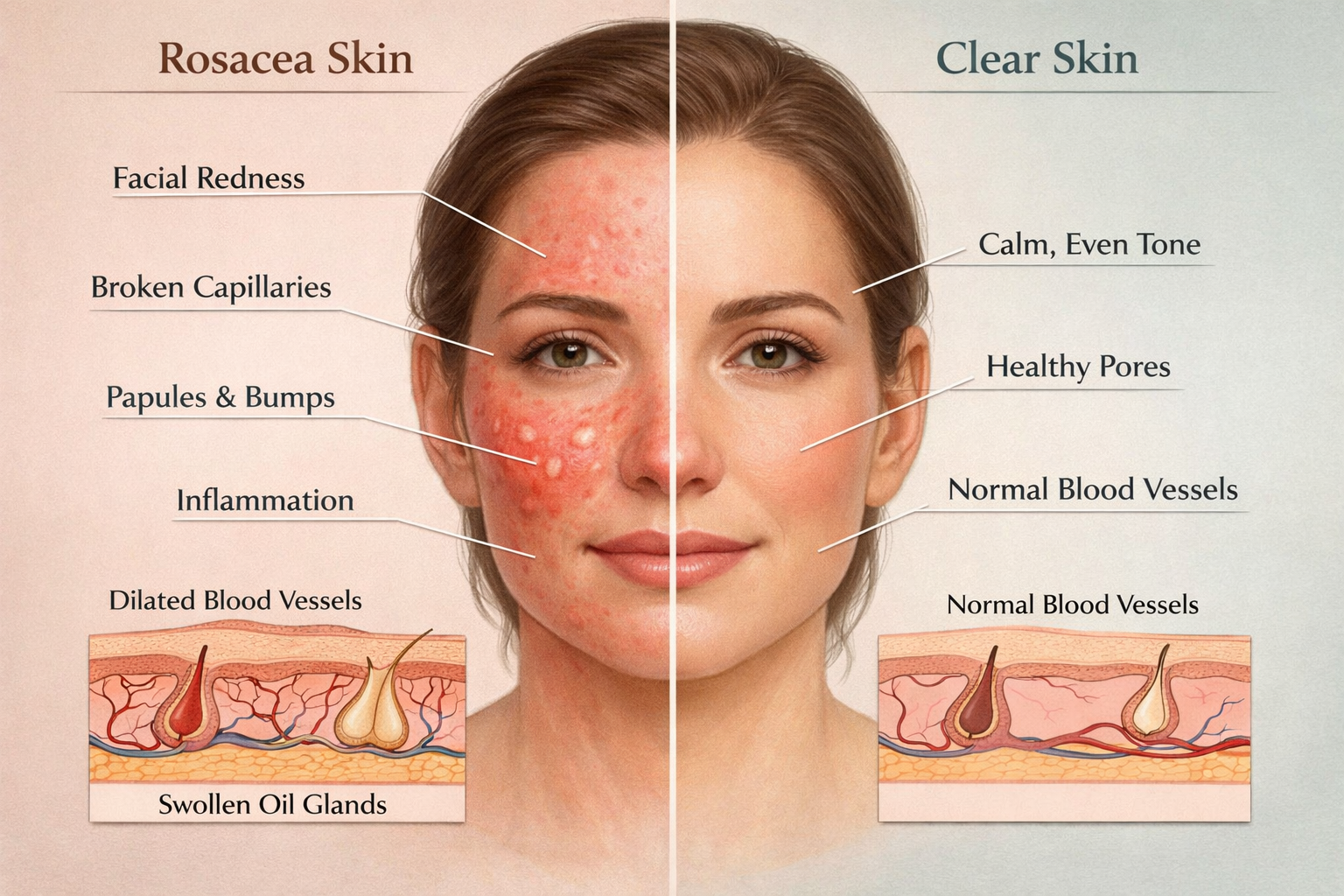
The condition is more common than many people realise. It tends to develop between the ages of 30 and 50 and is more frequently diagnosed in people with fair skin, though it can affect all skin types.
Why professional treatment matters: Over-the-counter creams and home remedies rarely address the underlying vascular changes that cause persistent redness and visible capillaries. Medical-grade treatments like IPL target the root cause — dilated blood vessels beneath the skin surface — rather than just masking symptoms [2].
At Dermacy Clinic in Armthorpe, we see patients every week who’ve spent years trying drugstore products with little improvement. The difference with clinically proven solutions is that they work at a deeper level, using controlled light energy to reduce the blood vessels responsible for redness.
The Four Subtypes of Rosacea
Understanding your subtype helps determine the best treatment approach:
SubtypeKey FeaturesBest Suited ForErythematotelangiectaticPersistent redness, flushing, visible blood vesselsIPL therapy, vascular laserPapulopustularRedness with bumps and pimple-like breakoutsCombination of topical medication + light therapyPhymatousThickened skin, especially on the noseSpecialist dermatology referral + laserOcularRed, irritated, watery eyesOphthalmology referral + supportive skin treatment
Common mistake: Many people confuse papulopustular rosacea with acne and use harsh acne products that actually make rosacea worse. If you’re unsure, a professional skin analysis is the safest first step. Browse our acne treatment resources to understand the differences.
What Causes Rosacea? Understanding Your Triggers
The exact cause of rosacea isn’t fully understood, but it involves a combination of genetic predisposition, immune system dysfunction, and environmental triggers. Rosacea is not caused by poor hygiene — that’s a persistent myth that needs to go.
Known contributing factors include:
Genetics: A family history of rosacea significantly increases your risk.
Immune response: Overactive immune reactions in the skin lead to inflammation.
Demodex mites: These microscopic organisms live on everyone’s skin, but people with rosacea often have higher concentrations, which may trigger inflammation.
Blood vessel abnormality: The facial blood vessels in rosacea patients dilate more easily and stay dilated longer.
Common Rosacea Triggers
Identifying and avoiding your personal triggers is a critical part of long-term management:
☀️ Sun exposure (the single most common trigger)
🌡️ Extreme temperatures — both hot and cold
🍷 Alcohol, particularly red wine
🌶️ Spicy foods
😰 Emotional stress and anxiety
🏋️ Intense exercise that causes significant flushing
💊 Certain medications that dilate blood vessels
🧴 Harsh skincare products containing alcohol, fragrance, or strong acids
Practical tip: Keep a simple trigger diary for 2–3 weeks. Note what you ate, your stress level, weather conditions, and how your skin responded. This gives us valuable information during your consultation at Dermacy Clinic and helps build a truly personalised treatment plan.
How Does IPL Treatment Work for Rosacea? The Science Explained
IPL (Intense Pulsed Light) therapy is the most widely used and clinically supported non-surgical treatment for rosacea-related redness and visible blood vessels in the Doncaster area [1][2]. Here’s how it actually works.
The Mechanism Behind IPL
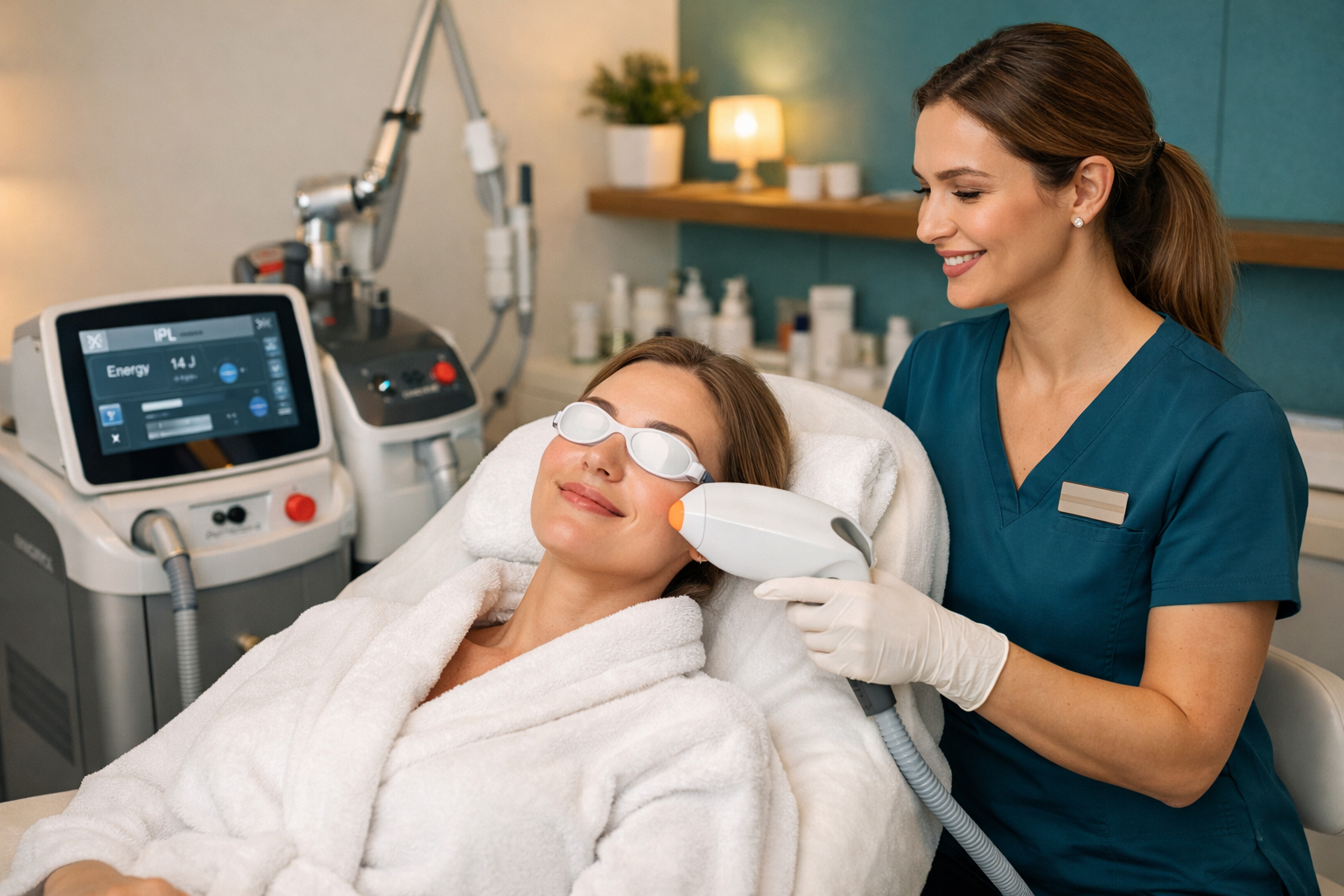
IPL devices emit broad-spectrum light that penetrates the skin and is absorbed by two main targets: haemoglobin (the red pigment in blood) and melanin (the brown pigment in skin). For rosacea treatment, the light energy is primarily absorbed by haemoglobin in the dilated blood vessels.
This absorption converts light energy into heat, which damages the walls of the targeted blood vessels. Over the following days and weeks, your body naturally breaks down and reabsorbs these damaged vessels, reducing visible redness and flushing [2][3].
Key point: IPL uses photo-thermolysis technology — delivering specific wavelengths of light that target red and brown pigments in damaged skin. Medical-grade IPL devices like Lumecca are described as among the most effective treatments available for rosacea and thread veins [3].
IPL vs. Laser: Which Is Better for Rosacea?
This is one of the most common questions we hear at Dermacy Clinic. Here’s a straightforward comparison:
FactorIPLVascular LaserLight typeBroad-spectrum (multiple wavelengths)Single wavelengthBest forMild to moderate rosacea, general rednessSpecific stubborn vesselsVersatilityTreats redness, pigmentation, and textureMore targeted, less versatileSide effectsGenerally milderCan cause more bruisingSessions needed3–6 typically1–3 typicallyCost per sessionGenerally lowerGenerally higher
IPL is often preferred for rosacea because of its versatility and broader treatment range, offering a gentler approach with fewer side effects — particularly for mild to moderate cases [2]. For patients with very specific, stubborn individual vessels, laser may be recommended as a complementary treatment.
Choose IPL if: You have generalised facial redness, mild to moderate visible blood vessels, and want a treatment with minimal downtime.
Choose laser if: You have a few very prominent individual vessels that haven’t responded to IPL.
For more information about our advanced laser treatments and skin services, visit our treatments page.
What to Expect: Your Rosacea Treatment Journey at Dermacy Clinic Armthorpe
We believe informed patients make confident decisions. Here’s exactly what the treatment process looks like at Dermacy Clinic, from first contact to long-term results.

Step 1: Professional Skin Analysis and Consultation
Every rosacea treatment at Dermacy Clinic begins with a thorough consultation. This isn’t a quick chat — it’s a detailed professional skin analysis where we:
Assess your rosacea subtype and severity using clinical examination
Review your medical history, including current medications and skincare routine
Identify your personal triggers and discuss lifestyle factors
Explain treatment options honestly, including realistic expectations
Perform a patch test — this is mandatory and takes place at least seven days before your first full treatment [1]
The patch test confirms your skin responds safely to the IPL wavelengths. It’s a non-negotiable safety step. Patient safety first — always.
Step 2: Your IPL Treatment Session
On treatment day:
Duration: 30–45 minutes depending on the area treated [1][2]
Sensation: Most patients describe it as a warm snapping feeling, similar to a rubber band flick. It’s uncomfortable but manageable.
Eye protection: You’ll wear protective goggles throughout.
Cooling: A cooling gel is applied to the skin before treatment.
Step 3: Immediate Aftercare
Here’s what to expect right after your session:
Redness is normal. The treated area may appear red when you leave the clinic, and this can last a couple of days [1].
Mineral makeup can be applied the following day [1].
Most patients resume daily activities immediately — there’s no significant downtime [2].
Step 4: Recovery and Aftercare Protocol
Proper aftercare significantly affects your results. Follow these guidelines:
✅ Apply SPF 50 sunscreen daily for at least 4 weeks post-treatment
✅ Use gentle, fragrance-free cleansers and moisturisers
✅ Keep skin hydrated with medical-grade products
❌ Avoid direct sun exposure for 2 weeks minimum
❌ No saunas, steam rooms, or intense exercise for 48 hours
❌ Avoid retinol, AHAs, and exfoliating products for 1 week
❌ Do not pick or scratch treated areas
Step 5: Follow-Up Sessions and Maintenance
Optimal results typically require 3–6 sessions spaced 4–6 weeks apart [1][2]. After your initial course, maintenance sessions may be recommended at 6–12 month intervals, depending on your skin’s response and how well you protect it from sun exposure [3].
Important reality check: Results vary. Some patients see thread veins disappear completely. Others see a significant reduction. A small number may not respond as strongly to treatment [1]. We’re always transparent about this during your consultation.
The Psychological Impact of Rosacea — and Why Treatment Goes Beyond Skin Deep
This is something most aesthetic clinics don’t talk about enough. Rosacea doesn’t just affect your skin — it affects how you feel about yourself.
Many of our patients at Dermacy Clinic describe years of:
Avoiding social situations because of visible redness
Feeling self-conscious in meetings or on video calls
Spending significant time and money on concealer and colour-correcting makeup
Experiencing anxiety about flare-ups at important events
Dealing with unwanted comments like “Have you been drinking?” or “You look sunburned”
The emotional toll is real. Research consistently shows that visible skin conditions like rosacea are associated with higher rates of anxiety, depression, and reduced quality of life.
When patients complete their treatment course and see genuine improvement, the change in confidence is often as significant as the change in skin appearance. This is what we mean by skin health and confidence — they’re deeply connected.
One of our patients recently told us she wore foundation for the first time in years “because she wanted to, not because she had to.” That’s the kind of result that matters.
If you’re interested in other confidence-boosting treatments, explore our range of aesthetic treatments in Doncaster.
How Much Does Rosacea Treatment Cost in Doncaster?
Treatment costs vary depending on the area treated and the technology used. Here’s a general guide based on current pricing in the Doncaster area:
Treatment AreaApproximate Cost per SessionNose / nose veins onlyFrom £50Cheeks onlyFrom £75Cheeks and nose combinedFrom £100Full faceFrom £125
Prices based on medical-grade IPL (Lumecca) pricing in the Doncaster area [3]. Dermacy Clinic pricing may vary — please contact us or check our price list for current rates.
Cost-Benefit Analysis: Is Professional Treatment Worth It?
Let’s be honest — professional rosacea treatment is an investment. But consider this:
Daily concealer and colour-correcting products can cost £30–£60 per month — that’s £360–£720 per year.
Prescription topical creams (metronidazole, azelaic acid) manage symptoms but rarely resolve visible blood vessels.
A course of 3–6 IPL sessions addresses the underlying vascular cause, with results lasting months to years with proper maintenance.
For many patients, the long-term cost of professional treatment is comparable to — or less than — years of product-based management, with significantly better outcomes.
Who Is a Good Candidate for Rosacea Treatment? (And Who Isn’t)
Good Candidates
Adults with mild to moderate rosacea (subtypes 1 and 2)
People with persistent facial redness and visible blood vessels
Patients who have tried topical treatments without sufficient improvement
Those willing to commit to a course of 3–6 sessions
People who can avoid significant sun exposure during the treatment period
Treatment May Not Be Suitable If You
Are pregnant or breastfeeding [3]
Have had significant sun exposure within the past month [3]
Have active skin infections in the treatment area
Are taking photosensitising medications (e.g., certain antibiotics)
Have very dark skin tones (IPL carries higher risk of pigmentation changes)
Have severe phymatous rosacea (may need specialist dermatology referral)
Edge case: If you have both rosacea and hyperpigmentation, these may need to be treated in a specific sequence. Our practitioners can advise on the best approach — you might also benefit from our Cosmelan depigmentation treatment as part of a combined plan.
Long-Term Skin Health Strategies for Rosacea Management
Professional treatment is one part of the equation. Long-term management requires a consistent daily approach.
Your Daily Rosacea Skincare Routine
Cleanse with a gentle, fragrance-free, pH-balanced cleanser (avoid foaming formulas)
Apply a calming serum containing niacinamide, centella asiatica, or azelaic acid
Moisturise with a barrier-repair cream containing ceramides
Protect with SPF 50 broad-spectrum sunscreen — every single day, rain or shine
Avoid products containing alcohol, menthol, witch hazel, eucalyptus, or strong fragrances
Products to Avoid
Physical scrubs and exfoliating brushes
Retinol (unless specifically prescribed and introduced very gradually)
High-concentration vitamin C serums (can be irritating for some rosacea patients)
Waterproof makeup that requires harsh removal
For professional-grade skincare recommendations tailored to rosacea-prone skin, our team at Dermacy Clinic can guide you during your consultation. We also offer HydraFacial treatments and Dermafacial treatments that can complement your rosacea management plan with gentle, hydrating facial treatments.
Why Choose Dermacy Clinic in Armthorpe for Rosacea Treatment in Doncaster?
Dermacy Clinic is a medical aesthetics and laser centre based in Armthorpe, Doncaster, staffed by qualified aesthetic practitioners with clinical training in advanced skin treatments [4].
What sets us apart:
Medical-grade technology: We use advanced laser and IPL systems designed specifically for clinical skin conditions, not salon-grade devices.
Qualified practitioners: Our team includes trained aesthetic professionals with expertise in treating inflammatory skin conditions like rosacea.
Personalised treatment plans: No two rosacea patients are the same. We create evidence-based treatment protocols tailored to your specific subtype, severity, and skin type.
Transparent approach: We’ll tell you honestly what results to expect, how many sessions you’ll likely need, and whether IPL is the right option for your particular case.
Comprehensive aftercare: We don’t just treat and send you home. We provide detailed aftercare guidance and follow-up support throughout your treatment course.
Full range of complementary treatments: From skin boosters to anti-wrinkle injections, we offer a complete range of aesthetic treatments that can work alongside your rosacea management plan.
We’re proud to be trusted aesthetic specialists in the Doncaster community, and we take that responsibility seriously.
Frequently Asked Questions
Is rosacea treatment painful?
Most patients describe IPL as mildly uncomfortable — like a warm snap against the skin. It’s well tolerated without anaesthesia, and any discomfort lasts only during the pulse itself.
How quickly will I see results?
Some improvement in redness is often visible after the first session, but optimal results develop over the full course of 3–6 treatments as your body gradually reabsorbs the treated blood vessels [1][2].
Can rosacea be cured permanently?
Rosacea is a chronic condition with no permanent cure. However, professional treatment can significantly reduce symptoms and maintain clear skin for extended periods with appropriate maintenance sessions and skincare.
Is there any downtime after IPL for rosacea?
Minimal. Most patients return to daily activities immediately. You may have some redness for a day or two, and mineral makeup can be applied the following day [1][2].
How do I know if I have rosacea or just sensitive skin?
Rosacea involves persistent redness that doesn’t go away, visible blood vessels, and often a pattern of flare-ups triggered by specific factors. Sensitive skin may react to products but doesn’t typically cause permanent redness or visible capillaries. A professional skin analysis can confirm your diagnosis.
Can I wear makeup after treatment?
Avoid makeup on the day of treatment. Mineral makeup can be applied from the following day [1]. Avoid heavy or oil-based foundations for the first few days.
Will my rosacea come back after treatment?
Treated blood vessels are permanently destroyed, but rosacea is a progressive condition, so new vessels can develop over time. Maintenance sessions at 6–12 month intervals and consistent sun protection help manage this [3].
Are there any risks or side effects?
Common side effects include temporary redness, mild swelling, and occasionally slight darkening of pigmented areas (which fades). Serious side effects are rare when treatment is performed by qualified practitioners using appropriate settings. We discuss all potential risks during your consultation.
What qualifications should an aesthetic practitioner have for rosacea treatment?
Look for practitioners with clinical training in medical aesthetics, specific certification in IPL/laser use, and experience treating inflammatory skin conditions. At Dermacy Clinic, our team holds relevant professional qualifications and undergoes regular advanced training [4].
Can I have IPL if I’ve been in the sun recently?
No. Direct sun exposure within one month prior to treatment is a contraindication [3]. This is because tanned skin absorbs more light energy, increasing the risk of burns or pigmentation changes. Plan your treatment course accordingly — autumn and winter are ideal.
Do I need a GP referral?
No referral is needed. You can book a consultation directly with Dermacy Clinic. However, if we suspect your rosacea requires medical management (e.g., oral antibiotics or specialist assessment), we’ll recommend you see your GP alongside our treatment.
Can men have rosacea treatment?
Absolutely. Rosacea affects men and women equally, and our treatments are suitable for all genders. In fact, men are more likely to develop phymatous rosacea (thickened skin on the nose), making early professional intervention particularly beneficial.
Conclusion
Rosacea is a common, often misunderstood condition that affects far more than just your skin’s appearance. The persistent redness, visible blood vessels, and unpredictable flare-ups can take a genuine toll on your confidence and daily life.
The good news: effective, clinically proven solutions exist. IPL therapy, delivered by qualified practitioners using medical-grade technology, can significantly reduce rosacea symptoms with minimal downtime and lasting results.
Your next steps:
Book a consultation at Dermacy Clinic in Armthorpe, Doncaster. We’ll assess your skin, identify your rosacea subtype, and create a personalised treatment plan.
Start a trigger diary today to help us understand your specific patterns.
Review your current skincare routine — stop using anything with fragrance, alcohol, or harsh exfoliants.
Protect your skin with SPF 50 daily, starting now.
Ready to take control of your rosacea? Contact Dermacy Clinic today to book your professional skin analysis and begin your journey toward calmer, clearer, more confident skin.
SEO Meta Title: Rosacea Treatment in Doncaster | Dermacy Clinic Armthorpe
SEO Meta Description: Expert rosacea treatment in Doncaster at Dermacy Clinic Armthorpe. IPL therapy, personalised plans, and proven results. Book your skin consultation today.
Tags: rosacea treatment Doncaster, IPL for rosacea, Dermacy Clinic Armthorpe, facial redness treatment, skin rejuvenation, aesthetic treatments Doncaster, rosacea causes and symptoms, medical aesthetics clinic, sensitive skin care, advanced laser treatments, non-surgical skin treatments, skin confidence