Vertical lines above your upper lip are wrinkles in the skin. Dry or chapped lips are a surface problem with the lip itself. They can look alike in the mirror, but they have different causes, they respond to different things, and the first job of any assessment is to work out which one you have. This article covers that one question, and what a good consultation should clarify before anyone talks about treatment.
If you searched for smoker’s lines treatment, the short version is this: the name is misleading, the lines have several layers of cause, and no single product or procedure suits everyone. We are Dermacy Clinic in Armthorpe, Doncaster, and what follows is general information, not a diagnosis or a promise of results.
TL;DR
- Smoker’s lines (also called lip lines or barcode lines) are vertical wrinkles that form along and above the upper lip. Dry or chapped lips are a separate problem of dryness and irritation.
- You do not have to smoke to get them. Ageing, repeated lip movement and sun exposure all play a part.
- Moisturising helps dry lips, but it will not remove an etched line. Lines usually need an assessment of what is driving them.
- A good assessment looks at the skin, the muscle movement and the volume of the area, and explains limits and risks honestly.
- Results vary, and anything involving injections should only be discussed with an appropriately qualified professional.
Table of Contents
- What vertical lip lines actually are
- Why the lines form
- How lip lines differ from dry or chapped lips
- Why moisturiser alone rarely erases a line
- What an assessment should clarify
- Where the skin scan fits
- Looking after the area in the meantime
- What to bring to a consultation
- Book a skin consultation at Dermacy Clinic
- FAQ
- Sources
What vertical lip lines actually are
Vertical lip lines are fine creases that run from the edge of the upper lip up into the skin above it. They are sometimes called smoker’s lines, barcode lines or perioral lines. Clinicians writing about them use the term perioral rhytids, which simply means wrinkles around the mouth.
The Cleveland Clinic describes them as part of the natural ageing process, with habits such as smoking and sun exposure able to make them deeper. A clinical appraisal in the Journal of Aesthetic Nursing makes the same point about the name: the term persists, but the lines mainly reflect ageing, repeated activity of the muscle around the mouth and cumulative sun damage, so they affect non-smokers too.
That matters for how you think about them. If you have never smoked and you have these lines, nothing has gone wrong and you have not done anything to deserve them. If you do smoke, the habit is one contributor among several.
Why the lines form
Four things tend to combine around the mouth.
- Movement. The muscle that circles the mouth works constantly when you talk, eat, drink and purse your lips. Repeated folding of the same skin eventually leaves a crease that stays when the face is at rest.
- Skin changes. With age, skin gradually loses collagen and elasticity, so creases settle in more easily and spring back less.
- Sun exposure. Cumulative UV damage affects skin structure. The upper lip area is easy to forget when applying sunscreen.
- Smoking. Smoking involves repeated pursing, and tobacco use is also linked with poorer skin health and slower healing, which is why professionals often ask people to pause it around procedures.
There is also a structural layer. Aesthetic nursing literature increasingly describes ageing in three dimensions: the underlying support (bone and fat pads) as the table, and the skin surface as the tablecloth. The suggestion is that looking at both gives more natural, sustainable outcomes than simply targeting each line. In plain terms, a line is sometimes a symptom of changes lower down, not only of the skin itself.

How lip lines differ from dry or chapped lips
This is the question most worth getting right, because the two need different handling.
| Vertical lip lines | Dry or chapped lips | |
|---|---|---|
| Where | Mainly in the skin above the upper lip, sometimes crossing the lip border | On the lip itself (the red part), sometimes with flaking at the corners |
| What you see | Fine vertical creases, often more obvious when you purse your lips | Rough, flaky, cracked or tight-feeling lips |
| Main causes | Ageing, muscle movement, sun damage, smoking | Cold or dry weather, sun, lip licking, irritation from products |
| Comes and goes? | No, the lines are present at rest or become deeper over time | Often yes, improving when the lips are protected and moisturised |
| First step | Assessment of skin, movement and volume | Simple self-care, and a pharmacist or GP if it persists |
The lips are anatomically unusual. The Cleveland Clinic notes that lips lack the oil glands and protective outer layer that other skin has, so they dry out easily whether or not you have any wrinkles. That is why someone with perfectly smooth skin above the lip can still have sore, chapped lips, and why someone with deep lines can have well-hydrated lips.
A useful at-home check: look at the skin above your lip with your lips relaxed, then pucker. If creases are visible when relaxed or deepen sharply on puckering, you are probably looking at lines. If the problem is mostly roughness, flaking or cracking on the lip surface, it is more likely dryness. Many people have both at once, and this is only a rough guide, not a diagnosis.
When dry lips need a different kind of help
Dry or sore lips are common, especially in hot or cold weather. The NHS suggests a lip balm containing petroleum jelly or beeswax as a first step. Chapped lips can also follow sun exposure, frequent lip licking or a reaction to ingredients in a lip balm.
If your lips stay sore, crack at the corners, bleed, or have a patch that does not heal, speak to your GP or pharmacist. That is a medical question, not a cosmetic one, and it should not be treated as a wrinkle concern. The same applies to any discoloured, persistent or changing spot on or near the lip: see a doctor rather than waiting for an aesthetic appointment.
Why moisturiser alone rarely erases a line
Hydration can make fine lines look softer, because plumped, well-moisturised skin reflects light more evenly. It is a sensible part of care. But a line that has been etched in by years of movement and collagen loss is a structural change. Surface products can support the skin, yet they are unlikely to remove a settled crease by themselves.
The reverse is also true. Injectable or resurfacing treatments do nothing for flaky, cracked lips caused by dryness or irritation, and treating over inflamed skin is not advisable. This is one reason an assessment comes before any plan: treating the wrong problem wastes time and money, and can irritate skin that needed rest.
What an assessment should clarify
Whether you come to us or go elsewhere, a proper consultation about lines around the mouth should help you understand the following.
1. Is it lines, dryness, or both?
The practitioner should look at the skin at rest and in movement, ask how long the lines have been there, and ask about lip care habits and products. Experienced practitioners often map perioral lines while the person purses their lips, because that exaggerates the grooves and shows where the creases really sit.
2. What is driving them?
Movement, sun damage, volume loss, smoking and skin quality all push in different directions. The answer shapes the plan. A line caused mostly by muscle activity is a different problem from one caused mostly by thin, sun-damaged skin.
3. What are the realistic options for your skin?
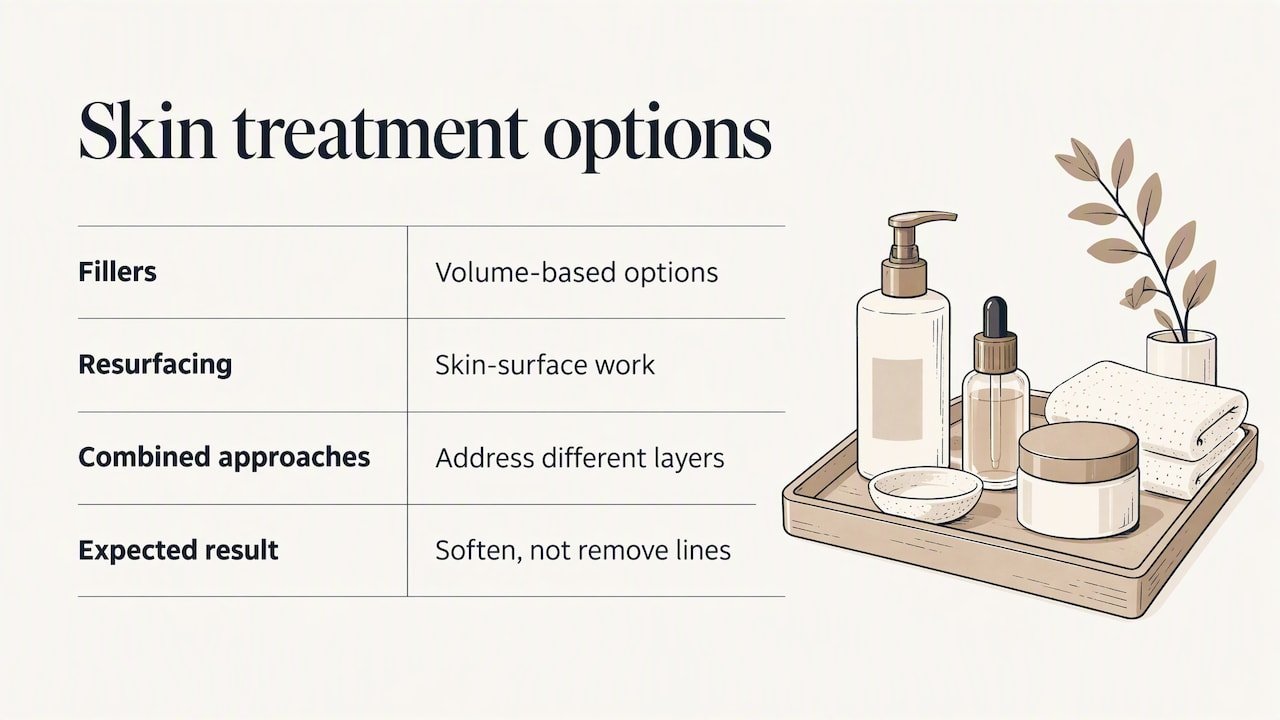
A fair discussion covers more than one route. Published reviews of perioral treatment describe injectable fillers, resurfacing procedures and other techniques, and clinical writing supports combining approaches, such as dermal filler alongside microneedling, chemical peels or laser resurfacing, to address different layers. Medical News Today notes that dermatology treatments tend to soften the look of the lines rather than remove them altogether.
For skin-surface work, you can read about our microneedling treatment, and for volume-based options our dermal filler page. Whether either is suitable for you is a decision for your assessment, not for a web page. Some treatments for muscle activity are prescription-only medicines, which can only be discussed after a consultation with a suitably qualified prescriber, and we do not advertise them here.
4. What are the risks and limits?
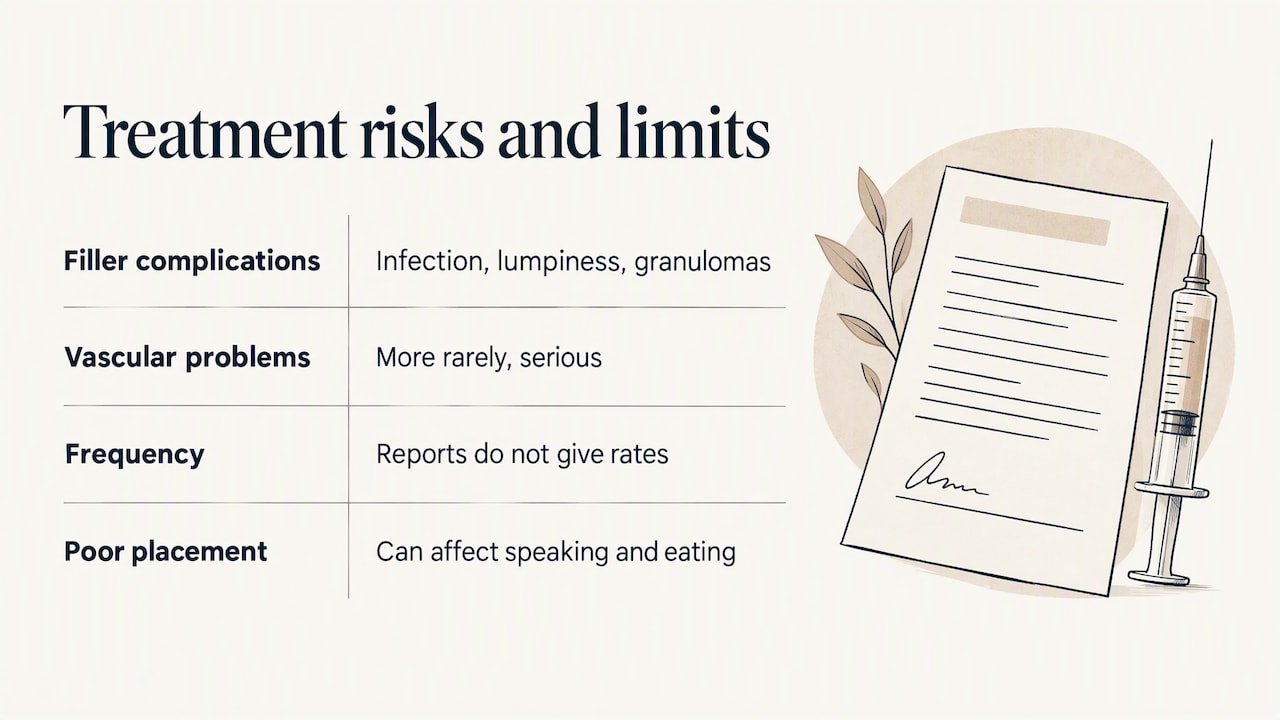
Any injectable or skin-resurfacing treatment carries risks, and you should hear them before you agree to anything. A government review of cosmetic interventions lists the complications linked to dermal fillers as including infection, lumpiness and granuloma formation, and more rarely serious vascular problems. Reports of this kind do not tell you how often problems occur, but they do explain why informed consent matters and why results cannot be guaranteed.
The mouth is also a highly mobile area. Practitioners describe it as one that calls for a cautious, conservative and staged approach, because poorly placed product can affect how the lips move when you speak and eat. Be wary of anyone who promises to erase lines in one visit.
5. What should you do before and after?
Expect questions about your medical history, medicines, allergies, previous treatments and whether you smoke. Tobacco use is documented to delay wound healing and can compromise how long results last, so you may be asked to pause it around treatment. Aftercare and what to do if something looks wrong should be explained to you in advance, and any concern afterwards should go straight back to the practitioner who treated you or to urgent medical care if it is severe.
Where the skin scan fits
At Dermacy Clinic, visual skin analysis and progress photographs can support a consultation. The scan is a visual assessment tool: it is not a diagnostic test, it does not detect disease, and not every treatment plan uses it. Its practical value is documentation. Photographs of the skin at the start make it easier to see, over time, whether anything has changed, and they give you and the practitioner a shared reference point instead of relying on memory.
Looking after the area in the meantime
These habits are low-risk and sensible whatever the cause of your lines.
- Use sun protection on the upper lip area. UV exposure contributes to line formation, and the area is easy to miss.
- Keep lips protected from dryness. A plain balm of the type the NHS describes is a reasonable start, and stop using any product that stings or irritates.
- Think about smoking. Stopping benefits your health far beyond skin. Your GP or local stop smoking service can help you plan it.
- Avoid picking at flaky skin. It irritates the area and does not improve fine lines.
If you are considering a broader look at your smile and lower face, a dental assessment can be part of the picture too. A practice offering cosmetic dentistry and tailored treatment plans can advise on tooth and bite factors, which is separate from the skin question this article covers.
What to bring to a consultation
A little preparation makes the appointment more useful.
- A note of how long the lines have bothered you and whether they have changed recently.
- The lip and skincare products you use, including balms, and any that irritate you.
- Your medical history, current medicines and any past aesthetic treatments.
- Your smoking and sun habits, said plainly. The advice depends on them.
- Your questions: what is realistic, what could go wrong, how many visits are likely, and what happens if you are unhappy with the result.
Be cautious about any plan that arrives before the practitioner has looked at your face moving and at rest.
Book a skin consultation at Dermacy Clinic
If you would like someone to look at the lines above your lip and tell you honestly what they are and what might suit your skin, you can contact our Armthorpe, Doncaster clinic through the skin consultation page. That page has current service details and the route to book. Suitability is decided at assessment, and results vary from person to person.
FAQ
Are smoker’s lines the same as dry lips?
No. Smoker’s lines are vertical wrinkles in the skin above the lip, while dry lips are a surface problem on the lip itself, usually caused by weather, sun, licking or irritation. You can have either or both. A consultation helps separate them.
Can you get smoker’s lines if you have never smoked?
Yes. Ageing, repeated movement of the muscle around the mouth and sun exposure all contribute, so non-smokers develop them too. Smoking can make them deeper, but it is not required.
Will lip balm get rid of vertical lip lines?
Lip balm can help dry or chapped lips, and good hydration may soften how fine lines look. It is unlikely to remove an established crease. If the lines bother you, ask for an assessment of the skin, movement and volume of the area.
Can the lines be removed completely?
Not reliably. Dermatology treatments generally soften the appearance of the lines rather than eliminate them, and results vary between people. A sensible plan is often gradual and may combine more than one approach.
When should I see a doctor instead of an aesthetic clinic?
See your GP or pharmacist if your lips stay sore or cracked, bleed, or if a patch on or near the lip does not heal or changes. Those are medical questions, not cosmetic ones.
Sources
- Lip Lines: Vertical Lip Wrinkles, Causes, Filler & other Treatments, Cleveland Clinic
- Chapped Lips (Cheilitis): Causes, Treatment & Prevention, Cleveland Clinic
- Sore or dry lips, NHS
- Clinic appraisal of the use of dermal filler and combination treatment modalities for perioral lines, Journal of Aesthetic Nursing
- Treatment of perioral rhytids, PubMed
- Smoker’s lips: What it is and how to treat, Medical News Today
- Review of the Regulation of Cosmetic Interventions, UK Government
Recommended
This article provides general information and is not a diagnosis or personalised medical advice. Treatment suitability, risks and expected outcomes require an individual consultation. Results vary.