Acne & breakouts

Acne treatment in DoncasterGraded properly, treated honestly — and we tell you when it belongs with your GP instead

Most acne that walks through our door has already been treated as one single thing. It is not. Comedonal, inflammatory and nodular acne need different work, hormonal adult acne needs a different conversation again, and a fair number of “acne” breakouts turn out not to be acne at all. We grade it, name it, and only then agree a plan.

Plan your visit · 07899 703678 · Armthorpe, Doncaster
4.9142 Google reviews
I–VIFitzpatrick types assessed
NICEseverity grading used
What we treat
Mild to moderate acnePlus the marks and scarring left behind. Nodular and cystic acne is assessed, then routed.
Where
Armthorpe, DoncasterFree customer parking outside. Around 30 miles of South Yorkshire covered.
Skin types
Fitzpatrick I to VIDeeper skin tones are planned differently, not turned away.
First step
45-minute skin assessmentSkin analysis imaging, grading and a written plan. The fee comes off your treatment.
Step one

How bad is your acne, actually?

“Mild” and “severe” get used loosely, usually by whoever is selling the treatment. UK clinical guidance is countable, so we count. It decides whether your acne belongs in a treatment room, with a prescriber, or with a dermatologist — and it stops you paying for the wrong thing.

GradeWhat that means, countedWhere it should be treated
Mild to moderateAny number of blackheads and whiteheads, plus up to 34 inflamed spots, and no more than two nodules.Treatable here, alongside a proper homecare routine.
Moderate to severe35 or more inflamed spots, or three or more nodules.Needs a prescriber. We assess, explain, and tell you what to ask for.
NodulocysticDeep, tender lumps and cysts, often on the jaw, neck, chest or back.Dermatology territory. High scarring risk, and the priority is stopping the scarring, not polishing the surface.
Scarring already presentPitted, raised or discoloured marks that persist after spots clear.Treatable here, but only once the acne itself has been settled for a while.
Sudden, severe, with feeling unwellRapid onset of painful ulcerating lesions, sometimes with fever or joint pain.Same-day medical attention. Not a cosmetic appointment.

Grading takes five minutes and it is the difference between a plan and a guess. Photographs are taken at the same visit so change is measured rather than remembered.

Step two

Which type you have, and why it changes the treatment

Acne is one name for several different processes. Treating a blocked pore the way you would treat an inflamed one wastes months.

What you seeWhat is actually happeningWhat tends to help
Blackheads and whiteheads
Comedonal. Forehead, nose, chin, often no redness.
The lining of the pore is shedding too fast and plugging the opening. Bacteria are barely involved.Keratolytic and retinoid-type routines, professional extraction, salicylic-based peels. Antibacterial products alone do very little.
Red spots and pus-heads
Inflammatory papules and pustules.
A blocked pore has become inflamed, with Cutibacterium acnes — a bacterium that lives on everyone’s skin — driving the immune response.Benzoyl peroxide, anti-inflammatory peels, LED, and a routine that does not strip the skin. Scrubbing harder makes this worse.
Deep tender lumps
Nodules and cysts, slow to come and slow to go.
Inflammation deep in the dermis, which is where scarring is made.Prescription treatment, promptly. Everything cosmetic can wait; preventing the scar cannot.
Brown marks after spots clear
Post-inflammatory hyperpigmentation.
Pigment left behind by the inflammation. More common and longer-lasting in deeper skin tones.Pigment-directed work, and daily broad-spectrum SPF 50. See pigmentation treatment.
Red or purple marks after spots clear
Post-inflammatory erythema.
Dilated vessels, not pigment. Frequently mistaken for scarring.Vascular-directed treatment and time. Pigment treatments do nothing for it, which is why the distinction matters.
Pits and dents that stay
Ice pick, boxcar and rolling scars.
Collagen lost during deep inflammation. Permanent change to the skin’s structure.Needling and resurfacing work, once the acne has been quiet for months. Improvement, not erasure.
The one nobody checks

Three things that look like acne and are not

This is the most common reason a course of treatment fails. If the diagnosis is wrong, the plan cannot be right — and two of these three get worse with standard acne treatment.

  1. Rosacea

    Central facial redness with flushing, visible small vessels, and papules that come and go — but no blackheads or whiteheads. That absence is the giveaway. Rosacea flares when it is treated with strong acne actives or aggressive exfoliation, which is why separating the two at the assessment matters. We do treat rosacea — on its own pathway, with calming rather than clearing protocols and redness-directed work; see rosacea treatment. What we will not do is run an acne course on it.

  2. Perioral dermatitis

    Small clustered bumps around the mouth, nose or eyes, typically leaving a clear rim right at the lip border. Very often triggered by a topical steroid cream, or an inhaled steroid for asthma. The treatment is usually to stop the trigger under medical guidance, not to add a retinoid or a peel, both of which make it angrier.

  3. Fungal folliculitis, often called “fungal acne”

    Uniform, itchy, same-sized bumps, usually on the chest, back, shoulders or hairline, with no comedones. Caused by yeast in the follicle rather than bacteria, so it needs antifungal treatment — and it characteristically gets worse on antibiotics. Plenty of people spend months on peels and LED courses for this.

Others worth naming, because they are regularly mistaken for acne: keratosis pilaris on the upper arms and cheeks, hidradenitis suppurativa in the armpits and groin, acne caused by friction from helmets, straps or phones, and breakouts caused by medication. If your breakout matches one of these, we will say so at the assessment rather than start a course.

Adult acne

If you are in your thirties and breaking out on your jawline

Adult acne is not teenage acne that stayed too long. It behaves differently and it responds to different things.

  • Where it sits. Lower third of the face — jawline, chin, around the mouth and down the neck — rather than the T-zone.
  • How it behaves. Cyclical, deeper, tender, fewer spots but slower to settle, often worse in the week before a period.
  • What it is not. Not a hygiene problem, and not something a stronger cleanser fixes. Over-cleansing is one of the commonest reasons adult acne is stubborn.
  • When it is worth a GP conversation. If it comes with irregular periods, unusual hair growth or thinning at the temples, that pattern is worth investigating properly rather than treating only on the surface. We will say so.
  • What we can do. Calm the inflammation, unblock what is blocked, treat the marks left behind, and build a routine you can actually keep. What we cannot do is change the hormonal driver — that needs a prescriber.
In clinic

What happens at our Doncaster clinic

Treatment is chosen against the grade and type above, not picked from a menu. Once the assessment has identified what is actually driving your breakouts, a treating protocol is selected from the professional ranges we work with — mesoestetic, Medik8 and iS Clinical — and paired with homecare from the same system so the two are not working against each other. Your exact plan, and its full cost, is written down before anything is booked.

  1. A protocol, not a product

    Professional-strength protocols from mesoestetic, Medik8 and iS Clinical are matched to your grade and type, with the in-clinic step and the homecare designed as one course rather than bought separately. Which range suits you depends on whether the problem is congestion, inflammation, pigment left behind, or a combination.

  2. Clearing what is blocked

    Professional deep cleansing and careful extraction of comedones, done properly rather than squeezed. This is what shifts congestion that no home routine reaches, and it is the fastest visible change for comedonal acne.

  3. Calming what is inflamed

    Anti-inflammatory in-clinic work paired with a home routine that stops stripping the skin. Most inflamed acne arriving here is being over-treated, not under-treated, and part of the job is undoing that.

  4. Resurfacing, once it is safe to

    Controlled resurfacing for texture, congestion and the marks left behind, spaced to your skin’s tolerance and stepped down for deeper skin tones because of the pigmentation risk.

  5. Treating what the acne left

    Brown marks and redness are treated after the acne settles, not alongside it — see pigmentation treatment for how that side is assessed. Established scarring is treated later still — see acne scar treatment.

  6. A routine you can actually keep

    Written down, in order, with what to use when and what to stop. Daily broad-spectrum SPF 50 is not the optional part: without it, the marks will not fade whatever else we do.

Straight answers

What belongs with your GP, and what we can do

A clinic that will treat anything is a clinic that is not assessing anything. Here is the line, drawn plainly.

  • We can: grade and type your acne, photograph and track it, treat mild to moderate acne in clinic, unblock and extract, calm inflammation, build a routine from professional-grade products, treat the brown marks and the redness left behind, and treat established scarring once things have settled.
  • We can also: tell you when what you are already using is working against you, which is more often than you would think.
  • We cannot prescribe. Tretinoin, adapalene, clindamycin, prescription-strength azelaic acid, oral antibiotics, the pill and isotretinoin all need a prescriber. If your acne needs one of those, the honest answer is to say so and tell you what to ask for.
  • We will not treat nodulocystic acne cosmetically. Every month it continues is scarring you will pay to treat later.
  • We will not promise a cure, permanent clearance, or clear skin by a date. Acne is managed, and it can come back.
  • We will not treat you while you are on isotretinoin. Peels, needling and energy-based treatment wait until you have been off it for a period agreed with your prescriber, because treating too soon risks poor healing and scarring.
  • We will not treat what looks medical rather than cosmetic. Sudden severe acne with feeling unwell, anything ulcerating, or anything that does not look like acne at all, goes to a doctor the same day.

Acne affects how people feel, not just how they look, and UK guidance is explicit that this should be asked about rather than ignored. If it is affecting your mood, your sleep or whether you leave the house, say so at your appointment — it changes how urgently we push for prescription input, and your GP needs to know too.

Costs

What acne treatment costs here

Your plan and its total cost are agreed and written down at your assessment, before any treatment is booked. That includes what you will spend in clinic, what the homecare adds, and over how many weeks — so there is no figure that appears later.

  • The 45-minute assessment comes first, and its fee comes off your treatment. It buys you skin analysis imaging, a graded diagnosis and a written plan — useful even if you go no further, and not lost if you do.
  • Nothing is sold before it is graded. If your acne needs a prescriber rather than a treatment room, we say so at the assessment instead of selling you a course.
  • Homecare is costed up front, not later. It is the part that decides whether the plan works, so it is priced into the plan from the start.
  • Current prices are confirmed when you book. Call 07899 703678 or book online and the current cost of each step is confirmed before you commit to anything.
The process

What happens, step by step

  1. A 45-minute skin assessment

    It starts on the skin analysis machine, which shows congestion, oil distribution, redness and pigment that are not yet visible on the surface. Your acne is then graded and typed, your Fitzpatrick skin type recorded, and your history taken — including every product you are currently using and any medication. Images are stored so change is measured rather than remembered. The assessment fee comes off your treatment if you go ahead.

  2. A plan in writing

    What we will do in clinic, what you will do at home, how long before you should expect a change, and what it costs in total. If part of the answer is a prescriber, that is written down too.

  3. Patch test where a device is involved

    Booked as its own short appointment. Required, not optional.

  4. The active phase

    In-clinic treatments spaced to your skin’s tolerance, not to a sales calendar. Expect things to look slightly worse before better — that is normal, and you will be warned about it rather than surprised by it.

  5. Review at twelve weeks

    Compared against your first images. If it has not moved enough, the plan changes or we escalate. Twelve weeks is also roughly when prescription treatment should be reviewed, which is why we use the same clock.

  6. Then, and only then, the marks

    Pigment, redness and scarring are treated once the acne is quiet. Treating marks while spots are still forming is spending money on a moving target.

Honest fit

When we are, and are not, the right choice

  • Blackheads, whiteheads and congestion that will not shift
  • Red, inflamed spots at mild to moderate levels
  • Adult hormonal breakouts, alongside a GP conversation
  • Brown marks or redness left behind after breakouts
  • Established scarring, with the acne settled
  • Back, chest and shoulders as well as the face
  • Deeper skin tones, planned differently rather than turned away
  • Rosacea, redness and flushing — assessed and treated here on their own pathway
  • Deep cysts and nodules — prescriber first
  • Currently on isotretinoin, or recently finished
  • Pregnant or breastfeeding — several standard acne actives are unsafe, so the plan is stripped back and agreed with your midwife or GP
  • Perioral dermatitis or fungal folliculitis, which need a different treatment entirely
  • Looking for a guarantee, or clear skin by a fixed date
  • Unwilling to wear sunscreen daily — the marks will not fade without it
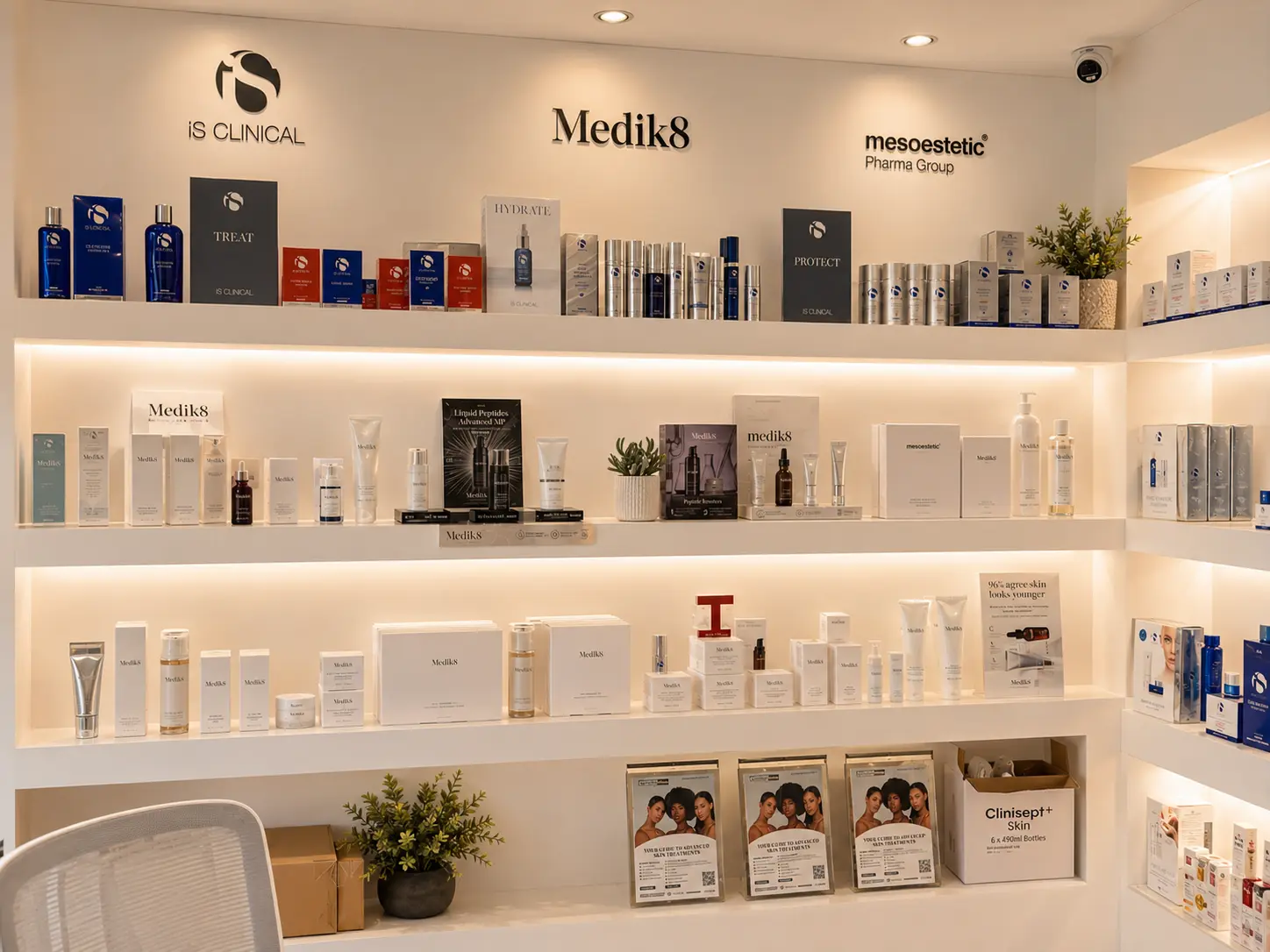
Shelves of iS Clinical, Medik8 and mesoestetic professional skincare at Dermacy Clinic in Armthorpe, Doncaster
The professional ranges we treat with at our Armthorpe clinic — iS Clinical, Medik8 and mesoestetic.
What we treat with

The professional ranges behind your plan

Professional ranges are not the versions sold in shops. They are supplied only to trained clinics, used at strengths that need supervision, and built so the in-clinic protocol and the homecare belong to one system rather than working against each other. We stock three, and which one you go on depends on what your skin is doing.

iS Clinical
Inflammation and reactive skinBotanical anti-inflammatories and barrier repair, for skin that stings and reacts to most acne products.
Medik8
Congestion and textureWhere the problem is blocked pores, surface texture and the routine that keeps them clear.
mesoestetic
The marks left behindDepigmenting protocols for post-acne pigmentation. See pigmentation treatment.
One system, start to finish
Clinic and homecare matchedYour homecare comes from the same range as your in-clinic protocol, which is why results hold between appointments.

All three are professional cosmetic ranges. None contains a prescription-only medicine, and where your skin genuinely needs one we will say so rather than reach for the nearest alternative on the shelf.

Why here

Six years of treating difficult skin in Armthorpe

Dermacy opened in July 2020 and has treated skin in the same place ever since — acne, rosacea, melasma, pigmentation and sensitive, reactive skin, in every skin tone. The clinic was built on fifteen years of hospital work beforehand, across anaesthesia, pain, oncology, plastic surgery and dermatology, and it shows in how we work: assess first, grade it, write it down, and refer when referring is the right answer.

Since
July 2020Six years in Armthorpe, Doncaster, treating the same conditions week in, week out.
Client rating
4.9 from 142Google reviews from clients across South Yorkshire.
Behind the clinic
15 years in hospital careAnaesthesia, pain, oncology, plastic surgery and dermatology before Dermacy opened.
Professional ranges
mesoestetic · Medik8 · iS ClinicalProtocols chosen from all three, matched to what your skin is doing.
  • Every skin gets analysed, not glanced at. The assessment starts on the skin analysis machine, so the plan is built on what is happening under the surface rather than what shows in a mirror.
  • Every skin tone is planned for. Fitzpatrick I to VI, with settings and sequencing changed for deeper tones rather than treating everyone the same way.
  • Patch testing is required, not offered. Where a device is involved, it is booked as its own appointment before treatment.
  • We treat the conditions that get confused with each other. Acne, rosacea and pigmentation all land here, which is exactly why they get separated properly at the assessment instead of treated as one thing.
  • We say no when no is the answer. That has cost us bookings and saved clients money and scarring.
Who assesses you

Your acne assessment in Doncaster

Your grading, skin analysis, treatment plan and progress reviews are carried out within each practitioner’s current professional scope.

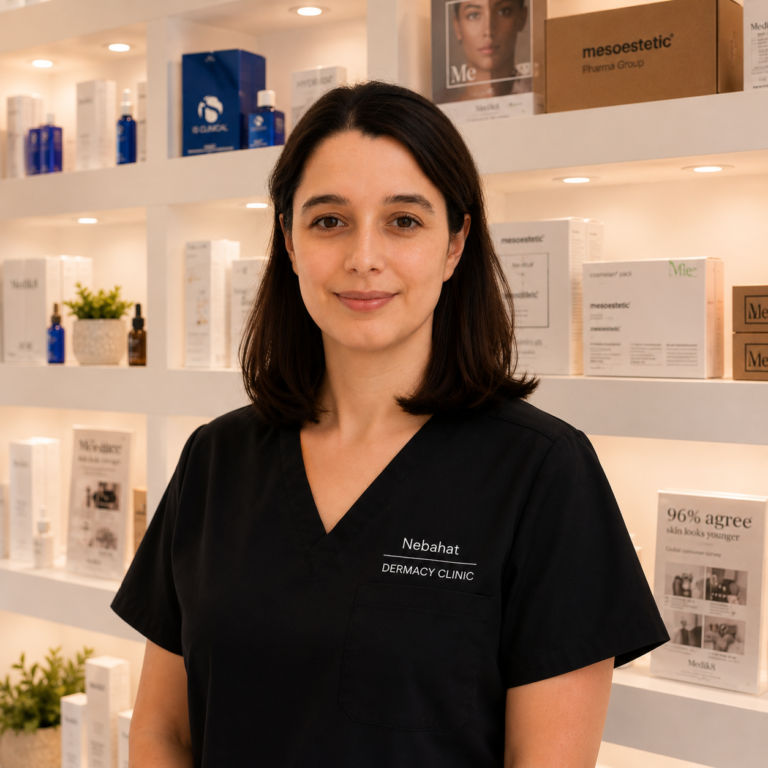
Nebahat Karadag, Aesthetic Nurse at Dermacy Clinic in Doncaster

Nebahat Karadag

Aesthetic Nurse

Carries out the graded acne assessment, skin typing and clinical history review, sets the treatment plan and the twelve-week review, and decides when a case should go to a prescriber or GP rather than be treated in clinic.

Find us

Where to find us in Doncaster

Address
Armthorpe, DoncasterFree customer parking directly outside.
Opening hours
Mon to Sat, 10:00 to 18:00Assessments and patch tests booked separately from treatment.
Areas covered
Around 30 milesDoncaster, Armthorpe, Bawtry, Bessacarr, Rossington, Thorne, Conisbrough and across South Yorkshire.
Getting started
07899 703678Or book your assessment online at any hour.
Before you book

Questions people ask about acne treatment

How much does acne treatment cost in Doncaster?

Your total is set at the assessment and written down before anything is booked — in-clinic work, homecare and the number of weeks, together. We do that rather than quote a single headline figure, because the right plan for comedonal congestion and the right plan for inflamed acne are not the same price. Call 07899 703678 and the current cost of each step is confirmed before you commit.

Do I need a consultation first?

Yes, always. It runs 45 minutes and starts on the skin analysis machine, so the grading is based on what your skin is actually doing rather than on what is visible in a mirror. Nothing is booked before that, because the grade decides whether treatment here is even the right answer — and the assessment fee comes off your treatment if you go ahead.

Can I have treatment while I am on isotretinoin, or just after?

Not while you are on it, and not immediately after. Isotretinoin changes how your skin heals, so peels, microneedling and energy-based treatments are postponed until you have been off it for a period agreed with your prescriber. Bring your dates to the assessment and we will plan around them. It is worth asking any clinic this question before you book.

Is it acne, or is it rosacea?

The quickest test is blackheads. Acne produces blackheads and whiteheads; rosacea does not. Rosacea tends to sit centrally with flushing and visible small vessels, and it flares when treated with strong acne actives. If your skin reacts badly to every acne product you try, that is worth taking seriously rather than pushing through. We treat both conditions, so the assessment is about getting you onto the right pathway rather than about turning anyone away.

Could my breakout be fungal rather than acne?

It is worth considering if the bumps are all the same size, itchy, mainly on the chest, back, shoulders or hairline, with no blackheads — and particularly if they got worse on antibiotics. Fungal folliculitis needs antifungal treatment and does not respond to acne protocols. We check for this pattern at assessment.

Is my acne hormonal?

The pattern is fairly recognisable: jawline, chin and neck, deeper and more tender, cyclical, in an adult rather than a teenager. If it comes alongside irregular periods, unusual hair growth or thinning hair, that combination deserves a proper GP conversation rather than surface treatment alone. We can treat the skin either way, but we will tell you when the driver sits somewhere we cannot reach.

At what point should I see a GP instead of a clinic?

If you have deep cysts or nodules; if your acne is already scarring or leaving lasting marks; if a proper routine has not moved it in about twelve weeks; if it is on your chest and back with lumps; or if it is affecting your mood or whether you go out. A GP can prescribe what we cannot, and can refer you on. Coming here first is not a wasted visit — a graded assessment and images make that GP appointment considerably more productive.

Will my skin get worse before it gets better?

Often, yes, for the first two to six weeks. Starting anything that speeds up pore turnover brings what was already forming to the surface sooner. It is expected, it is not a reaction, and stopping at week three is the commonest reason people conclude that nothing works. You will be told what is normal and what is not before you start.

How many sessions will I need?

It depends on grade and type, and you get the number at your assessment rather than being sold a course first. As a guide, in-clinic work is usually spaced two to four weeks apart and judged at twelve weeks. Comedonal congestion tends to respond faster than inflammatory acne; scarring takes longest by far.

Is treatment safe on darker skin tones?

Yes, with the plan changed accordingly. Fitzpatrick types IV to VI carry a real risk of the treatment itself leaving a darker mark, so heat-based options are used far more cautiously or avoided, settings are conservative, and the sequence is slower. Post-inflammatory pigmentation is also more persistent in deeper tones, which is precisely why the acne itself is treated first and the marks second.

Can I have acne treatment while pregnant or breastfeeding?

Some of it, with the plan stripped back. Several standard acne actives, retinoids in particular, are not used in pregnancy. Pregnancy also changes the skin, and breakouts that appear then often settle afterwards. We will agree a short, safe routine and coordinate with your midwife or GP rather than working around them.

Do you treat teenagers?

Yes, with a parent or guardian present, and with a deliberately gentle approach. Teenage acne that is moderate or severe is also the clearest case for prescription treatment, so a GP conversation is often part of what we recommend rather than something we replace.

Can you treat acne on my back and chest?

Yes, and it is worth doing, because truncal acne scars readily and gets neglected. Skin there is thicker, it responds more slowly than the face, and it is assessed and priced as its own area. Truncal acne with nodules is also the pattern most likely to need a prescriber.

Can we treat the acne and the marks at the same time?

Usually not, and this is where money gets wasted. While spots are still forming, new marks keep arriving, so the pigment and redness work is chasing a moving target. We settle the acne, then treat what it left. The exception is sun protection, which starts on day one because without it the marks will not fade whatever else we do.

Do chemical peels actually help acne?

They help specific things well: congestion, blackheads, surface texture, and the marks left afterwards. They are supportive rather than curative, and they are not a substitute for prescription treatment in moderate to severe acne. We use them where they earn their place and say so where they do not.

Does laser or LED clear acne?

Honestly: not on their own, and UK clinical guidance does not recommend them as the primary treatment for active acne. They are useful adjuncts — LED for calming inflammation, and vascular or pigment-directed devices for the redness and brown marks left behind. Any clinic presenting a device as the cure for acne is selling the device, not treating the condition.

Will my acne come back after treatment?

It can, particularly hormonal acne and particularly if homecare stops. Acne is a condition you manage rather than one you finish. What a good plan buys you is control, far fewer flares, much less scarring — and a routine you can maintain without living in the bathroom.

Are acne scars permanent?

True scars — the pits and dents — are permanent changes to the skin’s structure, and treatment improves them rather than erasing them. A meaningful improvement is realistic; a flawless result is not, and anyone promising one is not being straight with you. Brown marks and redness are different: those genuinely do fade, given time and protection.

Which product ranges do you use?

Professional protocols from mesoestetic, Medik8 and iS Clinical. Which one you are put on depends on what the assessment finds — congestion, inflammation, pigment left behind, or a combination — rather than on which range we happen to stock most of. All three are professional cosmetic systems: none contains a prescription-only medicine, and if your skin genuinely needs one of those, we will tell you rather than sell you the nearest alternative.

Do I have to buy products?

You need a routine, and what you use at home matters more than what happens in the room. The in-clinic protocol and its homecare are designed as one course, so they work best together. That said, if what you already own does the job, we will say so — the plan is written as what the routine needs to do, not as a shopping list.

Where exactly are you, and is there parking?

Armthorpe, Doncaster, with free customer parking directly outside. We are open Monday to Saturday, 10:00 to 18:00, and we see clients from across South Yorkshire — Doncaster, Bawtry, Bessacarr, Rossington, Thorne and Conisbrough among them.

Find out what you are treating before you pay to treat it

A graded assessment tells you which acne you have, whether it belongs here or with a prescriber, and what a realistic result looks like. That is worth knowing either way.