Melasma
Symmetrical brown or grey-brown patches across your cheeks, forehead or upper lip. Often appears during pregnancy or after starting the pill, and gets worse in heat and sunlight.
Pigmentation is not one condition, and the wrong treatment can leave it darker. We find out which type you have first, then build your plan around it.
This matters more than the treatment you choose. Melasma and sun damage look similar but respond to completely different things — and treating melasma the wrong way can leave it darker than before.
Symmetrical brown or grey-brown patches across your cheeks, forehead or upper lip. Often appears during pregnancy or after starting the pill, and gets worse in heat and sunlight.
Flat brown spots on your face, hands, chest or shoulders. Sharply defined, scattered rather than symmetrical, built up over years of sun exposure.
Dark patches exactly where a spot, cut or rash used to be. These are the flat marks acne leaves behind, not scars, and they often respond well.
Present since childhood and darker in summer. Treatable, though they will return with sun exposure unless you protect your skin afterwards.
Not sure which you have? That is exactly what the consultation is for — you do not need to work it out yourself. Book an assessment →
Two marks that look identical in the mirror can need opposite treatments. Melasma treated as though it were sun damage usually comes back darker than it started. This part of the appointment decides everything that follows.
Pregnancy, the combined pill, HRT, thyroid medication, heat and steam exposure, and any previous laser or IPL. We also ask how the marks behaved last summer and last winter. Hormonal melasma and sun-driven pigment behave differently, and the history usually separates them before anything touches your skin.
Skin type sets what is safe, not just what works. Types IV to VI carry a genuine risk of post-inflammatory hyperpigmentation, where the treatment itself leaves a darker mark than the one you came in with. Heat-based options are used far more cautiously on deeper skin tones, and sometimes not at all.
Surface pigment in the epidermis lifts faster and more predictably. Deeper pigment in the dermis responds slowly and only partially. Mixed patterns are common. You will be told which you appear to have, because it changes what a realistic result looks like for you.
Imaging can show pigment that has not yet surfaced, which helps with planning and gives us something measurable to compare against later. It supports the assessment and is not a medical diagnosis.
Required rather than optional, and booked as its own short appointment.
A mark that is changing shape, growing, itching, bleeding, crusting or clearly asymmetric is not a cosmetic concern. We will not treat it, and we will tell you to see your GP first. If a prescription-only medicine is the right answer for your skin, that needs a prescriber rather than a treatment room, and we will say so.
Your plan is built around what you actually have. Here is what that usually looks like.
| If you have | We usually use | We usually avoid |
|---|---|---|
| MelasmaSymmetrical patches, worse in heat | Cosmelan® or Dermamelan® programme with prescribed homecare and daily SPFSteady, controlled lightening without heat | Hot laser and IPLHeat can trigger rebound darkening |
| Sun damage & age spotsScattered flat brown spots | Depigmenting programme or medical peels, depending on how widespread it isOften the fastest type to respond | Nothing specificMost approaches suit this type |
| Marks left after spotsDark patches where spots were | Treat any active acne first, then peels, microneedling or medical skincareCalm skin first, then fade the marks | Aggressive treatment on inflamed skinIt can deepen the marks |
| FrecklesSince childhood, darker in summer | Peels or a depigmenting programme, with realistic expectations about sun exposureMaintenance matters more here | Promises of permanenceThey return with UV exposure |
We are an official Mesoestetic provider, so the depigmenting programmes below are genuine and applied professionally rather than bought over the counter.
Our most used route for melasma and widespread sun damage. A professionally applied mask in clinic, then a homecare pathway you follow at home. See the full Cosmelan page →
A more intensive programme from the same range, considered when pigmentation is deeper or has been there a long time. We confirm whether it suits you at assessment.
Prescription-strength peels that speed up how quickly pigmented skin cells are replaced. Most often used on marks left by acne and on uneven tone.
Used when pigmentation sits alongside acne scarring or rough texture, so you improve both at once. Microneedling →
Mesoestetic and Medik8, prescribed for your skin. With melasma especially, what you do daily at home does more of the work than any single appointment.
A gentle brightening treatment to keep skin healthy between programme stages. On its own it will not clear pigmentation. HydraFacial →
Pigment is made by melanocytes using an enzyme called tyrosinase. Almost everything that genuinely works on pigmentation interferes with that enzyme, speeds up how fast pigmented cells are shed, or stops new pigment being triggered in the first place. Anything that does none of those three things is a moisturiser with good marketing.
| Ingredient | What it does | Where it sits in the UK |
|---|---|---|
| Cosmelan® and Dermamelan® actives | A professional depigmenting combination applied in clinic, followed by months of structured homecare. This is the route we use. | Professional use only. Cannot be bought online legitimately. |
| Tranexamic acid | Reduces the signal that tells melanocytes to produce pigment. Useful in melasma, including stubborn hormonal patterns. | Topical forms widely available. Oral use is a prescriber's decision, not a clinic's. |
| Azelaic acid | Slows tyrosinase and calms the inflammation that drives dark marks after acne. | Lower strengths on the shelf, higher strengths on prescription. |
| Hydroquinone | Still the most studied pigment inhibitor there is, and the reason many older protocols worked. | Prescription-only in the UK. Anything selling it to you without a prescriber is not operating legally. |
| Cysteamine | A newer alternative to hydroquinone for melasma, without the prescription requirement. | Available as cosmetic homecare. Smell and tolerance put some people off. |
| Kojic acid, niacinamide, vitamin C | Mild to moderate support. They hold ground and improve tone; on their own they rarely clear established melasma. | Freely available. Best used alongside a real protocol, not instead of one. |
| Retinoids | Speed up cell turnover so pigmented cells are shed faster, and help other actives penetrate. | Cosmetic strengths on the shelf, tretinoin on prescription. Not in pregnancy. |
| Broad-spectrum SPF 50+ | Not optional and not the boring part. Every protocol above fails without it, because UV and visible light re-trigger pigment faster than any treatment clears it. | Look for zinc oxide or titanium dioxide, and reapply. Iron oxides add visible-light protection, which matters in melasma. |
What we do not do: sell you prescription-only medicines without a prescriber, promise permanent clearance of melasma, or treat a mark that should be looked at by a doctor first.
Five documented Cosmelan treatment journeys are shown for education. Each combined image presents its original before-and-after comparison, but no example can predict another client’s outcome.
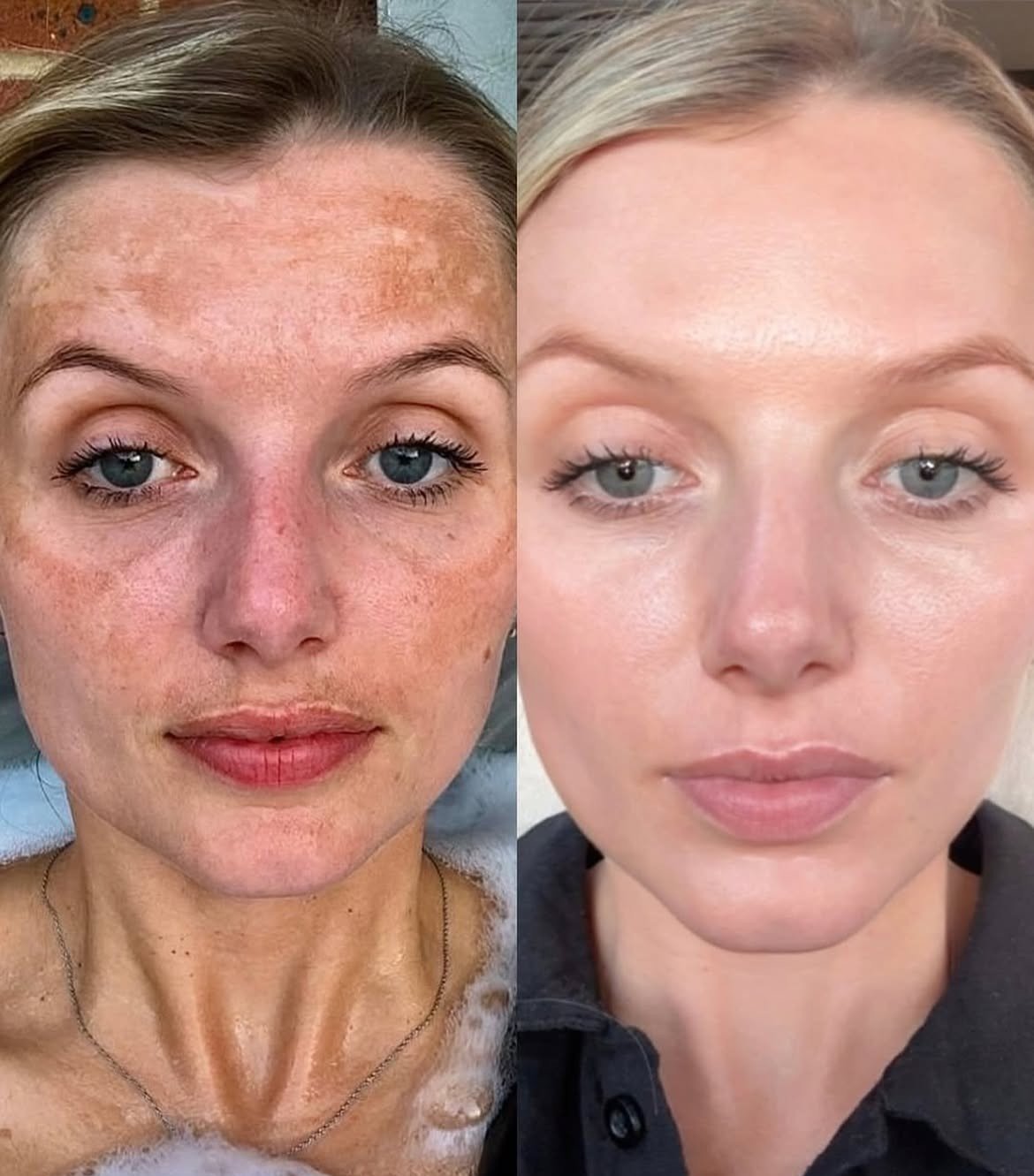 Featured result · Case 01
Official Cosmelan case image
This combined comparison keeps the original case presentation intact and makes the visible change easy to understand without an artificial slider or altered crop.
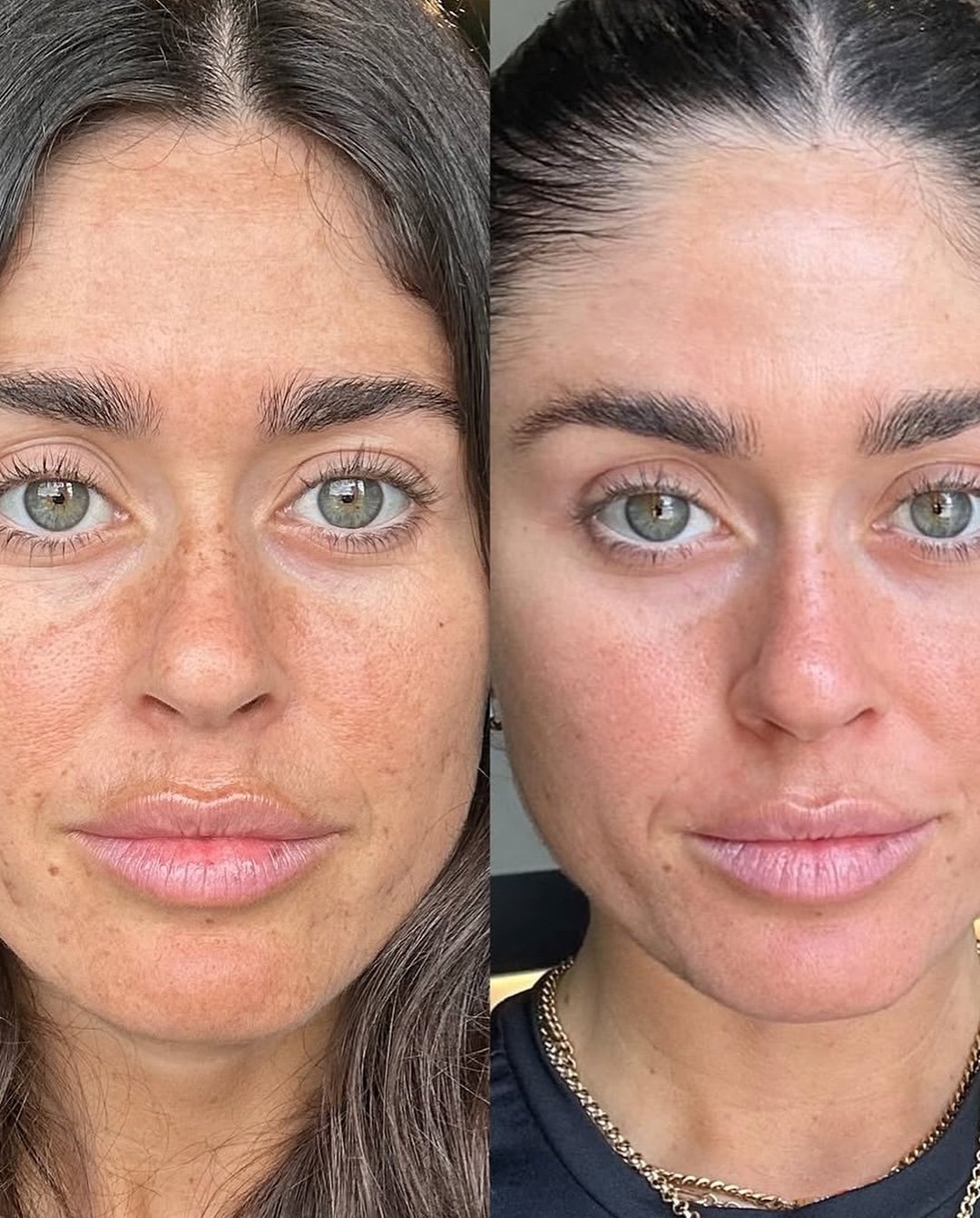 Case 02
Combined before-and-after comparison presented for treatment education.
Official Cosmelan case image · Individual results vary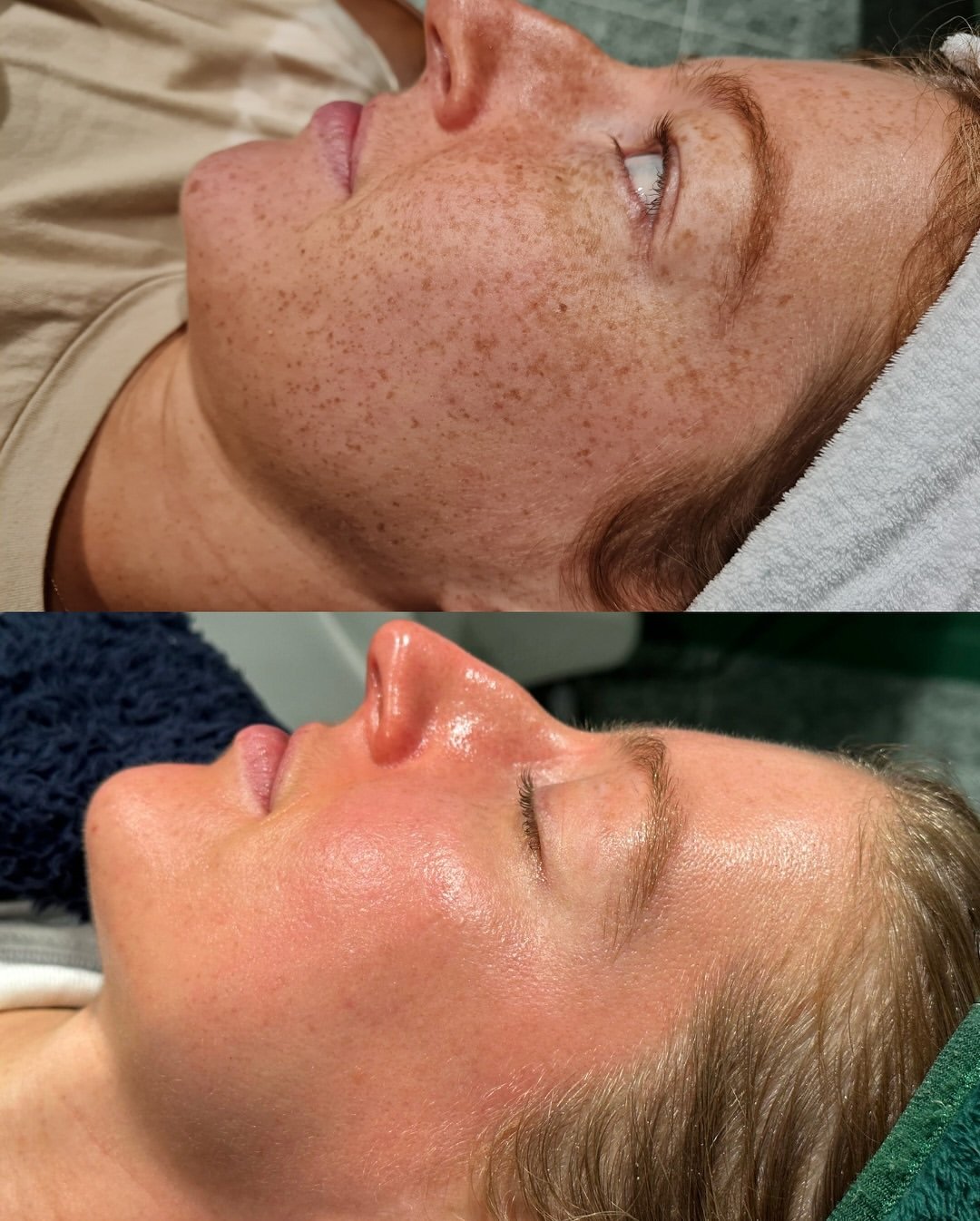 Case 03
Combined before-and-after comparison presented for treatment education.
Official Cosmelan case image · Individual results vary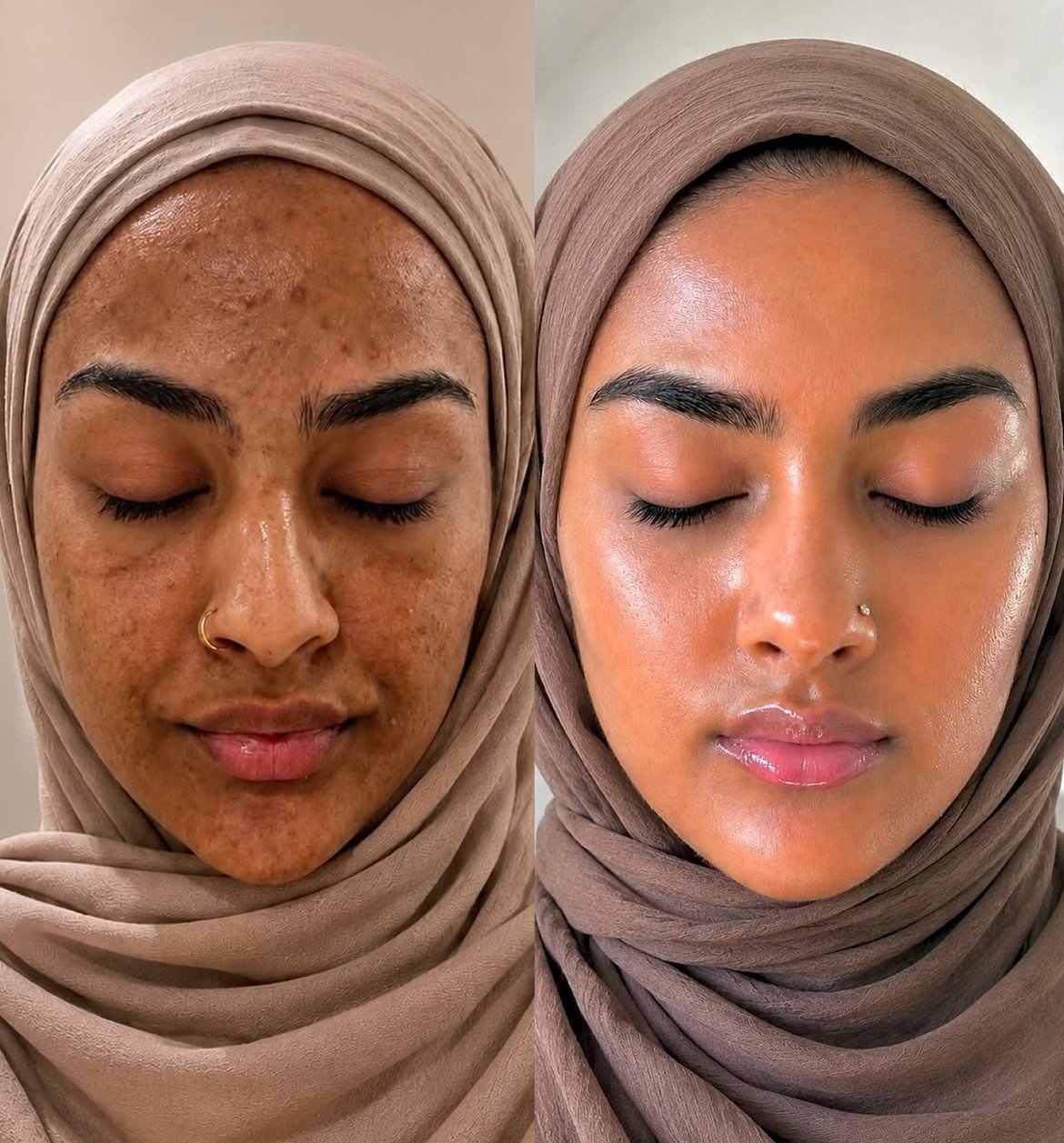 Case 04
Combined before-and-after comparison presented for treatment education.
Official Cosmelan case image · Individual results vary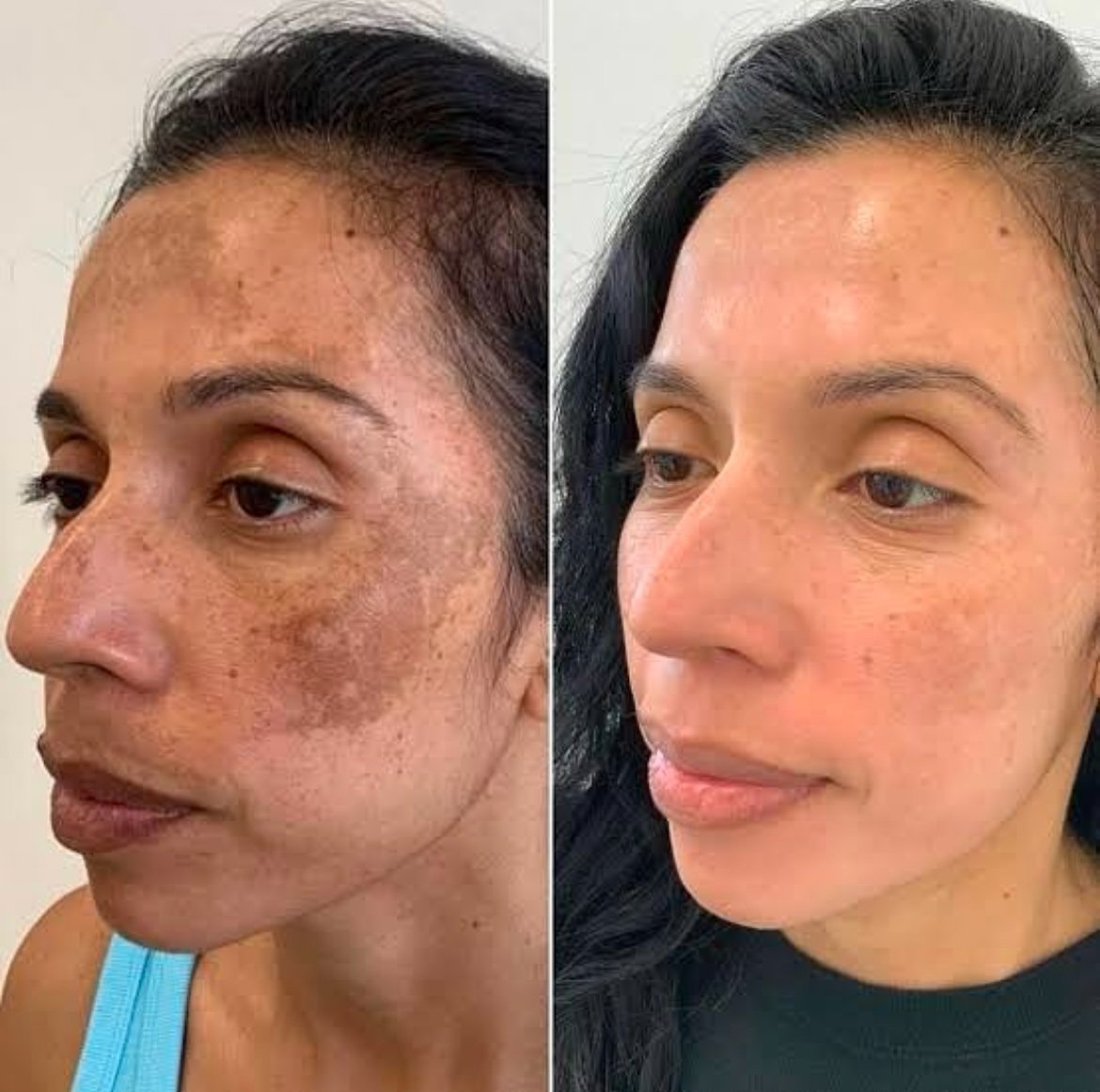 Case 05
Combined before-and-after comparison presented for treatment education.
Official Cosmelan case image · Individual results varyYour private Dermacy journey can combine baseline photography, AI-supported imaging, dated checkpoints, practitioner observations and a maintenance recommendation.
The provider profile lists Dermacy Clinic in Armthorpe and includes depigmentation among the clinic's available professional treatment categories.
Dermacy Clinic's wider Google reputation supports trust in the clinic, while Cosmelan outcomes are shown through correctly labelled treatment-specific imagery.
Read current Google reviewsYour consultation, skin analysis, treatment education and progress reviews are supported by the clinic team within each practitioner's current professional scope.
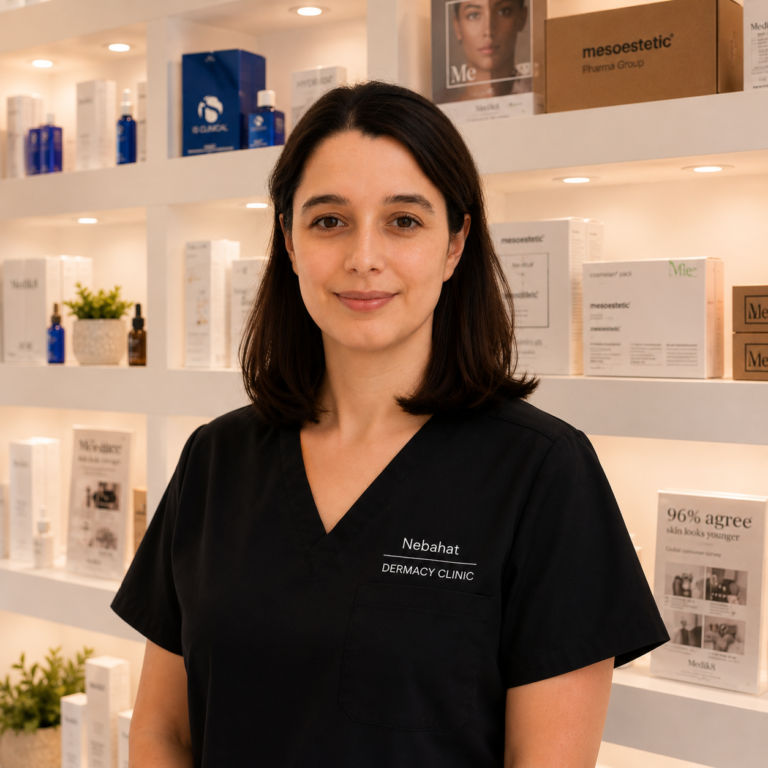
Supports consultation-led suitability assessment, treatment planning, clinical history review and structured follow-up for the pigmentation programme.
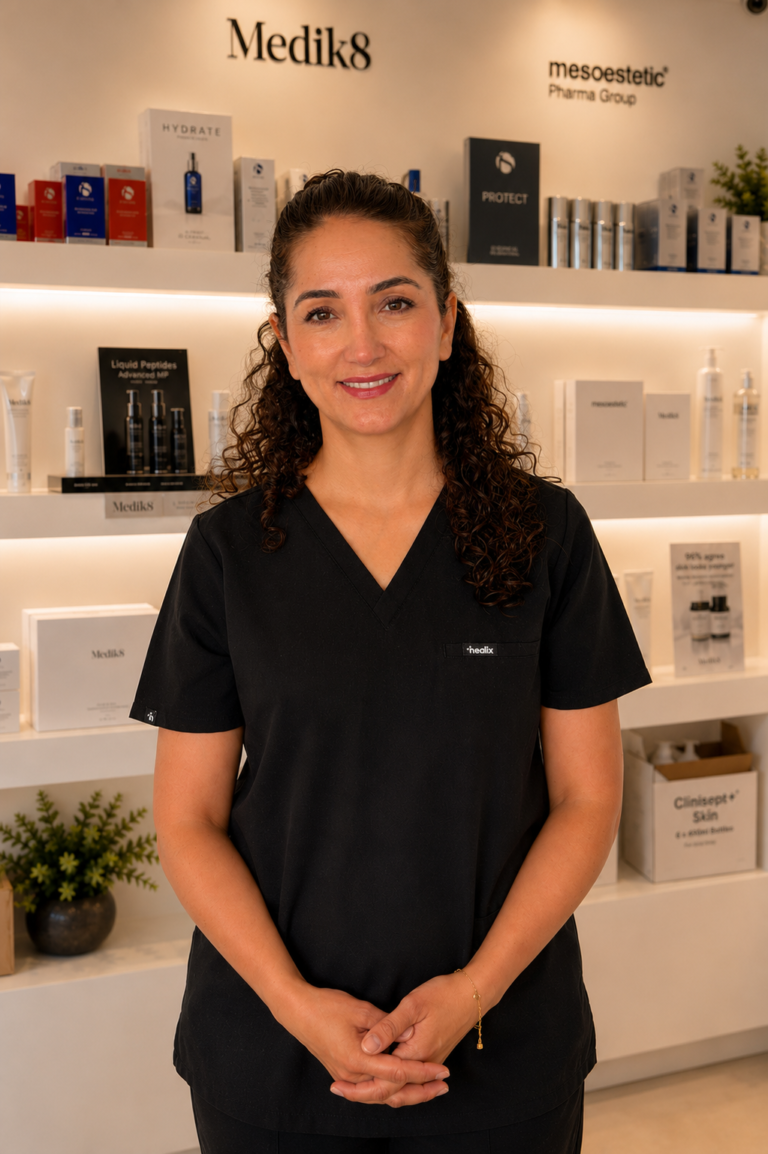
Supports professional skin analysis, treatment preparation, homecare education and standardised progress documentation within the clinic protocol.
So you can plan before you come in. What you pay depends on the programme agreed at your consultation.
| Treatment | What is included | Price |
|---|---|---|
| Cosmelan® Method | In-clinic mask application, your review appointment and the homecare pathway for the first phaseMost people start here | From £1,100 |
| Cosmelan® System | The extended programme, with a longer structured homecare pathway and additional review pointsFor more established pigmentation | £2,300 |
| Consultation | Your pigmentation type, skin type and history assessed, with a written plan before you commit to anything | See booking |
| Peels, microneedling & skincare | Priced by area and course lengthSee the full price list → | Varies |
Pigmentation is a course rather than a single appointment. Knowing the shape of it makes it easier to judge your own progress.
We look at your pigmentation type, your skin type, your medical history and what you use at home. Photographs are taken so you can compare properly later rather than relying on memory.
You get a written plan with costs. If a light-based treatment is part of it, we patch test first. This is the step that protects deeper skin tones from burns and rebound darkening.
For a depigmenting programme, this is an application in clinic followed by homecare you start the same week. For peels or microneedling, a planned course of appointments.
We compare against your baseline photographs at set points, so you can see real change rather than guessing.
Daily SPF and maintenance skincare. With melasma this is not optional — it is what stops it coming straight back.
We would rather tell you now than after you have paid for a course.
Rated 4.9 from 142 Google reviews.
Your pigmentation type is identified first. It is the single thing that decides whether treatment works or makes things worse.
Genuine Cosmelan® and Dermamelan® programmes, professionally applied, with the homecare that goes with them.
Baseline photographs and review points, so you can see the change rather than take our word for it.
Armthorpe, minutes from Doncaster town centre, with free customer parking right outside.
Not every brown mark is pigmentation, and treating the wrong thing wastes your money at best. These belong somewhere else.
If yours is not here, message us on WhatsApp and we will answer it.
A Cosmelan® Method programme starts from £1,100 and the Cosmelan® System is £2,300. Both include the application in clinic and the prescribed homecare that goes with it. Peels, microneedling and skincare are priced separately by area and course length.
You will get your exact cost in writing at your consultation, once we know which type of pigmentation you have.
Yes, it can. Melasma reacts badly to heat, and hot laser or IPL can cause it to come back darker than it started. This is why we identify your pigmentation type before treating anything.
For melasma we usually recommend a depigmenting programme with strict sun protection instead of aggressive light-based treatment.
Most people notice a change within the first few weeks of a depigmenting programme, with fuller results building over the following months as the homecare continues.
Sun damage and age spots often respond faster than melasma.
Darker skin carries a higher risk of marks after treatment, so the right approach matters more, not less. We assess your skin type at consultation and patch test before any light-based treatment.
Depigmenting programmes are often the safer route for deeper skin tones, which is one reason we use them so much.
Melasma is managed rather than cured, and it commonly returns with sun exposure, heat or hormonal change. Sun damage and age spots can also return with further UV exposure.
Daily SPF and maintenance skincare are what protect your result. We will be clear about this before you start rather than after.
Yes. Pigmentation is treated by type, and the wrong treatment can make it worse. Your consultation covers your pigmentation type, skin type, medical history and any medication.
You leave with a written plan and a price, and there is no obligation to book treatment on the day.
No. Depigmenting programmes are not suitable during pregnancy or breastfeeding.
Melasma that appears during pregnancy often improves on its own afterwards, so we would normally suggest waiting and focusing on sun protection in the meantime.
Both are professional depigmenting programmes from Mesoestetic. Cosmelan® is the one we use most often. Dermamelan® is more intensive and is considered when pigmentation is deeper or long-standing.
Which one suits you is decided at assessment, not in advance.
Not immediately after a depigmenting mask or a peel. You will be given clear aftercare instructions telling you exactly when you can, along with the SPF you should be using.
We are at Park View, Church Street, Armthorpe, Doncaster DN3 3AG, a few minutes from Doncaster town centre. There is free customer parking directly outside.
Generally, no. Melasma is treated as a cosmetic condition, so NHS dermatology referrals for it are uncommon and are usually declined unless there is a separate medical concern about the marks. Your GP can still confirm it is melasma rather than something that needs investigating, and some GPs will discuss topical options. Ongoing depigmenting programmes are almost always private.
Melasma appears as larger, symmetrical patches with soft edges, usually across the cheeks, forehead or upper lip, and it is driven by hormones as much as by sun. Sun damage produces separate, defined spots that sit where you have caught the most light, such as the cheekbones, nose and backs of the hands. Marks left after acne sit exactly where the spots were. They are separated at assessment because they need different treatment and carry very different expectations.
A combination, which is why it is stubborn. Hormonal shifts from pregnancy, the combined pill or HRT prime the skin; UV and visible light then trigger the pigment; and heat alone, from cooking, saunas or hot cars, can be enough to keep it going. Genetics decide how strongly you react. It is more common in Fitzpatrick types III to V and in women, though men do get it.
Sun damage and marks left after acne can often be cleared and stay clear, provided you protect your skin afterwards. Melasma is different: it is managed rather than cured. A good programme can lift it substantially, and daily protection plus periodic maintenance is what keeps it down. Anyone promising permanent clearance of melasma is either misinformed or selling something.
The in-clinic application is not painful. Once the mask comes off you should expect warmth, tightness, redness and then several days of peeling and flaking, which is the treatment working rather than going wrong. Most people carry on as normal and plan around the peeling week socially rather than taking time off. You will be told what to expect before you commit, not afterwards.
The Cosmelan® route is usually one in-clinic application followed by a homecare phase measured in months, not a course of repeated appointments. Other pigmentation responds to a short series instead. The number is set at your assessment, based on what you have and how deep it sits, and you get it in writing before anything starts.
No. Hydroquinone is prescription-only in the UK, so it needs a prescriber. If your skin would genuinely benefit from it we will tell you that, and you can take it to your GP or a prescribing clinician. The protocols we use are designed to work without it. Be wary of anything sold online claiming to contain it.
The pigment gradually returns, particularly with melasma. The in-clinic step lifts what is there; the homecare phase is what stops the melanocytes switching straight back on. Stopping early is the single most common reason a programme disappoints, which is why the cost of the homecare is set out at the start rather than appearing later as a surprise.
Yes. Pigmentation on the chest and the backs of the hands is usually sun damage and is often easier to shift than facial melasma, though skin there is thinner and heals more slowly, so the pacing is different. It is assessed and priced as its own area.
Sometimes, and the sequencing matters. Facials and resurfacing are usually paused during the active phase. Laser hair removal on a treated area is timed around the programme rather than run alongside it, and always after a patch test. Tell us everything you are currently using at home, including acids and retinoids, because those get adjusted too.
Armthorpe, a few minutes from Doncaster town centre, with free parking right outside the door.
Dermacy Clinic
Park View, Church Street
Armthorpe, Doncaster DN3 3AG
Directions and opening times →
We see people from Armthorpe, Doncaster town centre, Bessacarr, Cantley, Edenthorpe, Kirk Sandall, Thorne, Rossington, Bawtry, Conisbrough and across South Yorkshire.
Free customer parking on site, so you are not hunting for a space beforehand or walking back in strong sun on treated skin.
Book online, call 07899 703678, or message us on WhatsApp if you would rather ask something first.
The assessment is what decides whether your treatment works or backfires. Come in, we will identify the type, talk you through the realistic options and give you a written plan with costs. You decide afterwards, not on the spot.
Results vary from person to person and no outcome is guaranteed. Suitability, including your skin type and medical history, is assessed at consultation. Melasma is managed rather than cured and can return with sun exposure or hormonal change.