Laser Hair Removal for Men in Doncaster
Consultation-led long-term hair reduction for coarse, androgen-driven male hair, using triple-wavelength ice diode technology with treatment options and prices set for men.
Where, which technology, and what men pay
Each statement below is written to stand on its own, so clients and search assistants can identify the essential facts without interpreting marketing claims.
Dermacy Clinic is at Park View, Church Street, Armthorpe, Doncaster, DN3 3AG.
Current examples for men include cheeks £40, underarms £90, full arms £120, full back £140 and full legs £200.
The clinic uses triple-wavelength ice diode technology with integrated cooling to support treatment comfort.
Suitability depends on skin tone, hair pigment, recent tanning, medication, skin condition and any required patch test.
Choose your treatment
Compare the laser treatment options, appointment times and prices we run for men in one place. If a live laser campaign is available, the current offer appears automatically beneath the treatment cards.
Treatment availability, duration and price are kept current from the clinic booking catalogue. Open Learn More on any treatment for additional detail before booking.
Calculate single-session and course prices
Choose your treatment areas and compare a single visit with both current course offers before starting a consultation.
Why men’s laser hair removal is not the women’s treatment at a different price
Male hair differs in four ways that each change what a course has to look like. We would rather set that out before you pay than explain it at session six.
A thicker hair absorbs more energy, but a deeper follicle needs that energy delivered further down. Settings that clear a woman’s underarm will underdose a man’s back, so we bias longer and build from your patch test rather than assume.
Testosterone brings new follicles into active growth for decades, which is why male chest and back hair can thicken in your thirties. Courses are planned with maintenance in mind and we say so up front.
A full back and shoulders is many times the surface area of a bikini line, so session length, cooling and the number of passes all scale with it. Men’s prices reflect appointment length, not a gender surcharge.
Higher density means more heat in the skin per pass, so tolerance and post-treatment redness behave differently. First sessions are deliberately conservative and stepped up once we have seen how your skin responded.
Most men arrive with ingrown hairs, folliculitis or dark marks from razors and clippers. The skin is assessed as well as the hair, and sometimes the first job is calming it rather than lasering it.
Permanent reduction is realistic. Permanent removal of every hair on an androgen-driven area, with no maintenance, is not — and any clinic quoting eight sessions for a finished back is quoting a sales figure.
Areas we treat for men, and what men actually ask for
Very few men want everything gone. Most want one problem solved — the back they cannot reach, the neck that breaks out after every shave, the beard line that will not stay tidy.
The area men can least maintain themselves and the one where shaving is least practical. It responds well and it needs the most sessions. Shoulders are usually booked with the back, because the line between them looks odd treated alone.
Some men want it gone, others want the bulk removed and some hair kept. Hair here often thickens with age, so maintenance is more likely than on the back.
The area where treatment most often solves a skin problem rather than a cosmetic one. Neck hair grows in swirls and changes direction, so you are shaving against the grain somewhere whatever you do.
Tidying the cheek line and the neck below the jaw. Because reduction is permanent, we map and photograph the line with you first and treat conservatively below it.
Small area, high density, quick sessions. Less hair holds less moisture and less bacteria, so most men notice a difference in odour and in how long a deodorant lasts.
Forearm hair is sun-bleached at the tips on many men, which affects how well it responds. Hands and fingers are treated as their own small area.
Large area, coarse hair, long appointments. Usually better value as a full-leg course than booked in pieces.
Buttocks, natal cleft and intimate areas are treated with the consent conversation held at consultation rather than on the day. If this follows pilonidal surgery, bring your discharge letter.
Back, shoulders and neck, before and after a completed course
These are the three areas men ask about most, and they behave differently. The back clears; the neck is where shaving bumps stop forming; coarse, tightly curled hair on deeper skin needs the 1064 nm wavelength rather than a lighter touch.
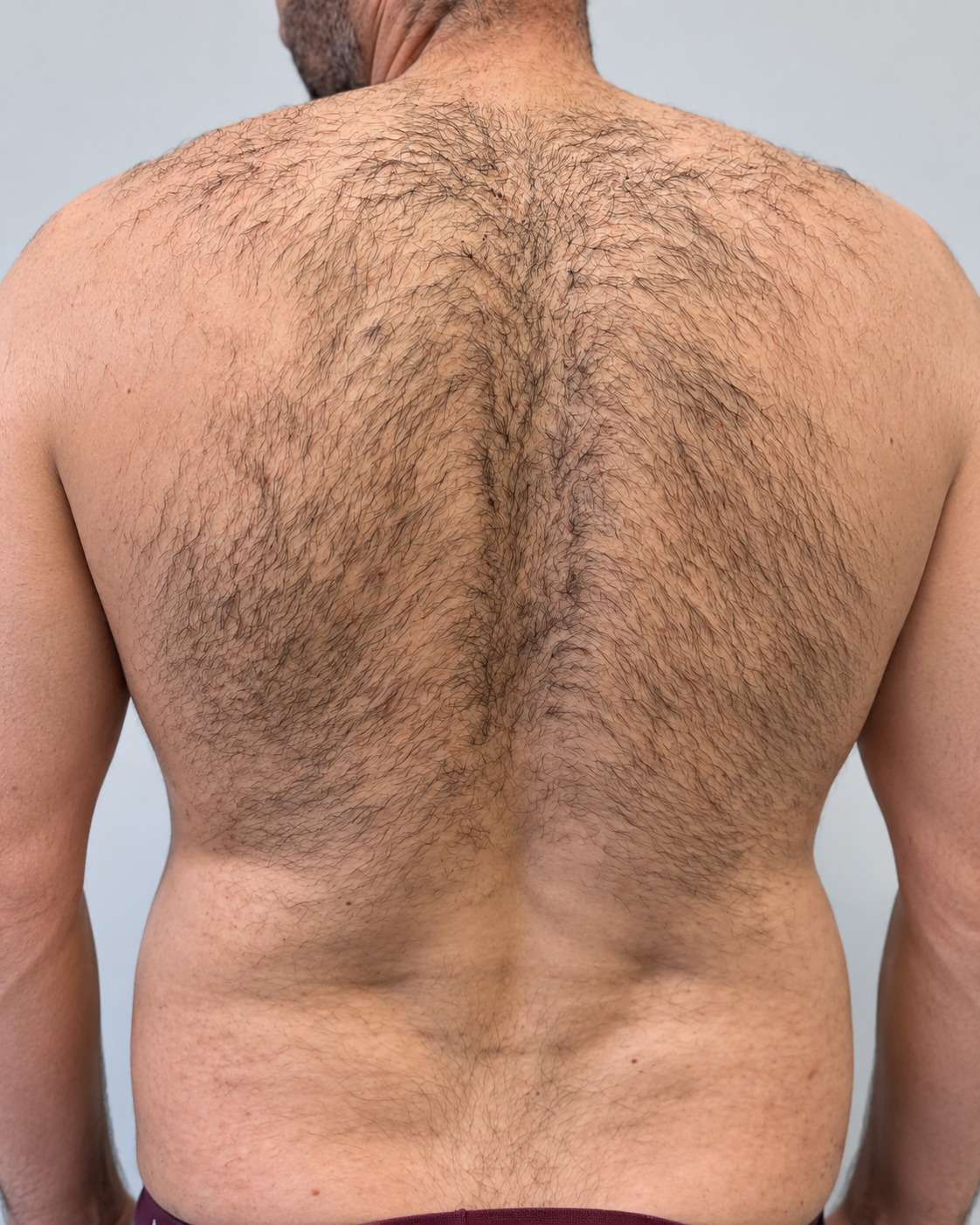 Before
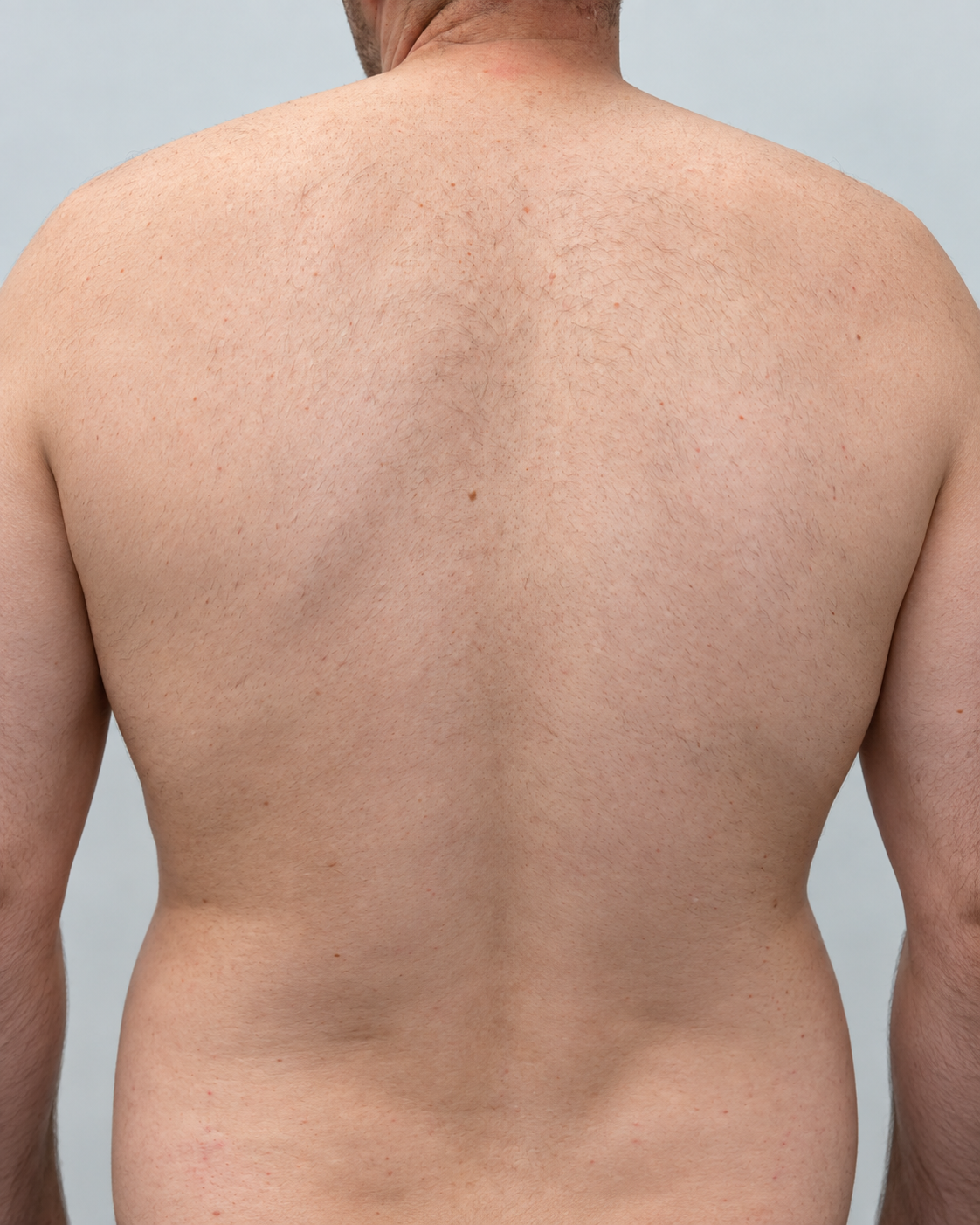 After
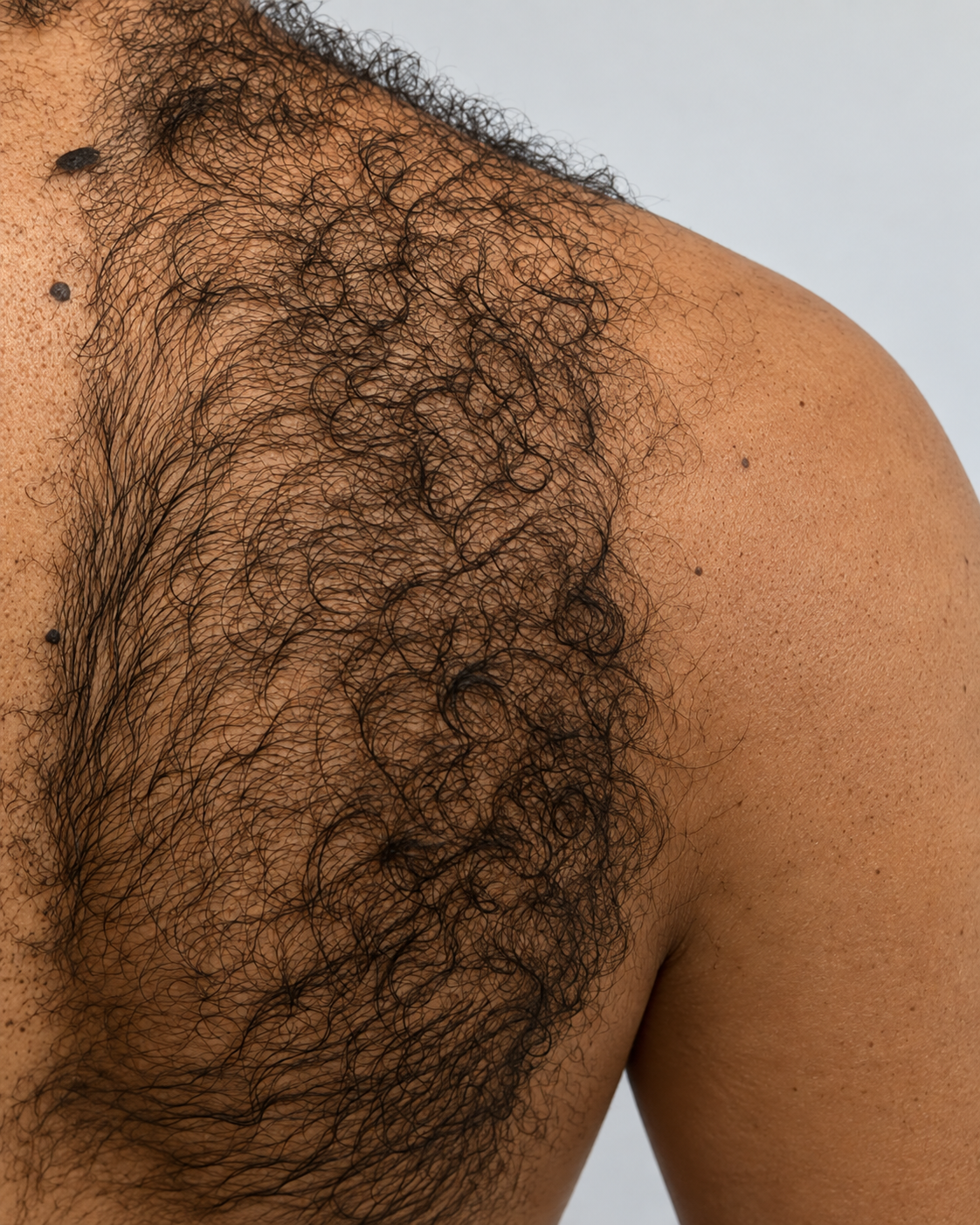 Before
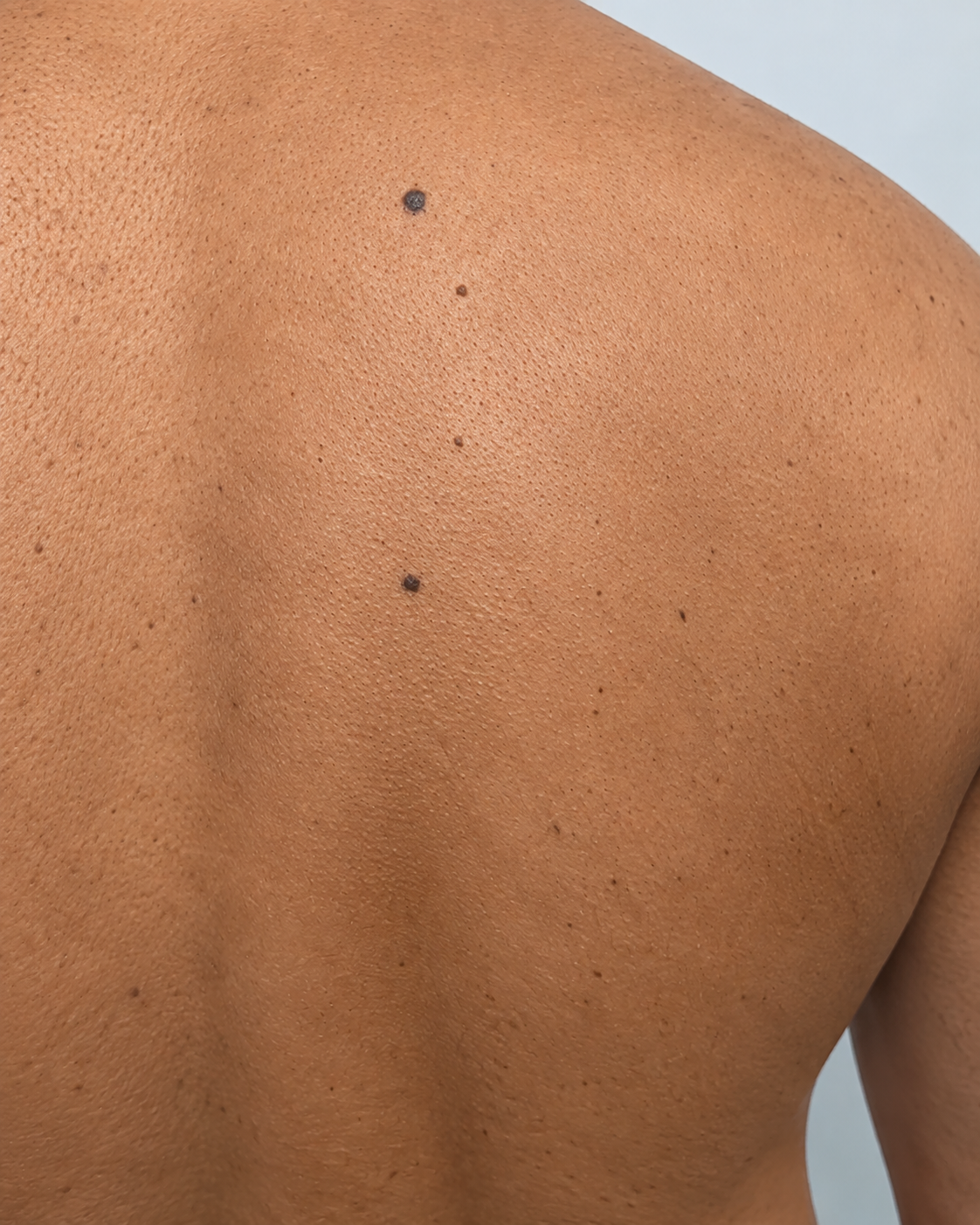 After
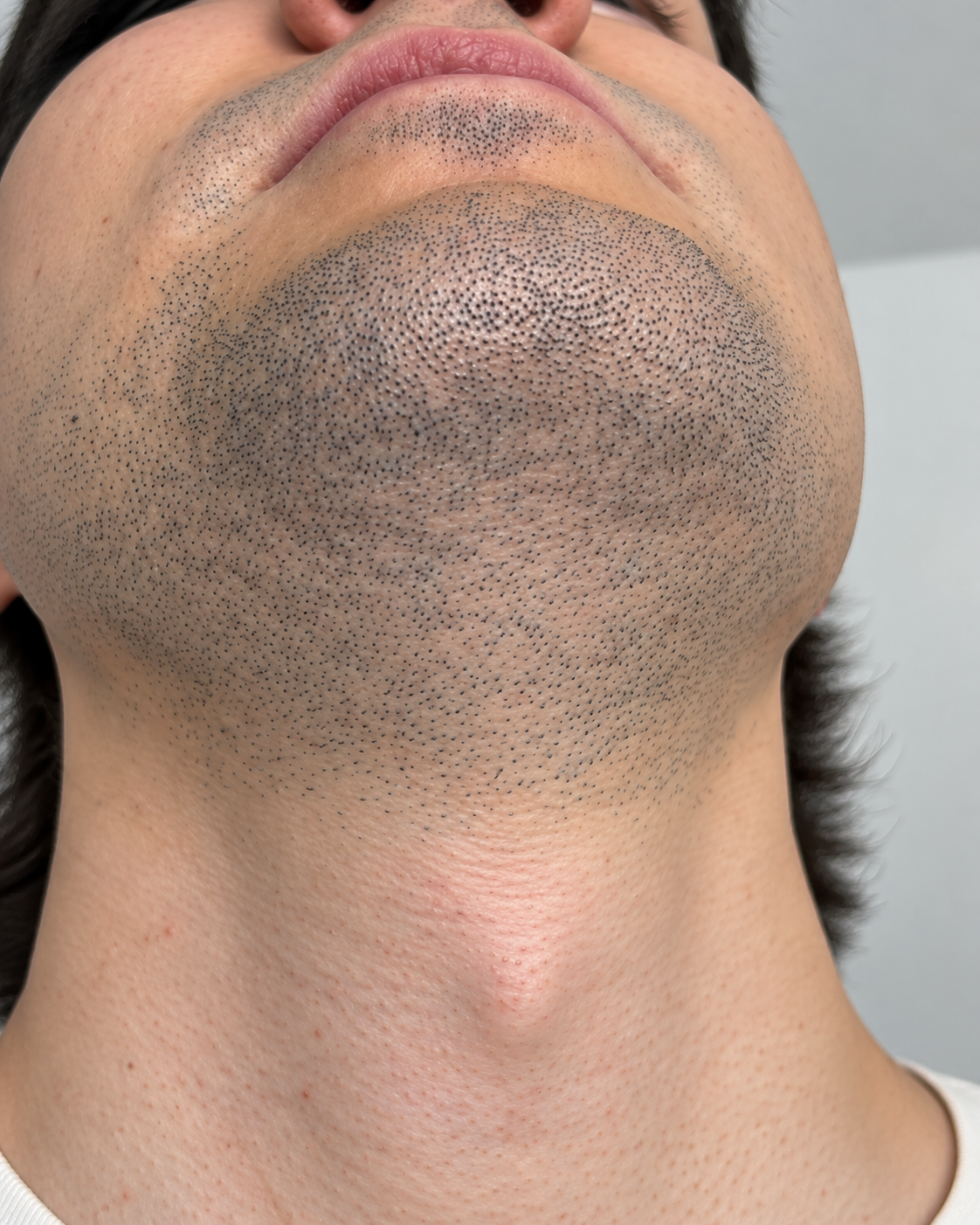 Before
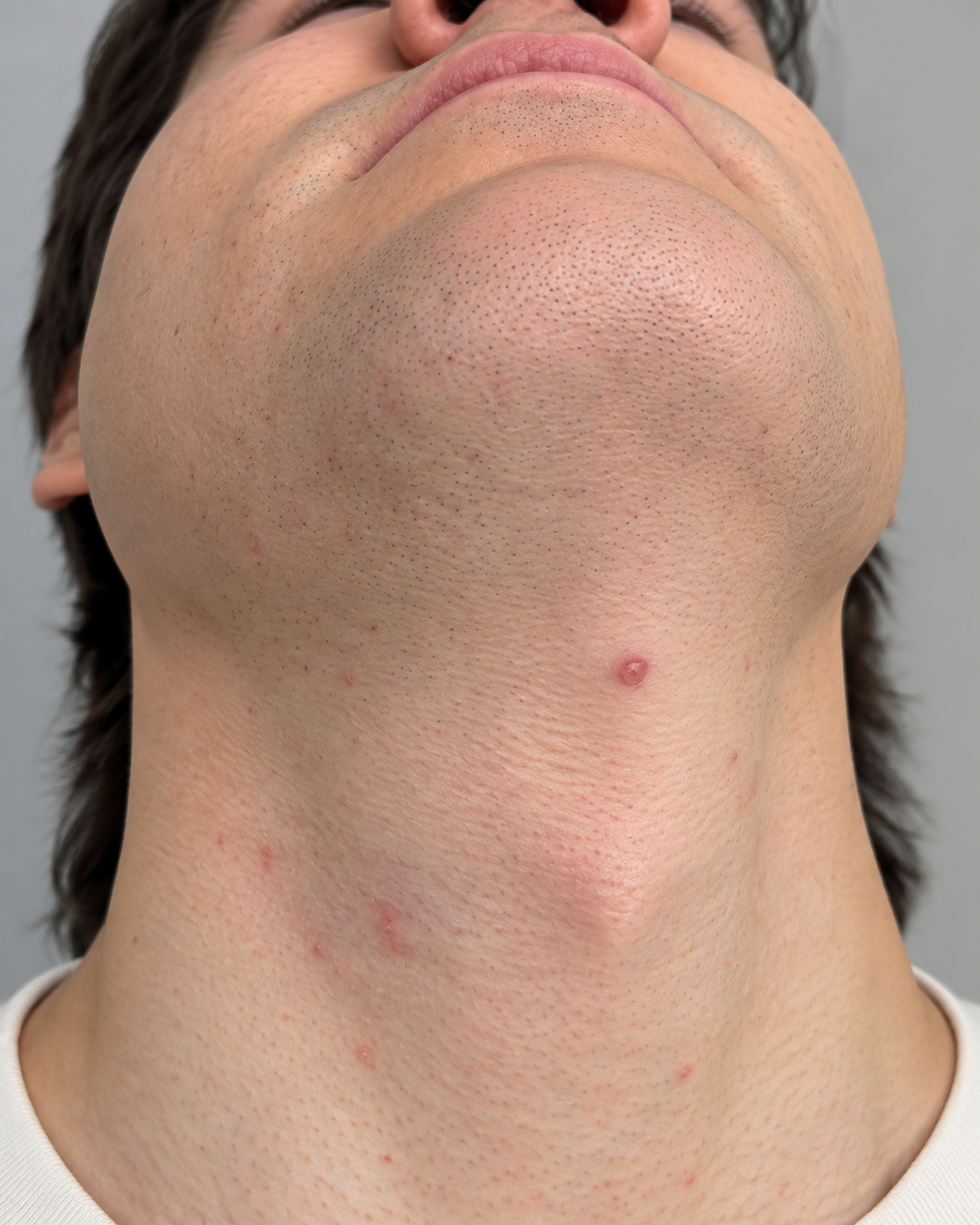 After
Beard, cheek line and neck — the area that needs a decision first
Beard work is the men’s request that most often goes wrong, and it goes wrong for one reason: it gets treated as a tidy-up when it is actually permanent. The shape you choose now is the shape you keep.
Decide what you want in five years
Beard fashions move. A cheek line lasered high in your twenties does not grow back if you want a fuller beard in your thirties. We map the line with you, photograph it, and treat conservatively below it so the style can still change.
The neck is the safe, high-value part
Almost nobody regrets clearing below the jawline. It is where shaving irritation lives and it is not part of any beard shape. If you shave daily and want one area treated, this is usually it.
Full beard removal is a considered decision
We will do it, but not on a first visit and not quickly. It needs a longer conversation, written consent about permanence, and a plan that clears evenly — partially cleared beard hair looks worse than either extreme.
Beard shadow is a different goal
Some men want the dark shadow softened rather than the hair gone, so the jaw reads cleaner after shaving. That is a density-reduction plan with a deliberate endpoint, and it is a goal we will plan for rather than talk you out of.
Why we do not treat faces timidly
In a small number of cases, low-dose treatment at the feathered edge of a treated area stimulates fine hair instead of reducing it — most often on the cheeks, jaw and neck. It is uncommon and manageable, and it is the reason facial settings are set properly rather than cautiously blended into untreated skin.
Razor bumps, ingrown hairs and shaving rash
A large share of the men we treat did not arrive wanting less hair. They arrived because their neck breaks out every time they shave, and they have already tried every razor, oil and single-blade technique going.
Where laser genuinely helps
- Curved hairs re-entering the skin after shaving, producing red tender bumps on the neck and jaw
- Shaving closer making it worse rather than better, because a sharper tip cut below the surface curls back in more easily
- Curly or tightly coiled hair, where fewer and finer hairs means far fewer left to curl back in
- Fitzpatrick IV to VI, where the dark marks left behind last far longer than the bump itself did
- Neck hair that grows in swirls, so there is no shaving direction that works everywhere
- Men who have stopped shaving properly because of the reaction it causes
What we settle first
- Actively inflamed or infected skin — lasering angry skin trades a shaving rash for a pigment problem
- Dark marks left by old bumps, which are post-inflammatory pigmentation rather than scars and are treated once the hair side is under control
- Bumps in the armpits or groin that are recurrent, painful and leaving tunnels or scarring — that pattern can be hidradenitis suppurativa, which needs a GP rather than a laser course
- Breakouts that are acne on the neck and jaw rather than ingrown hairs, which need treating as acne
- Skin currently being over-treated at home with strong acids or scrubs, which usually has to come down before we start
How many sessions men actually need
Laser only affects hair that is in its active growing phase on the day, and only a share of your follicles are in that phase at any one time. That is why courses exist and why the interval between sessions is not arbitrary.
Every 6 to 8 weeks, stretching out later in the course. The most requested male area and the one most likely to want an annual top-up afterwards.
Every 6 to 8 weeks. Hair here is strongly androgen-driven, so maintenance is more likely than on the legs or arms.
Every 4 to 6 weeks — facial hair cycles faster than body hair, so the intervals are shorter.
Every 4 to 6 weeks, with the line agreed and photographed before the first session.
Every 6 to 8 weeks. Long appointments, and usually better value taken as a full-leg course.
Every 6 weeks. Small area, high density, quick sessions.
Every 6 weeks, with draping and consent handled at the consultation rather than on the day.
Normal on back, chest and beard. That is the treatment working as intended rather than failing.
The rules that decide whether your course works
Most disappointing courses are not a device problem. They are a gap between sessions filled with waxing, sunbeds and a two-week holiday nobody mentioned.
Do
- Shave the area closely the day before or the morning of each session — the laser needs the hair in the follicle, not above the skin
- Shave as much as you like between sessions; shaving does not remove the root
- Daily broad-spectrum SPF 50 on anything exposed, especially shoulders, neck and forearms
- Exfoliate gently from a few days after each session to help the shedding hairs out
- Keep your intervals — a course stretched over two years by missed appointments works far less well
- Tell us about new medication, a new tattoo or a holiday before the session rather than during it
Do not
- No waxing, plucking, threading or epilating for four weeks before a session — those remove the target
- No sunbeds, deliberate sun or fake tan for two weeks either side
- No gym, sauna, steam room, swimming or hot baths for 48 hours afterwards
- No strong acids or retinoids on the treated area for a few days either side
- No shaving an area raw on the morning of a session — close, not bleeding
- No treatment over a tattoo, and none while you are on isotretinoin or recently finished
Why clients trust Dermacy Clinic for laser hair removal
Comfort, honest guidance and visible treatment progress are the themes clients mention most. Read the strongest laser-related feedback before choosing your consultation.
“She made me feel very comfortable and I can't wait to continue with treatment and see the results.”
A strong first-hand account of the consultation experience, personal comfort and confidence to continue with treatment.
View review source“Saw great results by my 2nd session.”
“Very happy with my results!”
“Laser is also very effective after third treatment.”
Reported improvement in ingrown hairs and confidence, and valued the guidance provided throughout treatment.
These laser-related highlights are selected from Dermacy Clinic review content for relevance. Visit Google to read the current profile and full customer feedback.
Laser hair removal for clients within around 30 miles of Armthorpe
Doncaster remains the clinic’s main location. This guide helps clients from nearby South Yorkshire, Nottinghamshire and Lincolnshire towns decide whether the journey is practical before booking.
Armthorpe, Doncaster, Edenthorpe, Cantley, Bessacarr, Rossington, Bentley, Kirk Sandall, Hatfield and Stainforth.
Tickhill, Bawtry, Thorne, Maltby, Dinnington, Rotherham and Worksop.
Gainsborough, Sheffield, Retford, Epworth and selected North Lincolnshire communities.
Laser hair removal near Maltby
A practical option for clients searching for laser hair removal near Maltby who prefer a consultation-led clinic with transparent prices and course offers.
Laser hair removal near Rotherham
Dermacy Clinic welcomes clients travelling from Rotherham for ice diode laser hair removal, consultations and personalised treatment planning.
Laser hair removal near Worksop
Clients looking for laser hair removal near Worksop can compare current prices online and calculate course costs before travelling.
Laser hair removal near Gainsborough
The Armthorpe clinic is accessible for clients travelling from Gainsborough who want triple-wavelength ice laser technology and clear consultation advice.
Laser hair removal near Sheffield
The clinic also receives enquiries from Sheffield clients comparing ice laser hair removal technology, comfort, course prices and visible results.
Laser hair removal near Bawtry & Tickhill
Bawtry and Tickhill clients can reach the Armthorpe clinic without travelling into a large city-centre treatment environment.
Check suitability before making the journey
Send the areas you want treated and your location. The clinic can confirm the most appropriate first appointment and current campaign terms before you travel.
Travel times vary by route and traffic. All appointments take place at Dermacy Clinic in Armthorpe.
When Dermacy Clinic may — and may not — be the right choice
Dermacy Clinic may suit clients who want transparent pricing, individual assessment and an Armthorpe alternative to a large city-centre chain. Final suitability is confirmed by the practitioner.
This clinic may be a suitable option if you
- Want consultation-led laser hair removal in or near Doncaster.
- Prefer separate women’s and men’s treatment menus.
- Want visible single-session prices before booking.
- Are comparing triple-wavelength ice diode systems.
- Have Fitzpatrick skin type I–VI and want individual settings assessed.
- Have suitable dark, pigmented facial or body hair.
- Live within approximately 30 miles of Armthorpe.
Laser treatment may not be suitable if you
- Expect guaranteed permanent removal of every hair.
- Require treatment to be completely painless.
- Want to treat white, grey, very light blonde or some red hair.
- Have recently tanned or used fake tan on the area.
- Have an active infection, broken skin or uncontrolled skin condition.
- Take medication that may increase light sensitivity or affect healing.
- Are pregnant; treatment is normally postponed during pregnancy.
Laser hair removal for light, medium and dark skin tones
Dermacy Clinic supports assessment across the full Fitzpatrick I–VI matrix. This means every skin type can be considered; it does not mean every individual is automatically suitable.
Lighter skin tones
Dark hair may provide clearer contrast against lighter skin. Current tanning, sensitivity and hair pigment still determine the treatment plan.
Medium and olive skin tones
Settings are selected according to current skin tone, tanning history, hair characteristics and the area being treated.
Darker skin tones
Darker skin can be assessed using an appropriate wavelength and setting strategy. Extra care is required because skin melanin can increase the risk of burns, irritation or pigment change when treatment is unsuitable or settings are inappropriate.
Dark hair usually responds best
Laser energy relies on pigment within the hair. White, grey, very light blonde and some red hair may contain too little melanin for reliable targeting.
Tanning and medication matter
Natural tan, sunbeds, fake tan, photosensitising medication and active skin conditions can affect timing, settings or suitability.
Consultation and patch testing
The treating practitioner confirms whether treatment can proceed and whether a patch test is required before a full appointment.
Dermacy Clinic assesses Fitzpatrick skin types I–VI, but treatment is only confirmed when the skin, hair, medical history and recent exposure factors indicate that laser treatment is appropriate.
Ice diode laser and long-term hair reduction
These are common questions from Doncaster clients. The answers explain the technology, comfort and realistic long-term reduction without guaranteed claims.
What technology is used for treatment?
The system combines 755, 810 and 1064 nm wavelengths with integrated cooling. Settings are selected individually after consultation rather than using one standard setting for every client.
Is the treatment painless or pain free?
Integrated cooling is designed to support comfort, but sensation varies by person, treatment area, hair density and settings. The treatment should not be presented as completely painless.
Is laser hair removal permanent?
The medically responsible description is long-term hair reduction. Complete permanent removal cannot be guaranteed, and some clients may need maintenance sessions.
Plan and book your treatment directly with us
Use Dermacy Clinic’s own website to explore treatments, review prices, ask a question and complete your booking without leaving the site.
Five clear steps from assessment to aftercare
A predictable process helps new clients feel informed before their first appointment.
Consultation
Discuss the treatment area, skin history, hair pattern, medication and your goals.
Skin and hair assessment
Your current Fitzpatrick type, hair pigment, hair density, tanning and medical history are reviewed.
Patch test
A small test area may be used before the first full treatment where appropriate.
Treatment
The area is prepared and treated systematically using individual device settings.
Aftercare
You receive practical guidance and a proposed interval for your next appointment.
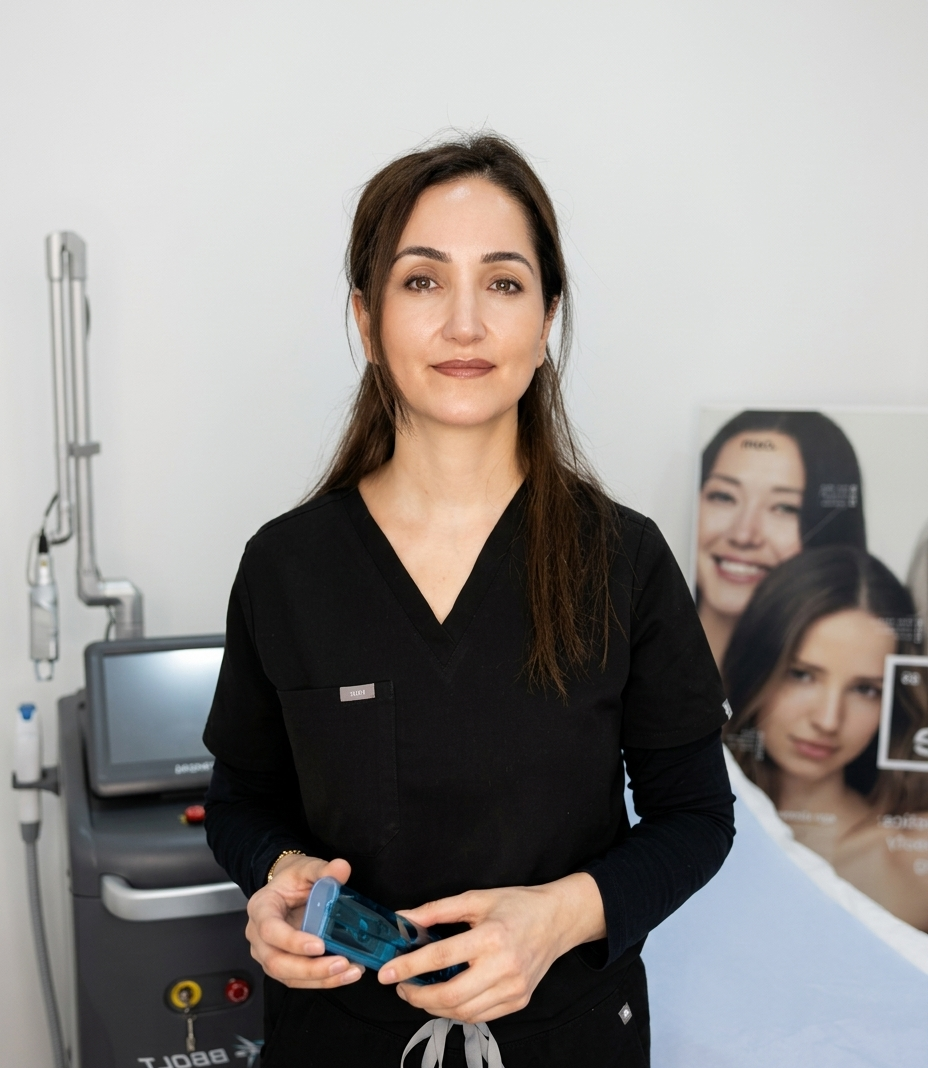
Triple-wavelength 755 / 810 / 1064 nm ice diode laser
Dermacy Clinic uses triple-wavelength ice diode technology combining 755, 810 and 1064 nm with integrated cooling. These are the wavelengths many clients recognise when searching for Soprano Ice; the practitioner still selects settings individually after reviewing skin tone, Fitzpatrick type, hair pigment, hair density, treatment area, recent sun exposure and medical history.
Often associated with more superficial targeting and suitable pigmented hair characteristics.
A commonly used diode wavelength intended to balance penetration and follicle targeting.
A deeper-penetrating wavelength that may be considered when planning treatment for darker skin types and deeper follicles.
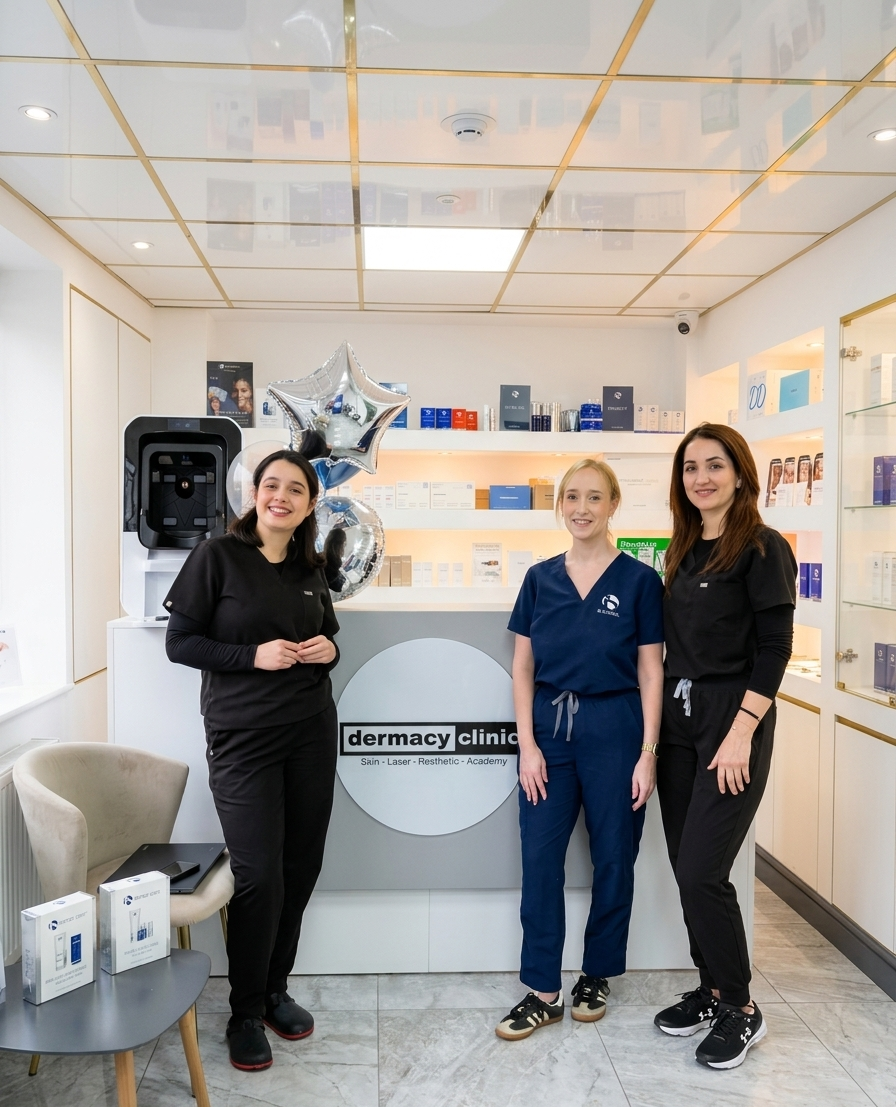
Consultation-led care supported by more than 15 years of experience
Dermacy Clinic · Armthorpe, Doncaster
Dermacy Clinic has more than 15 years of experience. The clinic’s founder has a critical-care nursing background and experience in complication management.
This background supports structured medical-history assessment, risk awareness, informed consent, personalised treatment planning, aftercare and appropriate escalation when a reaction requires further attention. It does not remove the need for individual assessment and does not guarantee that every client will be suitable.
Clear information before you book
Risks should be visible and readable rather than hidden in small print.
Common temporary effects
- Redness around treated follicles
- Warmth or mild tenderness
- Temporary swelling or itching
- Dryness as the skin settles
Less common risks
- Blistering or crusting
- Temporary pigment changes
- Prolonged irritation
- Rare scarring or texture changes
Contact the clinic if
- Pain or redness is increasing
- You notice blistering or broken skin
- You develop an unexpected pigment change
- You are worried about any reaction
Natural-language answers before booking
Each answer begins with a direct statement and then adds the qualification needed for safe, realistic decision-making.
Ask a QuestionWhere can men get laser hair removal in Doncaster?
Does laser hair removal work on men?
How much does laser hair removal cost for men in Doncaster?
Why are men’s prices different from women’s?
How many sessions will I need?
Is it painful?
Do I need a patch test if I have had laser before?
Should I shave or wax before my appointment?
Will it work on grey or blond chest hair?
Can you treat my back if I have a tattoo on it?
I have deeper skin. Will you treat me?
Will laser get rid of my razor bumps?
Can I have just my neck done and keep my beard?
What if I want a fuller beard in a few years?
Can laser make facial hair grow more?
Is it permanent?
Can I go to the gym afterwards?
Will it help with sweating and odour?
Do you treat intimate areas for men?
Can you laser inside my nose or ears?
Can I have treatment if I am on medication?
How long does a session take?

Visit Dermacy Clinic in Armthorpe, Doncaster
Park View, Church StreetArmthorpe, Doncaster
DN3 3AG
Sunday closed
Check current appointment availability online before travelling.
Start with a personalised laser consultation
Choose a consultation through Dermacy Booking. Your practitioner will review your goals, treatment areas, Fitzpatrick skin type, hair characteristics, medical history and expected course before confirming treatment.
No guaranteed outcome. No one-size-fits-all settings. No pressure to proceed.