A dermatologist is a medical doctor who diagnoses and treats skin disease. An aesthetician, often called a skin therapist or beauty therapist in the UK, works on skin appearance and maintenance, usually through facials, peels and similar non-medical treatments. If you have a rash that will not settle, a mole that has changed, or a skin problem you cannot name, start with your GP or a dermatologist. If your skin is healthy and you want help with texture, glow or routine care, a trained skin professional is the right call.
The lines are less tidy than that in practice, because UK job titles are loosely used. This guide explains what each role means here, how to check who is treating you, and how the two can work side by side.
TL;DR
- A dermatologist is a medically qualified specialist who diagnoses and treats skin, hair and nail disease. An aesthetician or skin therapist focuses on appearance, maintenance and non-medical treatments.
- New, changing, bleeding or painful skin lesions, persistent rashes and a diagnosis you are unsure about belong with your GP or a dermatologist, not a facial.
- In the UK, “aesthetician” and “skin clinic” are not protected medical titles, so check registration and training rather than trusting the name.
- Injectables and other prescription-only treatments should be carried out by a suitably qualified medical professional.
- Outcomes vary, and the right person for you depends on what is going on with your skin.
Table of Contents
- What a dermatologist does
- What an aesthetician or skin therapist does
- The key differences at a glance
- Which one for your skin concern?
- Dermatologist versus aesthetic clinic or skin clinic
- How to check who is treating you
- How the two roles work together
- Where Dermacy Clinic fits
- Treatments where the distinction matters most
- Questions to ask at a consultation
- FAQ
- Sources
What a dermatologist does
A consultant dermatologist is a medically qualified practitioner who specialises in diagnosing and treating skin disease. The British Association of Dermatologists (BAD) says dermatologists treat more than 2,000 hair, skin and nail diseases, including acne, eczema, psoriasis and skin cancer.
The NHS careers service describes the practical side: dermatologists may perform diagnostic biopsies for rashes, remove skin cancers, investigate contact dermatitis and provide UV light therapy for inflammatory skin conditions. In other words, the job is medical: working out what a condition is, then treating it, sometimes with prescription medicines or minor surgery.
How long dermatologists train
The route is long. According to BAD, a consultant dermatologist completes five or six years of medical school, two years of foundation training, two years of internal medicine training, then four years of dermatology specialty training, with postgraduate exams along the way. That is the depth of training behind the title “consultant dermatologist”.
What this means for your appointment
On the NHS you are usually referred by your GP. Privately, you can often book directly, but many dermatologists still prefer to know your history. Either way, expect questions about when the problem started, what you have tried, family history and medicines. The aim is a diagnosis and a plan, not a cosmetic result.
What an aesthetician or skin therapist does
In the UK, the term “aesthetician” (a US word) usually means a trained beauty or skin therapist. A UK national magazine’s guide describes them as trained beauty therapists who can safely provide facials, light to medium chemical peels, microneedling and some laser or light-based procedures if they have the right training and work within their qualifications and insurance.
Typical work includes:
- Skin consultations and routine skincare advice
- Facials and exfoliation, including HydraFacial-style treatments
- Light to medium superficial peels
- Microneedling
- Laser hair removal, where the practitioner is trained for the device
The focus is how skin looks and feels: congestion, dullness, uneven tone, fine lines, unwanted hair. A good skin therapist will also recognise when something is outside their remit and send you elsewhere.
What they do not do
A skin therapist does not diagnose disease. Under the Joint Council for Cosmetic Practitioners (JCCP) definitions, only designated registered healthcare professionals can determine whether a consultation or procedure is medical, and they should assess the patient and produce a written diagnosis and care plan. That is a clear dividing line: if you need a diagnosis, you need a registered healthcare professional.
The key differences at a glance
| Dermatologist | Aesthetician or skin therapist | |
|---|---|---|
| Background | Medical degree plus specialist training | Beauty or skin therapy qualifications, plus training for each treatment |
| Diagnoses skin disease | Yes | No |
| Prescribes medicines | Yes, where appropriate | No |
| Typical concerns | Persistent acne, eczema, psoriasis, suspicious lesions, rashes | Skin maintenance, texture, glow, hair removal, surface-level concerns |
| Typical treatments | Medical treatments, biopsies, minor surgery, prescription therapies | Facials, superficial peels, microneedling, some light-based treatments |
| How to check | GMC register (Specialist Register for dermatology) | Training certificates, insurance, voluntary registers, professional association |
The table is a general guide. Individual practitioners differ, and some people hold more than one qualification.
Which one for your skin concern?
The NHS and professional bodies do not give one rule for every case, but the sensible split is by purpose: diagnosis and medical treatment on one side, appearance and maintenance on the other. A national guide advises seeing a dermatologist for persistent acne, rosacea, eczema, pigmentation, unexplained rashes or scarring, or if you need a diagnosis, and notes that aestheticians can provide maintenance and surface improvement for mild concerns.
Start with your GP or a dermatologist if
- A mole or spot is new, changing shape or colour, bleeding, crusting or not healing
- You have a rash that is painful, spreading, blistering or keeps returning
- Acne is leaving scars, is painful and deep, or has not responded to over-the-counter products
- Your face is persistently red, flushed or bumpy and you do not know why
- A patch of pigmentation is new, uneven, darkening or has appeared suddenly
- You are losing hair in patches or notice sudden thinning
- You are unsure what a skin problem is
These are not situations to book a treatment first. A skin professional who is asked about any of them should send you to your GP. If you are worried about a mole or lesion, contact your GP promptly rather than waiting for a routine appointment.
A skin therapist can be a sensible choice if
- Your skin is healthy but dull, congested or uneven
- You want a regular facial or a superficial peel
- You want advice on a skincare routine
- You are interested in microneedling or laser hair removal and have no medical reason to avoid them
- You have mild, stable concerns that a doctor has already assessed
Pigmentation and acne sit in the middle
Both are common reasons for booking a clinic, and both can have medical causes or triggers. Pigmentation can follow sun exposure, hormonal change, inflammation or certain medicines, and a sudden or irregular dark patch should be checked by a doctor first. If you want to understand what sun damage is and what can be treated, our guide to sun damage on the face covers what to check before booking. For breakouts, our explainer on what causes adult acne sets out the options, and where a medical route is the better one.
Dermatologist versus aesthetic clinic or skin clinic
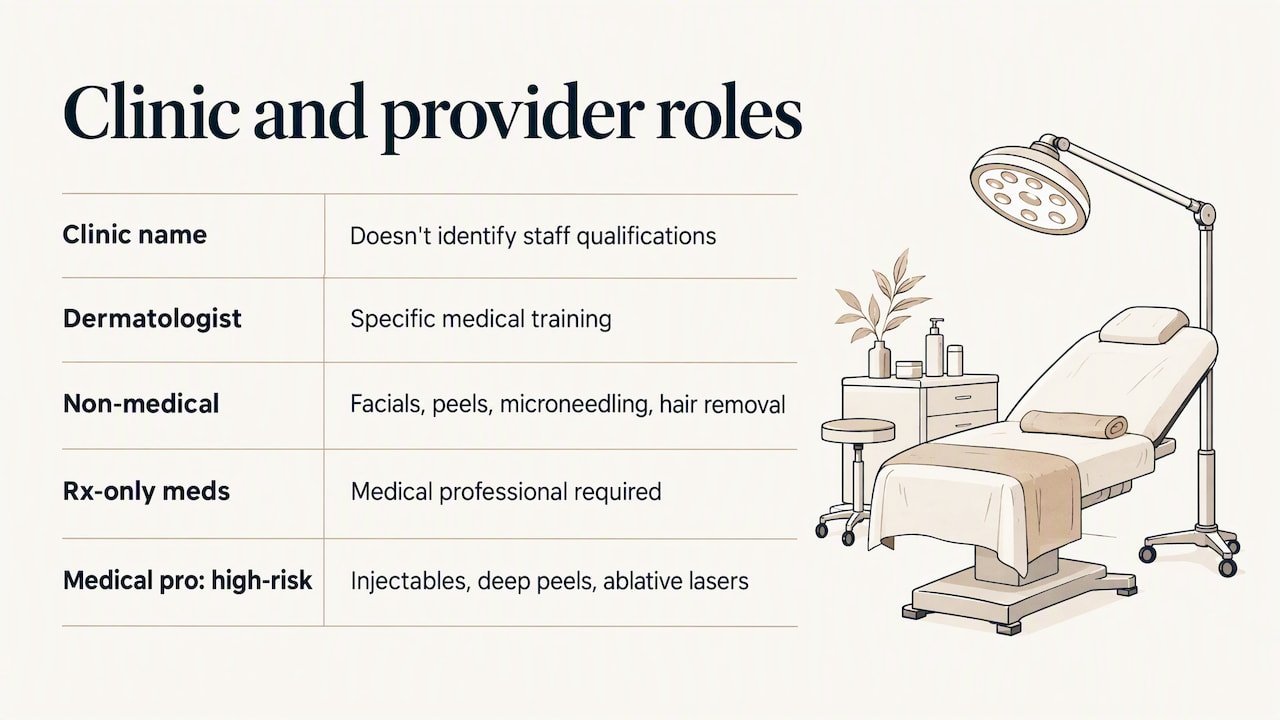
This is where people get confused. “Dermatologist” refers to a person with specific medical training. “Skin clinic” and “aesthetic clinic” describe a business, and the name says nothing about who works there. One clinic may be staffed by doctors, another by nurses, another by skin and laser therapists, and some by a mix.
So the useful question is not what the clinic is called but who will assess you and who will treat you. A clinic can legitimately offer non-medical treatments such as facials, superficial peels, microneedling and laser hair removal. Treatments that involve prescription-only medicines are a different matter. The same national guide says that those, along with higher-risk procedures such as injectables, deeper chemical peels and ablative lasers, should be performed by a qualified medical professional.
What BAD says about cosmetic treatments
The BAD patient information on cosmetic dermatology says treatments are best performed by trained consultant dermatologists, but also says that other medical or non-medical practitioners with the correct training may also perform them. The point is training and accountability, not only the job title.
Why training standards matter
Cosmetic procedure training has been uneven in the UK. Health Education England developed qualification requirements to improve and standardise cosmetic-procedure training across practitioners from different backgrounds, with patient safety in mind. That is another reason to ask specific questions about the person in front of you.
How to check who is treating you
You do not need to take anyone’s word for it. The NHS advises checking a doctor or surgeon on the GMC online register. It adds that other practitioners may be listed on voluntary registers accredited by the Professional Standards Authority, such as JCCP or Save Face, and that professional associations also set standards for members.
A short checklist before you book
- Ask who will carry out the treatment and what their qualifications are for that specific treatment.
- Check the register. For a doctor, look them up on the GMC register. For a dermatologist, look for the specialist listing rather than relying on the word alone.
- Ask about insurance and what happens if something goes wrong.
- Ask who is responsible for medical oversight when a treatment involves prescription medicines or higher risk.
- Expect a proper consultation covering your medical history, medicines, allergies and realistic outcomes, before any treatment.
- Ask about aftercare and follow-up, including how to contact the clinic if you have a concern.
- Be wary of pressure to book on the spot or buy a course before you have been assessed.
For surgical procedures, the NHS notes that independent hospitals and clinics providing cosmetic surgery in England must be registered with the Care Quality Commission. Non-surgical treatments such as facials are different, which is why checking the practitioner matters even more.
How the two roles work together
The choice is rarely either/or. If a dermatologist treats acne or pigmentation medically, a skin therapist may later help with maintenance, such as gentle exfoliation and sun protection advice, when your doctor agrees it is suitable. The reverse also happens: a skin therapist notices something unusual and suggests you see your GP. For some borderline treatments, an aesthetician may work with oversight from a doctor and a medical team who can support them if problems arise.
A sensible pattern for many adults:
- If something looks or feels wrong, get it checked by a GP or dermatologist first.
- Follow any medical advice, including what to avoid while on treatment.
- Once your skin is stable and you have been told it is suitable, use a skin professional for maintenance or appearance goals.
- Tell every practitioner about every treatment and medicine you use.
Where Dermacy Clinic fits
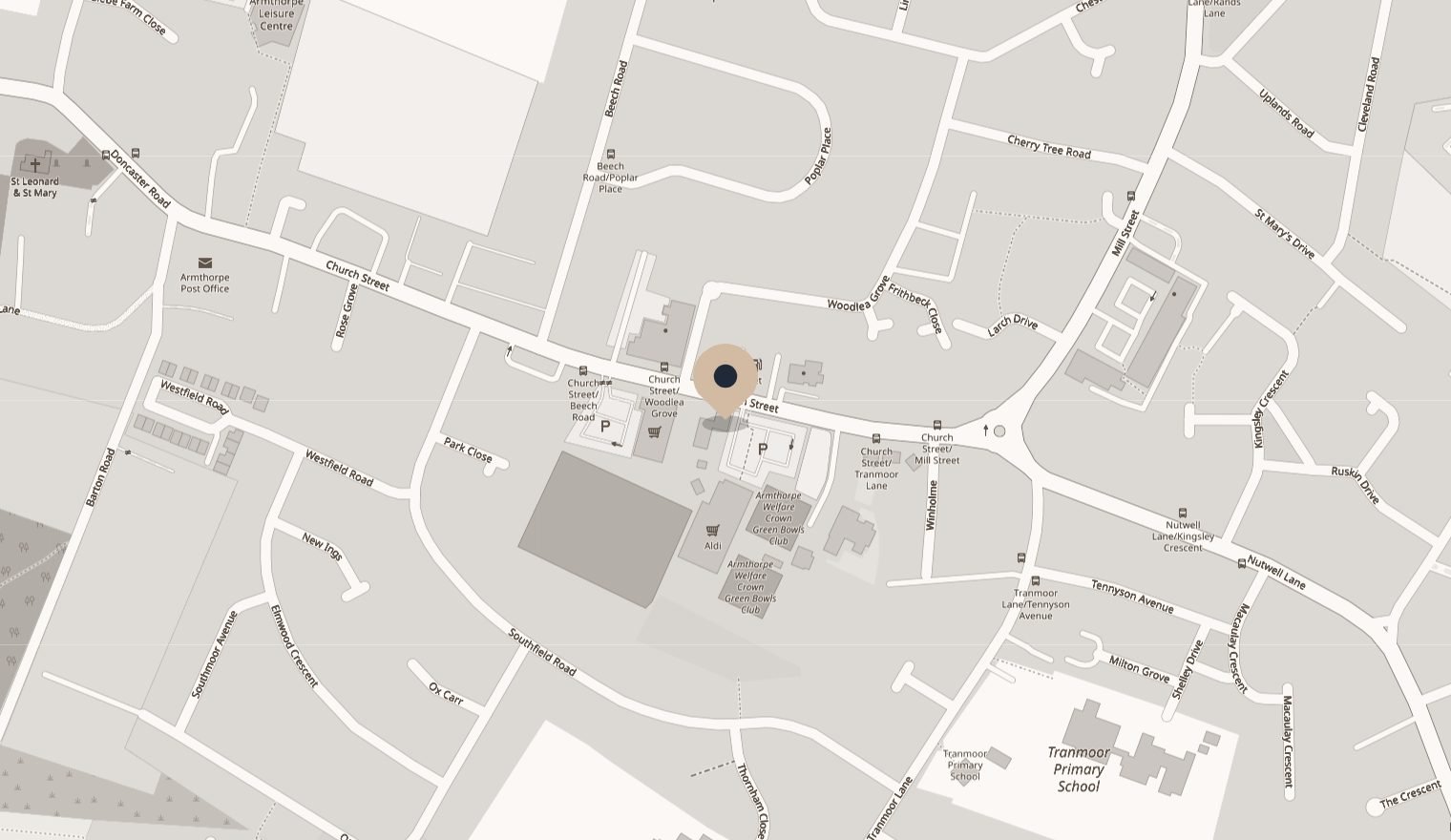
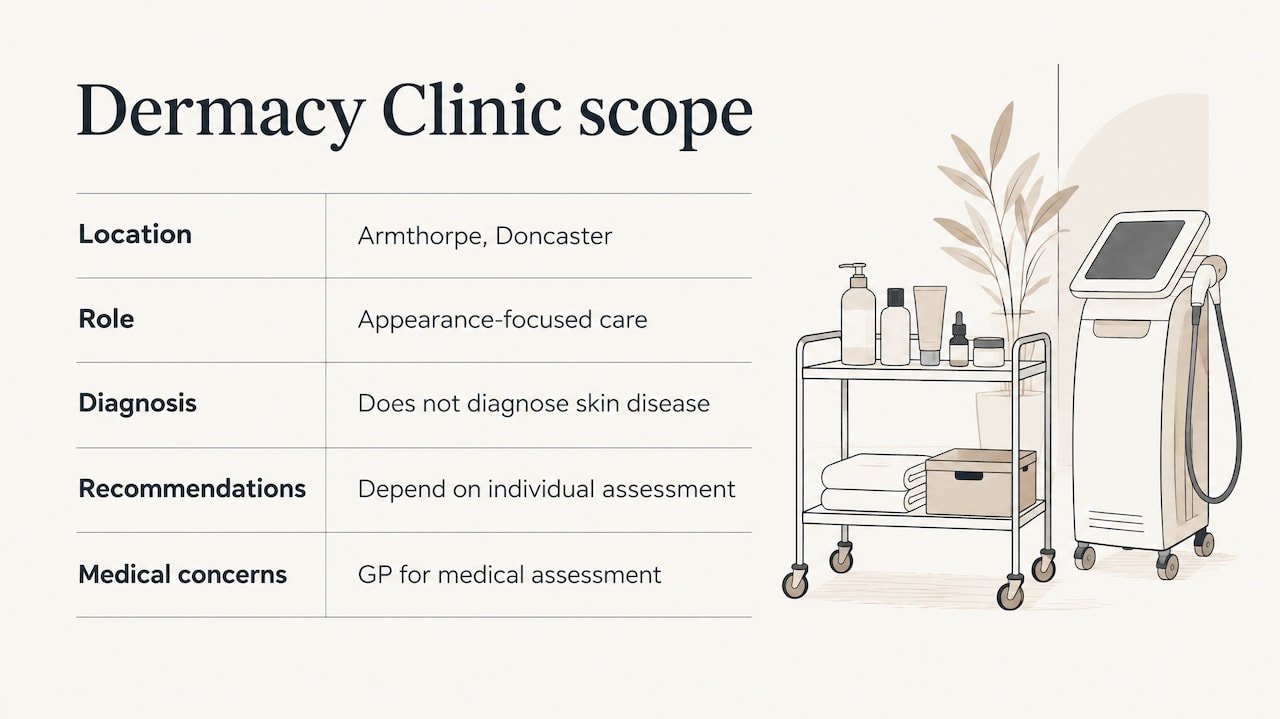
Dermacy Clinic is a skin, laser and aesthetic clinic in Armthorpe, Doncaster. It is not a substitute for a GP or a dermatologist, and it does not diagnose skin disease. Its role is appearance-focused care: consultations, treatments such as HydraFacial, laser hair removal, microneedling and pigmentation programmes, and advice on what is and is not suitable for you. Recommendations depend on individual assessment, and results vary.
If you are unsure whether your concern is cosmetic or medical, the sensible step is to talk it through before any treatment is booked. You can contact Dermacy Clinic for current service details and booking, and you can browse the treatments available in Doncaster to see what each one is for. If a concern needs medical assessment, the right next step is your GP.
Treatments where the distinction matters most
A few examples show how the line falls in practice.
Facials and superficial peels
These are surface treatments aimed at tone, texture and hydration. They are typical skin therapy work. Even so, a patch test or consultation should come first, and active skin conditions such as flaring eczema or infected spots are usually a reason to wait or to see a doctor. For how facials differ, see our guide to the best facial treatments in Doncaster.
Microneedling
Microneedling creates tiny controlled skin injuries to prompt a healing response, and it is within the remit of suitably trained non-medical practitioners. It still has contraindications, such as active skin infections, so suitability should be assessed first. Our microneedling page explains what it involves.
Laser hair removal
Laser hair removal is a cosmetic treatment for reducing unwanted hair, and it does not promise permanent removal. It is a light-based treatment that needs a trained operator and a proper skin and hair assessment. If you are weighing it against other methods, read laser versus electrolysis.
Fillers, skin boosters and anti-wrinkle injections
These involve prescription-only medicines or injectable products and belong with an appropriately qualified medical professional. They are not skin therapist work. We explain the products on our dermal filler and skin boosters pages. Never buy injectables or injecting equipment to use on yourself, and never use a provider who will not tell you who is responsible for your treatment.
Pigmentation
Pigmentation sits across both worlds. A new, changing or irregular dark mark needs a medical opinion before cosmetic treatment. Established, stable, benign-looking pigmentation can be discussed with a skin professional, with an honest explanation of what a treatment may and may not achieve.
Questions to ask at a consultation
Whoever you see, a good consultation leaves you with answers. Bring these questions:
- What do you think is causing this, and who has the training to say so?
- Do I need to see my GP or a dermatologist before treatment?
- What are the risks, side effects and downtime for me specifically?
- What results are realistic, and what are the limits?
- What will it cost in total, including any follow-up?
- Who do I contact if I am worried afterwards?
A practitioner who answers plainly, admits what a treatment cannot do and is happy for you to take time to decide is worth more than a promise of dramatic results.
FAQ
Is an aesthetician the same as a dermatologist?
No. A dermatologist is a medical doctor who has completed specialist training in diagnosing and treating skin disease. An aesthetician or skin therapist is trained in non-medical skin treatments and does not diagnose conditions. The two can complement each other, but one does not replace the other.
Can a skin therapist treat acne or pigmentation?
They can help with surface-level concerns and skin maintenance, but they cannot diagnose the cause. Persistent or painful acne, scarring, and new or changing pigmentation should be assessed by your GP or a dermatologist first. After that, a skin therapist may support you if your doctor agrees it is suitable.
Is a skin clinic the same as seeing a dermatologist?
Not necessarily. A skin clinic is a business, and the name does not tell you who works there or how they are qualified. Ask who will assess and treat you, and check them on the relevant register, such as the GMC register for doctors.
Should I see my GP before a dermatologist?
On the NHS, yes: your GP usually refers you. Privately you may be able to book directly, but a GP is still the right first stop for anything new, changing or worrying. They can examine it and advise whether specialist care is needed.
Who should do injectables such as fillers?
Treatments involving prescription-only medicines or higher medical risk should be carried out by a qualified medical professional. Ask for their name and registration, and check it before you agree to treatment.
Sources
- Dermatology | Health Careers (NHS)
- Becoming a Dermatologist, British Association of Dermatologists
- Cosmetic Dermatology, BAD Patient Hub
- Choosing who will do your cosmetic procedure, NHS
- Medical, related or cosmetic definitions paper, JCCP (May 2021)
- Cosmetic procedure training requirements, Health Education England (2015)
- Aesthetician or dermatologist? Marie Claire UK
Recommended
- What Causes Adult Acne | Treatment Options Explained
- Laser Hair Removal Aftercare: What to Do and When to Call
- Best Facial Treatments for Glowing Skin in Doncaster
This article provides general information and is not a diagnosis or personalised medical advice. Treatment suitability, risks and expected outcomes require an individual consultation. Results vary.