Broken capillaries are tiny, permanently widened blood vessels near the skin’s surface. Creams and home routines will not remove them. The treatments that target them are light-based (laser or intense pulsed light, IPL), and they only make sense after someone qualified has looked at your skin and decided what the redness actually is. This guide explains what you are seeing, how it differs from flushing that fades, what treatment involves, and what to do next if you live in Armthorpe, Doncaster or elsewhere in South Yorkshire.
TL;DR
- Visible fine red or purple lines on the cheeks, nose or chin are usually widened vessels (telangiectasia), not a skin surface stain, so they do not rub off or fade with skincare alone.
- Redness that comes and goes with heat, alcohol or stress is a different pattern from vessels that stay visible, and it is worth having both looked at.
- Laser and IPL are the usual in-clinic approaches, working by targeting the blood in the vessel. Number of sessions and results vary from person to person.
- Vessels on the face can sit alongside rosacea, so an assessment matters before any treatment is chosen.
- Dermacy Clinic can talk through your skin at a consultation. Use the contact page for current service details and booking.
Table of Contents
- What broken capillaries actually are
- Visible vessels versus redness that comes and goes
- Why they appear
- What does not work
- How laser and IPL treat facial vessels
- How many sessions, and what to expect
- Broken capillaries on the nose
- When to get assessed first
- The NHS and cost question
- What to ask at a consultation
- Talking to Dermacy Clinic
- FAQ
- Sources
What broken capillaries actually are
“Broken capillaries” is a popular phrase rather than a medical one. In most cases the vessel is not literally broken. It has widened and stays visible through the skin. The clinical term is telangiectasia, and you may also hear “thread veins” or “spider veins” used for the same thing on the face.
They tend to look like fine red, pink or sometimes purplish lines, often branching, and they commonly appear:
- across and around the nose, especially the sides of the nostrils
- over the cheeks
- on the chin
- occasionally on the forehead or temples
The NHS notes that rosacea may cause tiny broken blood vessels to appear on the skin that do not go away. That is the key practical point: once a vessel stays visible, it generally does not return to invisible by itself.
On brown or black skin, redness can be harder to see, as NHS guidance on rosacea also points out. Vessels may look darker, more purple or brown-toned, or may be noticed more by touch of warmth than by colour. If you have deeper skin and suspect visible vessels, mention that at assessment so the practitioner can look carefully and choose a suitable approach.
Visible vessels versus redness that comes and goes
Many people use “broken capillaries” for any red face. It helps to separate three patterns, because they point to different conversations.
Transient flushing
The face goes pink or hot, then settles within minutes or hours. Common triggers listed by the NHS for rosacea include alcohol, spicy food, hot drinks, sunlight, hot or cold temperatures, aerobic exercise and stress. Flushing is a vessel response, not damage that is visible afterwards, though repeated flushing is often part of the story for people who go on to develop persistent vessels.
Persistent diffuse redness
A general red or pink tone across the central face that does not fade. Stinging or burning with water or skincare products can accompany it. This is the pattern where a rosacea assessment is most relevant, and it is not something to self-diagnose from a photo.
Discrete visible vessels
Individual fine lines you can trace with your eye, present all day regardless of temperature. These are what most people mean by broken capillaries, and they are the main target of vascular light treatments.
These patterns overlap. You can have all three at once. That is one reason the first step is a proper look at the skin, not a product or a treatment name.
Why they appear
No single cause explains every case, and nobody can tell you exactly why yours formed. Contributing factors that clinicians commonly discuss include:
- Rosacea. The NHS says it is not known what causes rosacea, but triggers can make symptoms worse. Persistent vessels are one of its features. The British Association of Dermatologists guideline on rosacea is the main UK clinical reference for how it is managed.
- Sun exposure. Long-term ultraviolet exposure is widely linked with visible vessels, especially on fair skin. The NHS lists sunlight as a rosacea trigger.
- Temperature swings. Moving repeatedly between cold outdoors and warm rooms, or very hot showers, can provoke flushing.
- Alcohol. Another listed trigger for flushing.
- Genetics and skin type. Thinner, fairer skin shows vessels more readily, and they often run in families.
- Skin trauma and some medicines. Aggressive scrubbing, repeated squeezing, or long use of certain products can irritate fragile skin. If you use prescribed topical steroids on the face, do not stop or change them without speaking to the prescriber.
A quick note on prevention: you cannot guarantee a vessel will never appear, but you can reduce the things that provoke flushing and strain fragile skin. Daily sun protection, gentle cleansing, avoiding very hot water on the face and keeping a note of your own triggers are the sensible habits. They protect what you have; they do not erase existing vessels.
What does not work
Most search results for this topic include lists of serums and routines. Here is the honest version. Fine vessels are structural, sitting below the skin surface, and a cream cannot close them. UK beauty journalism consulting dermatologists has made the same point: there are no topical hacks for removing telangiectasia.
That does not make skincare pointless. A calm routine can make your skin more comfortable and less reactive:
- a gentle, fragrance-light cleanser
- a simple moisturiser that supports the skin barrier
- a broad-spectrum SPF every day, which matters more than anything else you can buy
- avoiding harsh scrubs, strong acids and hot steam if your skin stings easily
The aim is to avoid making redness worse and to protect skin ahead of any treatment. Camouflage make-up can also cover vessels on the day, which is a perfectly valid choice for some people.
How laser and IPL treat facial vessels
The approach that dermatology bodies describe for visible facial vessels is light energy. The European Academy of Dermatology and Venereology (EADV) explains that laser and light-based devices can coagulate facial vessels while limiting damage to surrounding tissue when suitable wavelengths and pulse durations are used.
In plain terms:
- The light is absorbed by the blood (haemoglobin) inside the vessel.
- That heat damages the vessel wall so the vessel closes.
- The body then clears the treated vessel over the following weeks.
The two main families are:
| Laser | IPL | |
|---|---|---|
| Light type | A single, focused wavelength | A broad spectrum of light, filtered |
| Typical use | Targeted treatment of individual vessels | Wider redness and mixed concerns |
| Settings | Wavelength and pulse length chosen for vessel size and depth | Filters and energy chosen per skin type |
| Who suits it | Depends on skin tone, vessel size, tan and history | Depends on skin tone, tan and history |
Which is better is not a question with one answer. Vessel size, depth, colour, your skin tone, recent sun exposure and whether you have rosacea all affect the choice of device and settings. Treating tanned skin or very dark skin with the wrong light setting carries a higher risk of skin colour change or burns, which is exactly why a practitioner should assess first.
We do not want to over-promise here. Dermacy Clinic’s published treatment pages cover HydraFacial, laser hair removal, pigmentation programmes, peels, microneedling and consultations, and we do not list a vascular laser. If a vascular device is what you are looking for, ask the practitioner at consultation what is and is not offered, rather than assuming it is.
How many sessions, and what to expect
No honest source can give you a fixed number. Fine, isolated vessels on the nose may respond in fewer visits than widespread, deeper or recurring vessels on the cheeks. Some vessels clear well, some fade only partly, and some return. Results vary, and a practitioner who guarantees complete removal is overpromising.
What people typically describe, and what a practitioner should explain before you agree to anything:
- Sensation. Light treatment is commonly described as a snapping or stinging feeling. It is not painless, and comfort varies from person to person and with the area treated. The nose can be more sensitive.
- Immediately after. Redness, mild swelling and warmth are common for a short time. Some vessels can look darker or briefly more obvious before they fade.
- Spacing. Sessions are generally spaced by several weeks so the skin can heal and the result can be judged. Your practitioner sets this for you.
- Sun. Strong sun on the area before and after treatment raises the risk of side effects, so your plan needs to consider holidays and tanning.
- Maintenance. New vessels can appear over time, particularly if the underlying tendency (such as rosacea) continues.
Risks include blistering, crusting, colour change (lighter or darker patches), and scarring in rare cases. This is why the person treating you should be trained in the specific device, should ask about your medical history, medicines and skin tone, and should talk you through aftercare. If something looks wrong after any treatment, such as blistering, increasing pain, signs of infection or marked colour change, contact the clinic that treated you promptly, or your GP or NHS 111 if you cannot reach them. Do not try to manage it yourself with leftover creams.
Broken capillaries on the nose
The nose is one of the most common places vessels show. Skin there is thin, exposed to sun and weather, and often oily, with fine vessels easy to see around the nostril wings. Treatment is more delicate than on the cheeks because the area is small, curved and sensitive. Squeezing blackheads and over-scrubbing in this area can aggravate vessels, so leave extractions to a professional.
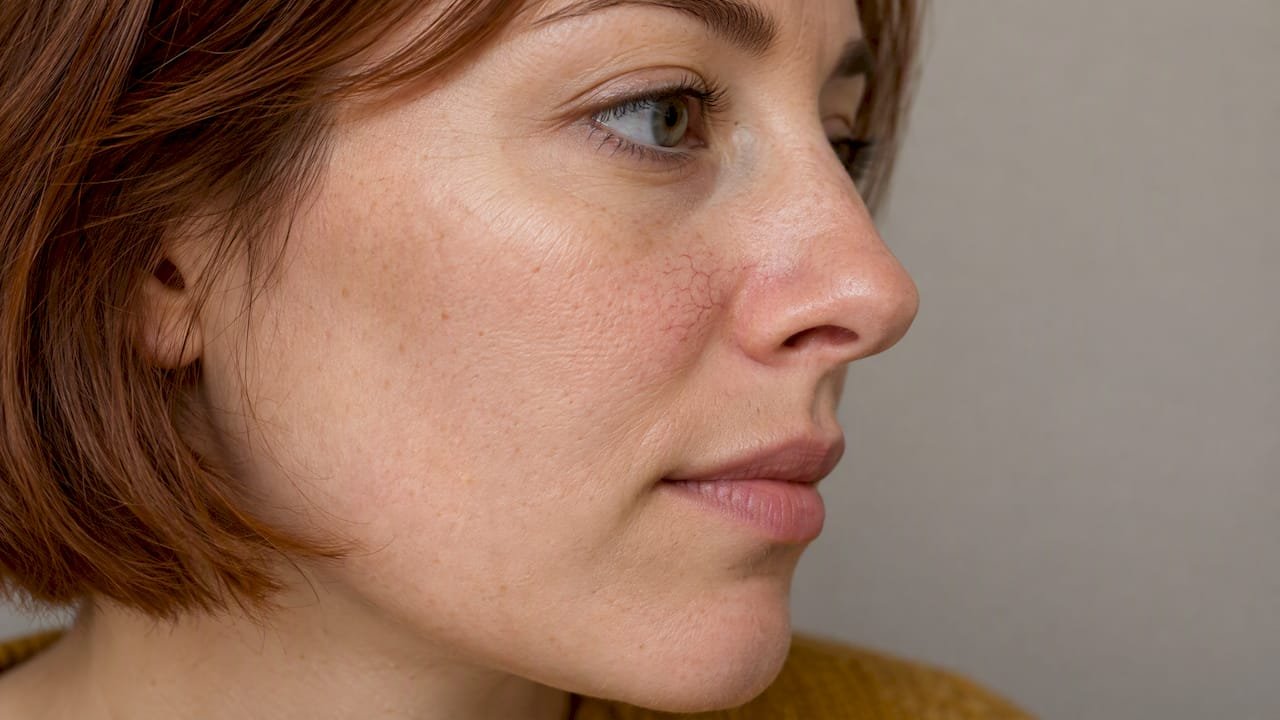
New redness, thickening or bumps on the nose are worth a GP or dermatology opinion rather than an immediate cosmetic treatment. The NHS describes thickened skin, mainly on the nose, as something that can appear after many years of rosacea.
When to get assessed first
Facial redness is a cosmetic concern for many people, but it can also be a sign of a skin condition that deserves proper care. Book an appointment with a GP, or ask for a dermatology referral, if:
- you have burning, stinging, bumps or pustules along with redness, which can fit rosacea or other conditions such as acne or lupus. The NHS lists acne, lupus and keratosis pilaris among the things that can be confused with rosacea
- your redness is spreading, itchy, scaly, painful or has appeared suddenly
- you have a red, painful or gritty eye, or blurred vision. The NHS says to ask for an urgent GP appointment or call 111 if you have rosacea and any of these, because it could signal keratitis
- a mark or lesion on your face is changing in size, colour or shape, bleeds or does not heal. That needs medical review, not a cosmetic treatment
A cosmetic skin consultation is not a diagnosis. At Dermacy Clinic, visual skin analysis supports the conversation and helps document progress with photographs, but it is a visual assessment, not a diagnostic test, and it does not detect disease. For anything that looks like a medical problem, a GP or dermatologist is the right route.
The NHS and cost question
If you are wondering about funding, laser treatment for rosacea-related vessels is not routinely funded on the NHS, according to a specialist NHS laser centre’s own information (April 2025). Most people who want visible vessels treated for appearance go privately. The NHS route is still the right first step if your concern is rosacea itself, because treatment for the condition focuses on controlling symptoms with creams, gels or antibiotics, and a specialist may be involved.
Prices for light-based vessel treatment vary by device, area and number of sessions, so treat any figure you see online as specific to that clinic. Ask for the price per session and an honest estimate of how many sessions might be needed, and what happens if you need more.
What to ask at a consultation
Whether you come to us or see another provider, these questions protect you:
- Who will carry out the treatment, and what is their training on this device?
- What do you think my redness is, and does it need a GP or dermatologist first?
- Which device and settings suit my skin tone and vessel type, and why?
- What results are realistic, and what are the risks for me?
- How many sessions might I need, and what is the cost per session?
- What aftercare will I need, and who do I contact if there is a problem?
- Should I avoid sun, tanning, certain medicines or skincare beforehand?
If an answer is vague or you are pressured to book on the spot, pause.
Talking to Dermacy Clinic
We are a skin, laser and aesthetic clinic in Armthorpe, Doncaster. If your concern is persistent facial redness, you can read about how we approach it on our rosacea treatment page, then use the contact page for current service details and booking. A consultation lets a practitioner look at your skin, talk through what suits you, and be clear about what we can and cannot help with. Recommendations depend on individual assessment and suitability, and results vary.
You can also browse the Dermacy Clinic blog for other skin and aesthetic guides.
FAQ
Can I get rid of broken capillaries on my face at home?
No cream, serum or device sold for home use is shown to close existing facial vessels. Sun protection, gentle skincare and avoiding your triggers can stop things getting worse and keep skin comfortable. Closing a visible vessel needs an in-clinic light-based procedure after assessment.
Do broken capillaries go away on their own?
Sometimes a small mark after a knock or irritation fades, but vessels that stay visible usually persist. The NHS says the tiny broken vessels linked with rosacea do not go away. If yours are lasting, a consultation is the sensible step.
Is treatment for facial vessels available on the NHS?
Treatment for rosacea itself, such as creams, gels or antibiotics, is available through your GP. Laser for rosacea-related vessels is not routinely funded, according to one NHS laser centre’s published information. Most cosmetic vessel treatment is paid for privately.
How many sessions will I need?
It depends on the size, depth and number of vessels, your skin tone and whether rosacea is involved. A responsible practitioner will give you an estimate after assessment but will not guarantee an outcome. Results vary, and new vessels can appear later.
Are broken capillaries on the nose treated differently?
The principle is the same, but the area is small, sensitive and curved, so settings and technique need extra care. Thickening, bumps or persistent redness on the nose are worth showing a GP or dermatologist first.
Sources
- Rosacea, NHS
- British Association of Dermatologists guidelines for the management of people with rosacea 2021, British Journal of Dermatology
- Laser- and light-assisted procedures to treat facial telangiectasias, EADV
- Rosacea laser treatments, North Bristol NHS Trust
- How to treat broken capillaries on the face, Harper’s Bazaar UK
Recommended
This article provides general information and is not a diagnosis or personalised medical advice. Treatment suitability, risks and expected outcomes require an individual consultation. Results vary.