Sometimes, yes, but not automatically. Sensitive skin is not a single condition, and a HydraFacial is not a single fixed treatment. Whether it suits you depends on why your skin is sensitive, what state it is in on the day, and whether the practitioner can adapt the treatment. Skin that is calm but easily irritated by products is a very different case from skin with an active flare, broken areas or an infection.
This article covers that one question: how sensitive skin and HydraFacial fit together, what to disclose at a consultation, and when treatment should wait or a doctor should come first. It is not a diagnosis, and it cannot tell you whether your own skin is suitable. At Dermacy Clinic in Armthorpe, Doncaster, that decision follows an individual consultation.
TL;DR
- “Sensitive skin” describes how skin behaves, not a diagnosis. A HydraFacial may be adapted for it, but it is never right for everyone.
- Active eczema, an inflamed rosacea flare, open or injured skin, infection and recent sunburn are reasons to postpone, not to push on.
- Tell your practitioner about pregnancy or breastfeeding, medicines (especially isotretinoin), past reactions, allergies and the products you use at home.
- Mild redness, tightness or irritation can follow treatment and usually settles within about 72 hours. Severe or worsening symptoms need medical advice.
- Evidence for HydraFacial is limited, so expect a short-term freshening of the skin, not a treatment for a skin condition.
Table of Contents
- What “sensitive skin” actually means
- How a HydraFacial works, and why that matters for reactive skin
- Who may be able to have one, and who should wait
- Eczema, rosacea and “just reactive” skin are not the same
- What to tell your practitioner at consultation
- What you may feel afterwards
- What a HydraFacial can and cannot do for sensitive skin
- Looking after sensitive skin around a treatment
- Seeing a practitioner in Armthorpe, Doncaster
- FAQ
- Sources
What “sensitive skin” actually means
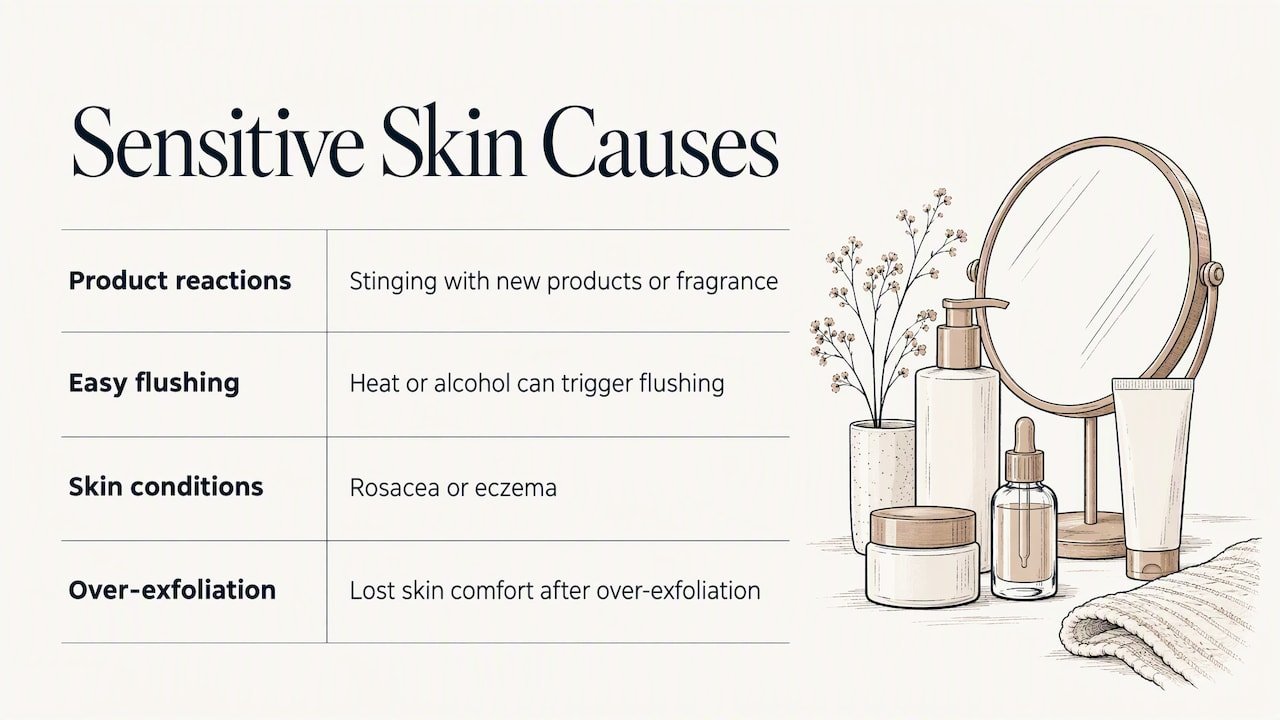
People use the phrase for several different things. Some have skin that stings with new products or fragrance. Some flush easily in heat or after alcohol. Some have a known condition such as rosacea or eczema. Others simply have skin that has been over-exfoliated and has lost its comfort.
The label tells a practitioner very little on its own. What matters is the cause and the current state of your skin. That is why “sensitive” is not a diagnosis and should not be used as one. If you have persistent redness, burning, scaling or itching and you do not know why, a GP or dermatologist is the right person to ask, not a beauty treatment room.
A visual skin analysis can support a consultation by showing what the skin looks like on the surface, and it helps document progress with photographs. It is a visual assessment only. It does not diagnose disease and it cannot detect skin cancer, and it is not used as a substitute for medical review.
How a HydraFacial works, and why that matters for reactive skin
A HydraFacial is a multi-step facial: cleansing, exfoliation, extraction using suction, and the application of hydrating serums. The manufacturer’s practitioner guide treats it as adjustable rather than fixed. For thin or sensitive skin, including rosacea, it allows a sensitivity test, lower vacuum, lighter handpiece pressure and a carefully chosen solution, provided the skin is intact and not actively inflamed.
That last condition is the important one. The adaptability is real, but it applies to calm skin with a low tolerance, not to skin in the middle of a flare. If you want the general step-by-step explanation, our guide to what a HydraFacial involves covers it. Here we stay with the sensitive-skin question.
It is also worth knowing that the steps that feel gentle are not all equal for reactive skin:
- Exfoliation removes the outer layer of dead cells. On skin with a weakened barrier this can sting or leave redness.
- Suction can be adjusted. Thin skin and skin with visible fine vessels is more easily marked by strong suction, which is why vacuum strength is one of the settings that can be reduced.
- Serums contain active ingredients. These are the most common route to a reaction, because they are products applied to skin, so ingredient allergies and past reactions matter.
Who may be able to have one, and who should wait
No article can sort you into a yes or no. What it can do is show you the usual dividing line, so you arrive at consultation knowing what will be asked.
Situations where treatment may be possible with adaptation
Skin that is easily irritated by products but currently calm, skin with a history of mild rosacea that is not flaring, and dry or dehydrated skin that reacts to harsh cleansers are the kinds of cases where a practitioner may discuss a gentler approach. This might mean a patch or sensitivity test first, less suction, lighter pressure and a simpler serum selection. Even then, the sensible expectation is a cautious first session, not a full-strength one.
Situations where treatment should be postponed
The manufacturer’s guide is clear that treatment should not go ahead on active skin conditions, fragile or injured skin, or skin with infection or open lesions. In practice that includes:
- an active eczema flare on the face, which the guide lists as a contraindication
- a rosacea flare with inflamed, tender or pustular skin
- cold sores, impetigo, warts or other suspected infection in the area
- cuts, grazes, recent injury or skin that is raw or peeling from another product
- sunburn, which professionals may delay treatment for
These are reasons to wait until the skin has settled, and for some of them, to see your GP first.
Situations that call for medical advice first
The same guide says pregnancy and breastfeeding are not covered because the treatment has not been evaluated for these groups, and lists isotretinoin use within the previous six months and allergy to solution ingredients as contraindications. It also advises people with autoimmune disorders, cancer, vascular disorders such as telangiectasias (visible fine surface vessels) or communicable diseases to obtain advice from their treating doctor before treatment.
If you take any prescription medicine for your skin, or any medicine that makes skin more fragile, say so. Do not decide for yourself that it is probably fine.
Eczema, rosacea and “just reactive” skin are not the same
Eczema-prone skin
Eczema UK states that facial skin is particularly sensitive and that cosmetic products should be avoided while facial eczema is active, because they are designed for normal, unaffected skin. So the practical rule is simple: not during a flare. When the eczema is well controlled and the skin is quiet, the conversation can be had, and your GP or dermatology team is the right source for your own condition. Some online accounts describe having a HydraFacial on eczema-prone skin without trouble, but a single person’s experience does not tell you how yours will behave.
Rosacea-prone skin
Rosacea is a long-term condition that mainly affects the face, and the NHS says it cannot be cured but that treatment from a GP can help control symptoms. Heat, alcohol, spicy food, sun and strong skincare are common triggers. The British Association of Dermatologists rosacea guideline notes that some people benefit from emollient washing, regular moisturising and suitable sun protection, and that detergent-containing washing products are best avoided if they worsen symptoms.
For a HydraFacial, that means rosacea-prone skin is a case for an honest conversation and cautious settings, not a quick yes. A treatment that involves suction, warmth and exfoliation can provoke flushing in some people. If you already have a diagnosis, mention it. If you suspect rosacea but have never had it assessed, our article on rosacea triggers, symptoms and what helps explains the picture, and your GP is the person to confirm it.
Skin that is reactive because of products
This group is often the easiest to help and the easiest to get wrong. Skin that has been scrubbed, over-peeled or loaded with strong actives can feel sensitive for weeks. The kind option is often to pause the actives, keep the routine simple, and let the barrier recover before any in-clinic treatment. A practitioner who tells you to wait is looking after your skin, not turning you away.
What to tell your practitioner at consultation
The consultation is where suitability is decided, so it is worth treating it as the main event. Bring or be ready to say:
- Your skin history. Eczema, rosacea, psoriasis, acne, cold sores, previous reactions to facials, peels or skincare.
- What you use at home. Retinoids, exfoliating acids, vitamin C, prescription creams and anything new in the last few weeks.
- Your medicines. Particularly isotretinoin in the last six months, topical steroids, antibiotics and anything that thins or sensitises skin.
- Pregnancy, breastfeeding or plans for either.
- Allergies. To ingredients, fragrances, nuts or anything in previous products.
- Recent sun exposure, sunbeds, waxing or other treatments on the face.
- Your own goal. Calmer, brighter, more hydrated? Being clear helps decide whether a HydraFacial is the right tool at all.
A good consultation also covers what will go on your skin. Medical News Today notes that products may vary between places or sessions and recommends learning which products will be used and patch testing to reduce the risk of an allergic reaction. Ask which serums are planned, and ask what would make the practitioner stop or change course on the day.
The UK cosmetic practice code from the JCCP and CPSA treats cosmetic interventions as procedures that carry risk and supports assessment, consent and appropriate practitioner practice. In plain terms: you should be assessed before treatment, told the risks, and free to say no.
What you may feel afterwards
The manufacturer’s guide describes possible temporary irritation, tightness or redness, usually fading within 72 hours depending on sensitivity. Medical News Today lists redness or inflammation, stinging and itch as possible reactions, and says product reactions can be immediate or delayed, with redness, dryness or cracking, itching, stinging or blisters.
On sensitive skin, that first group is more likely to be noticeable, so plan accordingly. Do not book a session straight before a day when you need to look your usual self. For makeup timing specifically, see our separate guide on wearing makeup after a HydraFacial.
When it is not a normal reaction
Stop using any product you suspect is causing the reaction and seek medical advice if you have:
- severe or worsening irritation, swelling or pain
- blistering, weeping or crusting skin
- signs of an allergic reaction, such as a spreading rash, facial swelling or difficulty breathing (the last is an emergency, so call 999)
- redness that is not easing after a few days
Contact the clinic that treated you, and your GP or NHS 111 if you are worried. Do not try to manage a significant reaction at home with leftover creams.
What a HydraFacial can and cannot do for sensitive skin
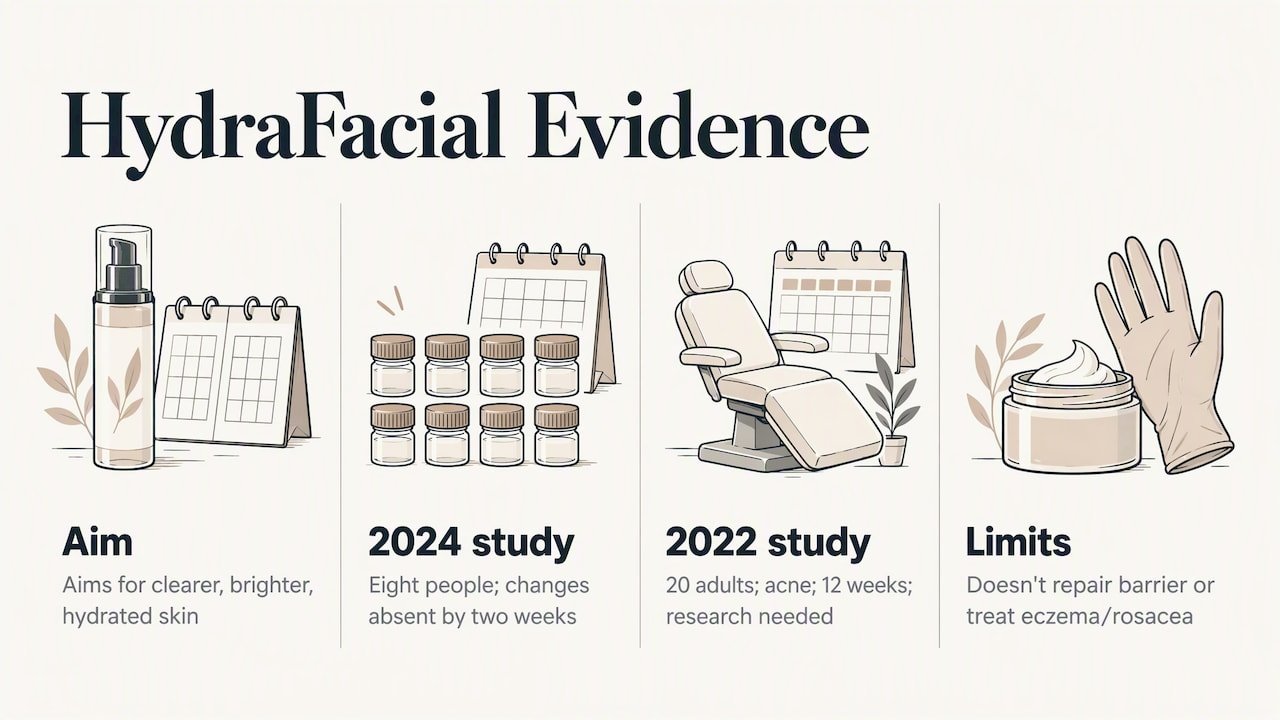
A realistic view helps. HydraFacial aims to make skin look clearer and brighter through cleansing, exfoliation and hydrating serums. The evidence is limited. Medical News Today reports a small 2024 study of eight people in which observed changes were no longer visible at two weeks, and a 2022 study of 20 adults with mild-to-moderate acne treated every two weeks for 12 weeks, with the conclusion that more research is needed.
So for sensitive skin, think of it as a short-term freshening and hydrating treatment. It does not repair a damaged barrier on its own, it does not treat eczema or rosacea, and results vary from person to person and from provider to provider. If your main problem is redness, persistent irritation or flare-ups, a medical assessment and a barrier-friendly routine will do more than any single facial.
Some websites call HydraFacial suitable for all skin types. That is more confident than the evidence and more confident than we are. The honest position is “may suit, after assessment”.
Looking after sensitive skin around a treatment
This is general skincare guidance, not a plan for your skin. Eczema UK recommends leave-on emollients for washing and frequent moisturising, and advises avoiding soap and perfumed face creams for facial eczema. The NHS advice for rosacea includes wearing a daily sunscreen of at least SPF 30 and using gentle skincare products. Those principles are a sensible baseline for most reactive skin.
In the days around a session:
- Avoid introducing anything new to your routine.
- Follow the pre-treatment instructions you are given about retinoids and exfoliating products. They differ by person.
- Protect the skin from sun afterwards.
- Avoid heat, heavy exercise and alcohol if your skin flushes easily, particularly on the day.
Seeing a practitioner in Armthorpe, Doncaster
At Dermacy Clinic, treatment suggestions depend on an individual assessment and on whether a treatment is suitable for you. A visual skin analysis can be part of the consultation, and progress photographs help document how your skin changes, although we do not claim every treatment plan uses the scan. If your skin is sensitive, say so at the start, and expect questions rather than a sales script.
When you are ready to look at the treatment itself, the HydraFacial page has the current service details and the route to booking. Prices are kept there so they stay current. If you would like your skin looked at first, you can also start from our main clinic page and ask about a skin analysis before you decide on any treatment. Results vary, and a practitioner may advise postponing or choosing a different approach.
FAQ
Is HydraFacial safe for sensitive skin?
It can be suitable for some people with sensitive skin when the practitioner adapts the settings and the skin is calm and intact. It is not safe to assume it suits everyone, and it should be postponed during active flares, infection or injured skin. Assessment before treatment is what decides it.
Who should not have a HydraFacial?
The manufacturer’s guide lists pregnancy and breastfeeding, active skin conditions, fragile or injured skin, infection or open lesions, isotretinoin use within the previous six months and allergies to solution ingredients. It also advises people with certain medical conditions to ask their treating doctor first. Tell your practitioner about all of these before booking.
Can I have a HydraFacial if I have rosacea or eczema?
Possibly, but only when the skin is not in a flare, and only after a conversation with the practitioner. Active eczema is a contraindication, and inflamed rosacea is a reason to wait. If you have a diagnosis, your GP or dermatology team is the best source of advice for your own skin.
How long does redness last after a HydraFacial?
Mild redness, tightness or irritation usually fades within about 72 hours, depending on how sensitive your skin is. If symptoms are severe, spreading or getting worse, contact the clinic that treated you and seek medical advice.
Should I do a patch test first?
It is a reasonable thing to ask for. The manufacturer’s guide allows a sensitivity test for thin or sensitive skin, and patch testing is recommended to reduce the risk of an allergic reaction. Ask which products are planned and whether a test is appropriate for you.
Sources
- hydrafacial Syndeo Manual (ManualsLib)
- HydraFacial: Procedure, effectiveness, risks, and more (Medical News Today)
- Facial Eczema: Treatment and Skincare (Eczema UK)
- British Association of Dermatologists guidelines for rosacea
- Rosacea (NHS)
- JCCP and CPSA Code of Practice 2023
Recommended
This article provides general information and is not a diagnosis or personalised medical advice. Treatment suitability, risks and expected outcomes require an individual consultation. Results vary.