Last updated: March 30, 2026
Quick Answer: Painless laser hair removal in Doncaster is now a reality thanks to advanced cooling systems, multi-wavelength laser platforms, and clinically proven treatment protocols. Modern devices like diode and Nd:YAG lasers work on all skin types (Fitzpatrick 1–6) with minimal discomfort, zero downtime, and up to 10% permanent hair reduction per session [2]. Most patients describe the sensation as a warm pulse rather than pain, and a full course of 8–12 sessions can deliver long-lasting smooth skin.
Key Takeaways
- Modern laser technology uses integrated cooling to protect your skin and reduce discomfort during treatment.
- Multi-wavelength lasers target hair follicles at different depths simultaneously for faster, more thorough results [2].
- All skin tones can be treated safely, including tanned skin, with FDA-approved devices [2].
- Sessions take 10–60 minutes depending on the treatment area, with no downtime required [4].
- A typical course requires 8–12 sessions, spaced 4–8 weeks apart to match your natural hair growth cycle [2].
- Patch tests and consultations are mandatory before your first treatment to confirm suitability and set realistic expectations.
- Pricing in Doncaster starts from around £45 for small areas like the upper lip, with multi-session packages offering significant savings [4].
- Conditions like PCOS may qualify for discounted treatment rates at certain clinics [2].
- Long-term cost savings over waxing and shaving make laser hair removal a practical investment, not just a cosmetic luxury.
Why Is Painless Laser Hair Removal in Doncaster Now Possible?
The short answer: better lasers and smarter cooling. A decade ago, laser hair removal had a reputation for being uncomfortable. That’s changed significantly.
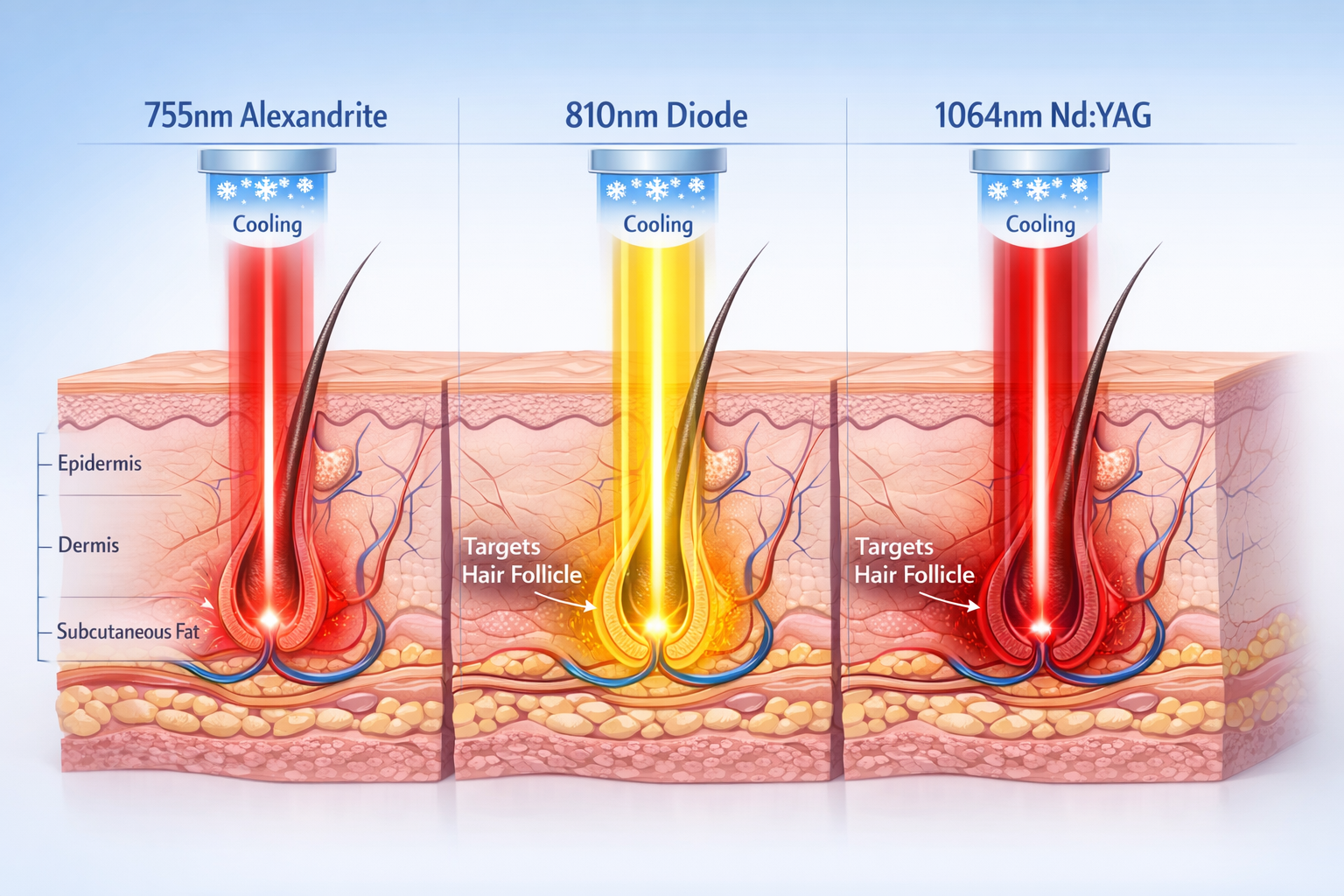
Today’s advanced laser treatments use three key innovations that make the experience genuinely comfortable:
1. Integrated cooling systems. Modern handpieces cool the skin surface before, during, and after each laser pulse. Devices like the Diolaze XL feature a built-in cooling mechanism that protects surrounding tissue, so most patients report feeling something closer to a rubber band snap than actual pain [4].
2. Multi-wavelength technology. Some of the most advanced platforms combine multiple laser wavelengths (typically 755nm Alexandrite, 810nm Diode, and 1064nm Nd:YAG) into a single applicator. This means the laser can target hair follicles at varying depths in a single pass, which reduces the number of passes needed and shortens treatment time [2].
3. Gradual energy delivery. Instead of firing a single high-energy pulse, modern systems use a sweeping “in-motion” technique that delivers energy gradually. This spreads heat more evenly and avoids the sharp sting associated with older machines.
At Dermacy Clinic, we use medical-grade treatments with advanced skin technology to ensure every session is both effective and comfortable. Our approach prioritises patient safety first while delivering clinically proven solutions for permanent hair reduction.
Common mistake: Choosing a clinic based on price alone. The type of laser matters enormously. Older IPL (Intense Pulsed Light) systems are not true lasers and typically cause more discomfort with less effective results. Always ask what specific device a clinic uses before booking.
For a full overview of what to look for when selecting a provider, read our guide on choosing the best laser hair removal clinic in Doncaster.
How Does Modern Laser Hair Removal Actually Work?
Laser hair removal works by targeting melanin (the pigment) in your hair follicle. The laser energy is absorbed by the melanin, converted to heat, and this heat damages the follicle enough to prevent future growth.
Here’s what happens during a typical session:
- The treatment area is cleaned and, if needed, any surface hair is shaved (the laser needs to reach the follicle beneath the skin, not the hair above it).
- The laser handpiece is applied to the skin with a cooling gel or built-in cooling tip.
- Energy is delivered in controlled pulses or a sweeping motion across the area.
- The follicle absorbs the energy, and the heat disrupts the growth cycle.
- Treated hairs shed naturally over the following 1–3 weeks.
Why Multiple Sessions Are Needed
Hair grows in cycles: anagen (active growth), catagen (transition), and telogen (resting). Laser treatment only works on hairs in the anagen phase because that’s when the follicle contains the most melanin. At any given time, only about 20–30% of your hair is in this active phase.
This is why you need 8–12 sessions spaced appropriately:
| Treatment Area | Session Interval | Reason |
|---|---|---|
| Face (upper lip, chin) | 4–6 weeks | Facial hair cycles are shorter |
| Underarms | 6–8 weeks | Moderate growth cycle |
| Bikini | 6–8 weeks | Moderate growth cycle |
| Legs, back, chest | 6–8 weeks | Longer growth cycle |
Data based on recommended protocols from Doncaster-area clinics [2] [4]
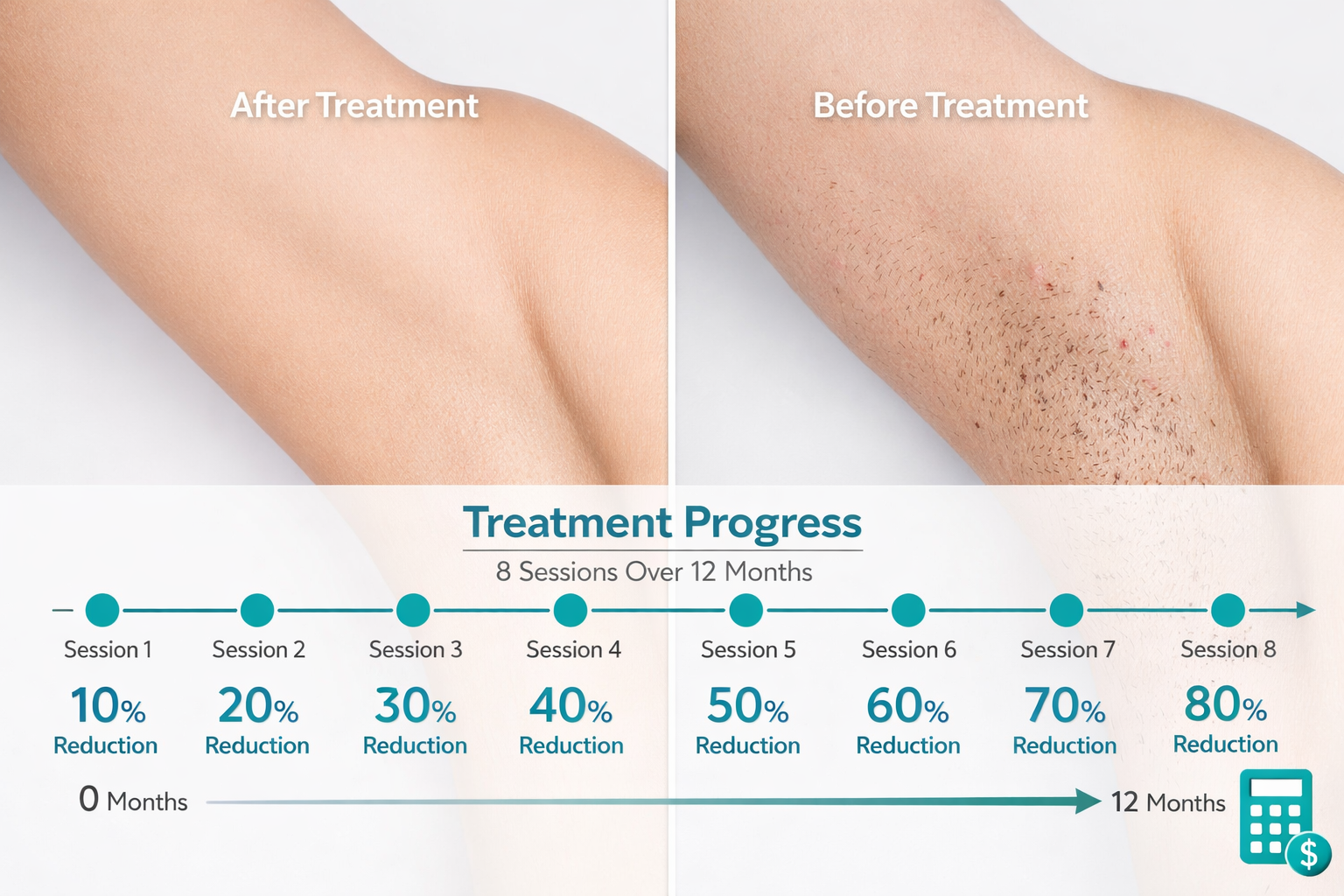
Each session targets a new batch of hairs entering the active growth phase. With each treatment, you can expect approximately 10% permanent hair reduction [2], so by session 8–12, the vast majority of hair in the treated area is gone for good.
Learn more about why laser hair removal treatment is worth considering on our blog.
What Does Painless Laser Hair Removal in Doncaster Feel Like During Treatment?
Most patients at Dermacy Clinic describe the sensation as a warm pulsing or gentle tingling. It’s genuinely mild, especially compared to waxing.

The comfort level depends on a few factors:
- Treatment area sensitivity. The upper lip and bikini line tend to be more sensitive than arms or legs. But even in these areas, modern cooling technology keeps discomfort minimal.
- Your skin and hair type. Darker, coarser hair absorbs more laser energy, which can feel slightly warmer. However, this also means the treatment is more effective on those hairs.
- The device being used. Medical-grade class 4 lasers like the Quanta Thunder Series [3] and multi-wavelength platforms [2] are specifically designed for comfort alongside power.
What Patients Typically Report
- Before treatment: Slight nervousness (completely normal, especially for first-timers).
- During treatment: A warm sensation with occasional mild tingling. Many patients say it’s far less uncomfortable than they expected.
- After treatment: The area may look slightly pink or feel warm, similar to mild sunburn. This usually fades within a few hours.
- Next day: Back to normal. Zero downtime means you can return to work, exercise, and daily activities immediately [4]. The only restriction is avoiding direct heat exposure (saunas, hot baths, intense sun) for about 72 hours.
Choose professional laser treatment if: You want long-term results with minimal discomfort. Choose waxing if: You only need a one-off solution and don’t mind repeating it every 4–6 weeks indefinitely.
For answers to other common questions, visit our FAQ page.
Who Can Benefit from Laser Hair Removal? (And Who Should Be Cautious)
Laser hair removal is suitable for a wide range of people, but it’s not a one-size-fits-all treatment. Here’s an honest breakdown.
Ideal Candidates
- Men and women aged 18–65 with unwanted facial or body hair.
- All skin types (Fitzpatrick 1–6), provided the correct laser wavelength is used. FDA-approved devices can now safely treat darker skin tones that were previously considered too risky [2].
- People with PCOS or hormonal conditions causing excess hair growth. Some Doncaster clinics offer 50% discounts for PCOS patients with a valid diagnosis [2].
- Anyone tired of the cycle of shaving, waxing, or using depilatory creams.
Who Should Proceed with Caution
- People with very light blonde, red, or grey hair. These hair colours contain less melanin, making the laser less effective. Your practitioner should discuss this honestly during consultation.
- Those on photosensitising medications (certain antibiotics, retinoids). A thorough medical history review during your consultation will identify any contraindications.
- Pregnant or breastfeeding women. Most clinics recommend waiting, as a precaution rather than because of proven risk.
- Active skin infections or open wounds in the treatment area.
The Psychological Impact Most Clinics Don’t Discuss
Here’s something competitors rarely address: the mental health benefits of laser hair removal are significant. Unwanted hair, particularly facial hair in women or excessive body hair, can cause genuine psychological distress.
Research in medical aesthetics consistently shows that confidence-boosting treatments like laser hair removal improve self-esteem, reduce social anxiety, and positively affect psychological well-being. At Dermacy Clinic, we see this regularly. Patients who were avoiding social situations, struggling with skin confidence, or spending hours on daily hair management tell us that treatment changed more than just their appearance. It changed how they felt about themselves.
This is why we take a personalised approach that considers both the physical and emotional aspects of treatment. Expert aesthetic care means understanding the whole person, not just the hair follicle.
Browse our full range of treatments to see how we support skin health and confidence across multiple concerns.
What Happens During a Personalised Consultation at Dermacy Clinic?
Every treatment at Dermacy Clinic begins with a professional skin analysis and detailed consultation. This isn’t a sales pitch; it’s a clinical assessment.
Here’s exactly what to expect:
Step-by-Step Consultation Process
- Medical history review. We check for medications, skin conditions, hormonal factors, and any contraindications.
- Skin type assessment. Your Fitzpatrick skin type is identified to determine the safest and most effective laser settings.
- Hair assessment. We evaluate hair colour, thickness, density, and growth patterns in the target area.
- Personalised treatment plan. Based on all of the above, we recommend the number of sessions, interval timing, and expected outcomes. No guesswork.
- Patch test. A small area is tested at least 24 hours before your first full session to confirm your skin responds well [2]. This is mandatory and non-negotiable at any reputable clinic.
- Honest expectation setting. We tell you what laser hair removal can and can’t do. We emphasise realistic, natural results rather than making exaggerated promises.
Signs of quality aesthetic care: A clinic that insists on a patch test, provides a written treatment plan, and discusses potential limitations is one that prioritises your safety. If a clinic offers to treat you on the same day without a consultation, consider that a red flag.
To book your initial assessment, get in touch with our team.
How Much Does Painless Laser Hair Removal in Doncaster Cost?
Pricing varies by treatment area and the number of sessions purchased. Here’s a realistic guide based on current Doncaster pricing:
| Area Size | Examples | Approx. Cost Per Session |
|---|---|---|
| Extra small | Upper lip, chin, sideburns | £45 |
| Small | Underarms, standard bikini | £90 |
| Medium | Half arms, Brazilian | £120 |
| Large | Full legs, back, chest | £120–£170 |
Prices based on published rates from Doncaster-area clinics [4]
Package Savings
Most clinics offer multi-session packages that reduce the per-session cost significantly. For example, a bikini and underarms package of 6 sessions may cost around £600, representing a saving of £480 compared to individual session pricing [4].
At Dermacy Clinic, we offer transparent pricing with no hidden fees. Check our full price list for current rates.
The Long-Term Cost-Benefit Analysis
Let’s put this in perspective. The average person who waxes spends roughly £50–£80 per session, every 4–6 weeks, for years. Over a 10-year period, that adds up to £6,000–£10,000 or more, with no permanent result.
A full course of laser hair removal for the same area might cost £500–£1,000 total, and the results are lasting. From a pure cost-benefit standpoint, laser treatment pays for itself within 1–2 years compared to ongoing waxing or shaving costs.
Choose laser if: You want a long-term solution and are willing to invest upfront for lasting results. Choose waxing/shaving if: You need a temporary fix and aren’t ready to commit to a treatment course.
What Emerging Technologies Are Shaping the Future of Laser Hair Removal?
The field of advanced aesthetic technology is evolving rapidly. Here are the developments that matter most in 2026:
- AI-assisted skin analysis. Some newer platforms use artificial intelligence to assess skin tone and hair characteristics in real time, automatically adjusting laser parameters for optimal safety and efficacy.
- Faster treatment speeds. The latest handpieces cover larger surface areas per pulse, reducing full-leg treatment times to under 30 minutes.
- Improved efficacy on lighter hair. Research into alternative chromophore targeting (beyond melanin) is ongoing, which could eventually make laser treatment viable for blonde and grey hair.
- Combination protocols. Some clinics are pairing laser hair removal with skin rejuvenation treatments to address both unwanted hair and skin texture concerns in the same session.
At Dermacy Clinic, we continuously invest in evidence-based aesthetics and update our equipment and protocols as the science advances. Our trusted aesthetic specialists stay current through ongoing professional development and advanced certifications.
Explore our aesthetic treatment options in Doncaster for a broader view of what’s available.
How Does Laser Hair Removal Compare to Other Hair Removal Methods?
| Method | Pain Level | Permanence | Cost Over 5 Years | Skin Damage Risk | Time Per Session |
|---|---|---|---|---|---|
| Laser | Low (with modern cooling) | High (80–90% reduction) | £500–£1,500 | Very low | 10–60 min |
| Waxing | Moderate to high | None | £3,000–£5,000+ | Moderate (burns, ingrowns) | 15–45 min |
| Shaving | Low | None | £500–£1,000 (products) | Moderate (razor burn, cuts) | 5–15 min daily |
| Electrolysis | Moderate to high | High (per follicle) | £2,000–£5,000+ | Low | 15–60 min |
| Depilatory creams | Low | None | £1,000–£2,000 | High (chemical irritation) | 10–20 min |
Laser hair removal offers the best balance of comfort, permanence, and long-term value. The only method with comparable permanence is electrolysis, but it treats one follicle at a time and is significantly more time-consuming and uncomfortable.
Frequently Asked Questions
Is laser hair removal truly painless? With modern cooling technology and advanced delivery systems, most patients describe the sensation as a warm pulse or mild tingling. It’s not completely sensation-free, but it’s far more comfortable than waxing and most people wouldn’t call it painful [4].
How many sessions will I need? A typical course involves 8–12 sessions, with approximately 10% permanent hair reduction per session [2]. Some patients see satisfactory results sooner, depending on hair type and treatment area.
Can laser hair removal work on dark skin? Yes. FDA-approved devices with Nd:YAG wavelengths (1064nm) are safe and effective on all Fitzpatrick skin types, including the darkest skin tones [2]. Always confirm that your clinic uses an appropriate device for your skin type.
How long does each session take? Sessions range from 10 minutes for small areas like the upper lip to 60 minutes for large areas like full legs [4].
Is there any downtime after treatment? No. You can return to normal activities immediately. The only precaution is avoiding direct heat exposure (hot baths, saunas, intense sun) for approximately 72 hours after treatment [4].
Can I have laser hair removal if I have PCOS? Absolutely. Laser treatment is particularly beneficial for PCOS-related excess hair growth. Some clinics in Doncaster offer 50% discounts for patients with a valid PCOS diagnosis [2]. You may need additional maintenance sessions due to ongoing hormonal stimulation.
What’s the difference between IPL and laser? IPL (Intense Pulsed Light) uses a broad spectrum of light, while a true laser uses a single, focused wavelength. Lasers are generally more precise, more effective, and more comfortable. For best results, choose a clinic that uses medical-grade laser devices rather than IPL [3].
Can I have treatment on tanned skin? With the right device, yes. Multi-wavelength platforms and Nd:YAG lasers are FDA-approved for use on tanned skin, allowing year-round treatment [2]. However, always disclose recent sun exposure during your consultation.
What should I do to prepare for my session? Shave the treatment area 24 hours before your appointment. Avoid waxing, plucking, or bleaching for at least 4 weeks prior, as the laser needs the hair root intact beneath the skin. Avoid self-tanning products for at least a week before treatment.
Are the results really permanent? Laser hair removal provides permanent hair reduction, not complete permanent removal. After a full course, most patients experience 80–90% reduction in hair growth. Any remaining hairs tend to be finer and lighter. Occasional maintenance sessions (once or twice a year) may be needed.
How do I choose the right clinic in Doncaster? Look for medical-grade equipment (not beauty-salon IPL), qualified practitioners with relevant certifications, mandatory patch testing, transparent pricing, and honest communication about realistic outcomes. Read our detailed guide on what to look for in a laser hair removal clinic.
Conclusion
Painless laser hair removal in Doncaster is no longer a marketing claim; it’s a clinical reality backed by advanced laser technology, integrated cooling systems, and evidence-based treatment protocols. Whether you’re dealing with unwanted facial hair, tired of the endless waxing cycle, or managing excess hair growth from PCOS, modern laser treatment offers a comfortable, effective, and financially smart long-term solution.
At Dermacy Clinic, we combine medical-grade treatments with personalised treatment plans tailored to your skin type, hair characteristics, and personal goals. Our expert aesthetic care focuses on delivering natural-looking results while keeping patient safety first at every step.
Your next steps:
- Book a consultation. Every treatment journey starts with a professional skin analysis and patch test. Contact Dermacy Clinic to schedule yours.
- Ask the right questions. Enquire about the specific laser device used, practitioner qualifications, and what realistic results look like for your skin and hair type.
- Plan your course. With sessions spaced 4–8 weeks apart, starting now means you could see significant results within a few months.
Smooth, confident skin is closer than you think, and getting there doesn’t have to hurt.
References
[1] Laser Hair Removal Doncaster – https://mayalaserclinic.com.au/laser-hair-removal-doncaster/ [2] Soprano Titanium Laser Hair Removal – https://mediface-aesthetics.co.uk/treatments/soprano-titanium-laser-hair-removal [3] Laser Hair Removal – https://elements.org.uk/treatment/laser-hair-removal/ [4] Laser Hair Removal – https://klcosmeticclinics.co.uk/laser-ipl/laser-hair-removal/