In most cases, no: if your skin is tanned, a responsible clinic will defer your laser hair removal session until the tan has faded. That applies to a holiday tan, a sunbed tan and fake tan. The laser is drawn to pigment, and a tan gives it more pigment than it should be finding. The result can be burns, blistering or lasting colour changes in the skin. Below we explain why, how long people are usually asked to wait, and how to plan a course around the British summer and your holidays.
TL;DR
- Laser hair removal targets melanin, the dark pigment in hair. Tanned skin has extra melanin, so the laser can heat the skin as well as the hair.
- NHS hospital guidance says you will generally be turned away if you arrive with a tan. Fake tan counts too.
- Many clinics ask for around six weeks without sun, sunbeds or tanning products before treatment. Your own clinic’s policy and your skin assessment decide the actual wait.
- Sun protection matters during and after the course, not only before it.
- Book a consultation before you pay for a course. Suitability is individual, and results vary.
Table of Contents
- Why a tan changes how laser behaves
- What can go wrong if you are treated with a tan
- Does fake tan count?
- How long should you wait after sun exposure?
- The “tan-safe laser” claim
- Laser hair removal after a holiday: how to plan
- Before your appointment: what else to prepare
- What if you want hair removal and keep your tan?
- Natural dark skin tone is not the same as a tan
- Choosing a clinic that takes this seriously
- Laser hair removal at Dermacy Clinic in Armthorpe
- FAQ
- Sources
Why a tan changes how laser behaves
Laser hair reduction works by sending a beam of light through the surface of the skin. The dark pigment (melanin) in the hair follicle absorbs that light and turns it into heat. According to Leeds Teaching Hospitals NHS Trust, this is how the follicle is damaged.
The laser cannot tell “hair melanin” from “skin melanin” by itself. It simply meets pigment. On pale, untanned skin with darker hair, there is a clear contrast: plenty of pigment in the hair, very little around it. The energy goes where it is wanted.
Tan the skin and that contrast narrows. A tan is your skin producing more melanin in response to UV. Some of the laser energy is now absorbed by the surface of the skin rather than the hair. That is called off-target absorption, and it is why the usual advice is blunt: no suntan or fake tan on the area to be treated, and limited sun exposure before and during the course.
Two things follow:
- Safety. More heat in the skin means a higher chance of redness, blistering and changes in pigment.
- Effectiveness. If energy is absorbed by the skin, less reaches the follicle, or the practitioner has to turn the settings down to protect you.
What can go wrong if you are treated with a tan
The risks are real but not dramatic for every person. It helps to know them so you can see why a clinic says no.
- Burns and blisters. Information from a West Midlands NHS leaflet on laser hair removal lists blistering among possible side effects, and tanned skin raises that likelihood.
- Pigment changes. The same leaflet states that hyperpigmentation (darker patches) occurs in approximately 17 out of 100 people after laser hair removal, and that these changes can take up to six months or longer to fade. Hypopigmentation (lighter patches) is also possible. A tan raises the odds, so this is the risk practitioners are most careful about.
- Less benefit for your money. A session that is delivered at cautious settings, or abandoned, is a session that does less.
None of this is a reason to panic if you had a sunny weekend. It is a reason to tell your practitioner honestly, and to let them look at your skin before they fire the laser.
Does fake tan count?
Yes. Many people assume that because fake tan is “not real”, it is fine. It isn’t. Fake tan colours the top of the skin, and that colour can absorb light much as natural pigment does. The North Bristol NHS Trust laser centre lists fake tan alongside suntan as something to avoid on the area to be treated.
In practice this means:
- Stop applying gradual tan lotions, mousses, sprays and tanning drops to the treatment area well before your appointment.
- Do not rely on scrubbing it off the night before. Residual colour may still be visible, and exfoliating hard can irritate skin that is about to be treated.
- Tell the clinic if you have used any tanning product, even a light one.
Sunbeds are a firm no for the same reason, and they bring UV risks of their own that have nothing to do with hair removal.
How long should you wait after sun exposure?
There is no single number that every clinic uses. A commonly quoted figure is about six weeks without tanning before treatment, and it is the figure in the guidance we reviewed. Some clinics ask for more, particularly for people whose skin tans easily, and some ask for less when the exposure was minimal. What matters is how your skin looks and behaves on the day.
A sensible way to think about it:
| Situation | What it usually means for your appointment |
|---|---|
| No sun, sunbed or tanning product on the area for several weeks, and skin back to its usual shade | Likely to be suitable, subject to your consultation and patch test |
| A visible tan, even a light one | Expect the session to be deferred |
| Recent sunburn | Wait until the skin has fully recovered, and speak to the clinic |
| Fake tan of any kind | Wait until it has completely gone |
| A holiday in the sun mid-course | Expect a pause in the schedule, and tell your practitioner when you return |
Leeds Teaching Hospitals also warns that the restriction applies to subtle natural tans too, not just obvious ones. If you think you might have a tan, assume you might.
The “tan-safe laser” claim
Search for this topic and you will see clinics saying that their machine is safe on tanned skin. It is worth understanding what is true here and what is marketing.
Some laser wavelengths, such as the long-pulsed Nd:YAG, are used for darker skin tones because they are absorbed less by the surface melanin. NHS laser services describe this: North Bristol NHS Trust explains that the type of laser used depends on your skin, and that practitioners adjust settings after assessing your skin type. That is a real clinical principle.
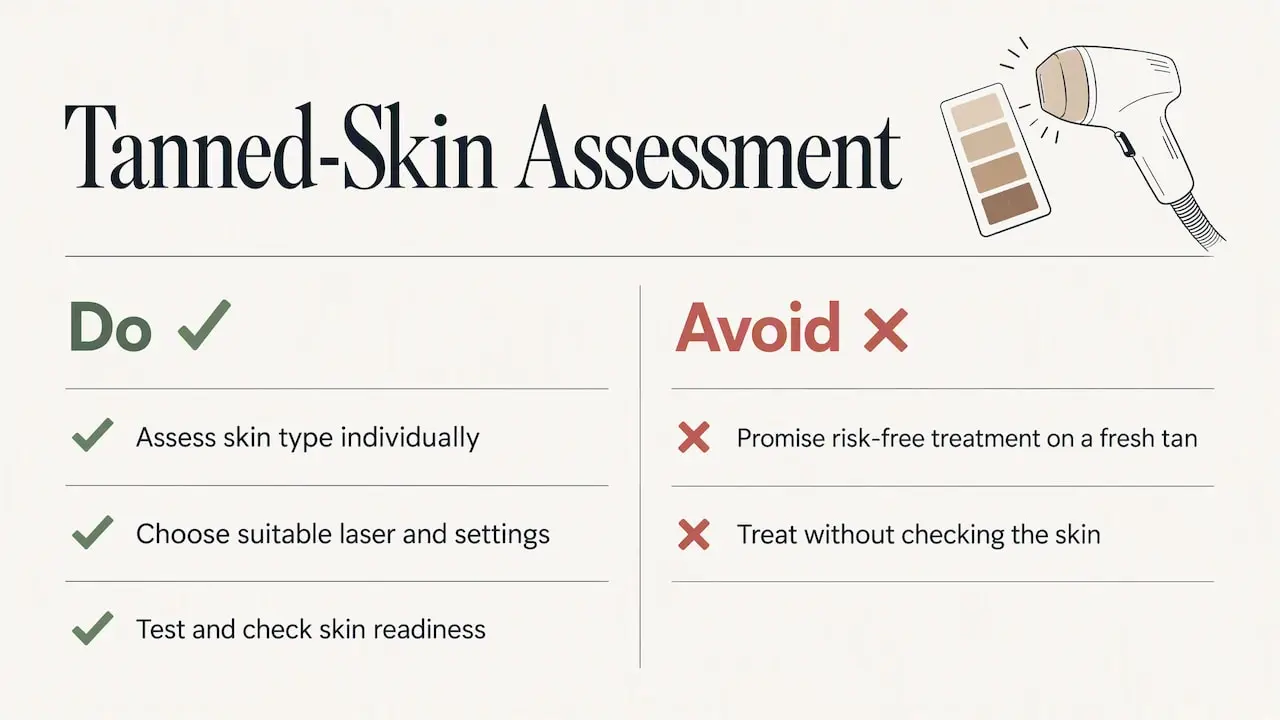
But “safer for darker skin” is not the same as “risk-free on a fresh tan”. Even with suitable technology, a tan is a temporary, UV-driven increase in pigment, and the sensible approach is the one the NHS pages describe: assess, test, and defer if the skin is not ready. Be wary of any promise that you can go from a sunbed to the treatment chair with no consequences. A clinic that tells you it depends on your skin, and that it will check, is being more honest than one that guarantees it.
Laser hair removal after a holiday: how to plan
Timing is the practical problem. Most people want smooth skin for summer, which is exactly when sun exposure is highest. A little planning removes most of the frustration.
Start in autumn or winter if you can
Laser hair reduction needs a course of sessions spread over months, not a single visit. The NHS pages note that several treatments are given over a period of months and are not normally available on the NHS, so people usually pay privately. Starting when skin is at its palest means fewer cancelled sessions. It is mid-October as we write this, which is a good time to begin if next summer is your target. We cannot say how many sessions you will need: that depends on the area, your hair and your skin, and is decided at consultation.
Map out your holidays before you book
Write down any trips, weddings or events where you plan to be in the sun, or where you will want fake tan. Share the list at consultation. If you have a holiday coming, it is usually better to schedule sessions well before it and to resume after your skin has returned to its normal colour, rather than squeezing in a session just before you fly.
Cover up and use sunscreen on treated areas
If you do go away mid-course, keep the treated areas covered and use high-factor sun protection. The Leeds aftercare guidance says to start SPF50 with 5-star UVA protection two days after treatment and to apply it daily throughout the course, reapplying regularly whatever the weather. The West Midlands leaflet goes further and recommends continuing for six months after the final session, because treated skin is more vulnerable to pigment change.
Sun protection is useful advice for everyone. The British Association of Dermatologists also stresses protecting skin from the sun as part of looking after your skin generally.
Before your appointment: what else to prepare
Tan is the headline issue, but a few other points affect whether your session goes ahead.
- Shave, do not wax. Leeds guidance, summarised in our research, is that plucking, waxing and hair removal creams remove the root the laser needs to target, so these are avoided for around eight weeks before a course starts. Shaving leaves the hair shaft intact and is the usual method between sessions. Your clinic will tell you exactly how to prepare.
- Tell them about medication. Some medicines make skin more sensitive to light. Mention everything, including over-the-counter products and anything you apply to your skin. This may change the plan or delay treatment.
- Expect a patch test. The hospital pages describe a test area first, with the full treatment delivered only if there have been no problems and the practitioner can see an improvement.
- Be honest about the tan. Nobody is judging you. Saying “I had a few days in the sun last week” lets the practitioner protect your skin. Hiding it with make-up or fake tan is the one thing that really causes harm.
What if you want hair removal and keep your tan?
It is a fair question, and the honest answer is that you may have to choose which comes first for a period. Some alternatives exist for the tan-loving person, but each has trade-offs:
- Shaving is quick, cheap and works at any skin tone, though hair grows back fast.
- Epilation or waxing removes hair at the root, and so cannot be done during the weeks before a laser course.
- Hair removal creams can irritate, and again should not be used in the preparation window.
Laser is a long game. If you are at the stage of deciding whether it is right for you at all, our piece on why people choose laser hair removal covers the benefits and limits, and our guide to choosing a laser hair removal clinic lists questions worth asking before you commit.
Natural dark skin tone is not the same as a tan
It is easy to mix up two different things. A tan is temporary pigment from UV exposure or products. A naturally deeper skin tone is your baseline. People with naturally brown or Black skin can often have laser hair removal, but it needs the right technology and a careful, individual assessment, because the risk of pigment side effects is higher than on very fair skin. One West Midlands NHS leaflet says laser treatment is suitable for all skin types, while the Bristol pages stress that settings and laser type are adjusted to your skin. Both can be true: suitable does not mean identical for everyone.
Laser also works best where hair is darker than the skin around it. It is generally much less effective on very light, grey or white hair, because there is little melanin to absorb the light.
Choosing a clinic that takes this seriously
How a clinic handles tan tells you a lot about how it handles safety in general. Look for:
- A proper consultation and skin assessment before treatment, not just a booking form.
- A patch test.
- A clear written policy on tanning and fake tan, and a willingness to defer your session when needed.
- Practitioners trained to the standard expected in the UK. One council licensing standard for laser premises, published by the Royal Borough of Kensington and Chelsea, refers to appropriately qualified operators working to protocols from an Expert Medical Practitioner. Rules differ between local authorities, so it is reasonable to ask a clinic about its training and protocols directly.
- Honest language. Complete hair removal cannot be guaranteed, and the NHS trust says it is unrealistic to expect all unwanted hair to disappear.
Laser hair removal at Dermacy Clinic in Armthorpe
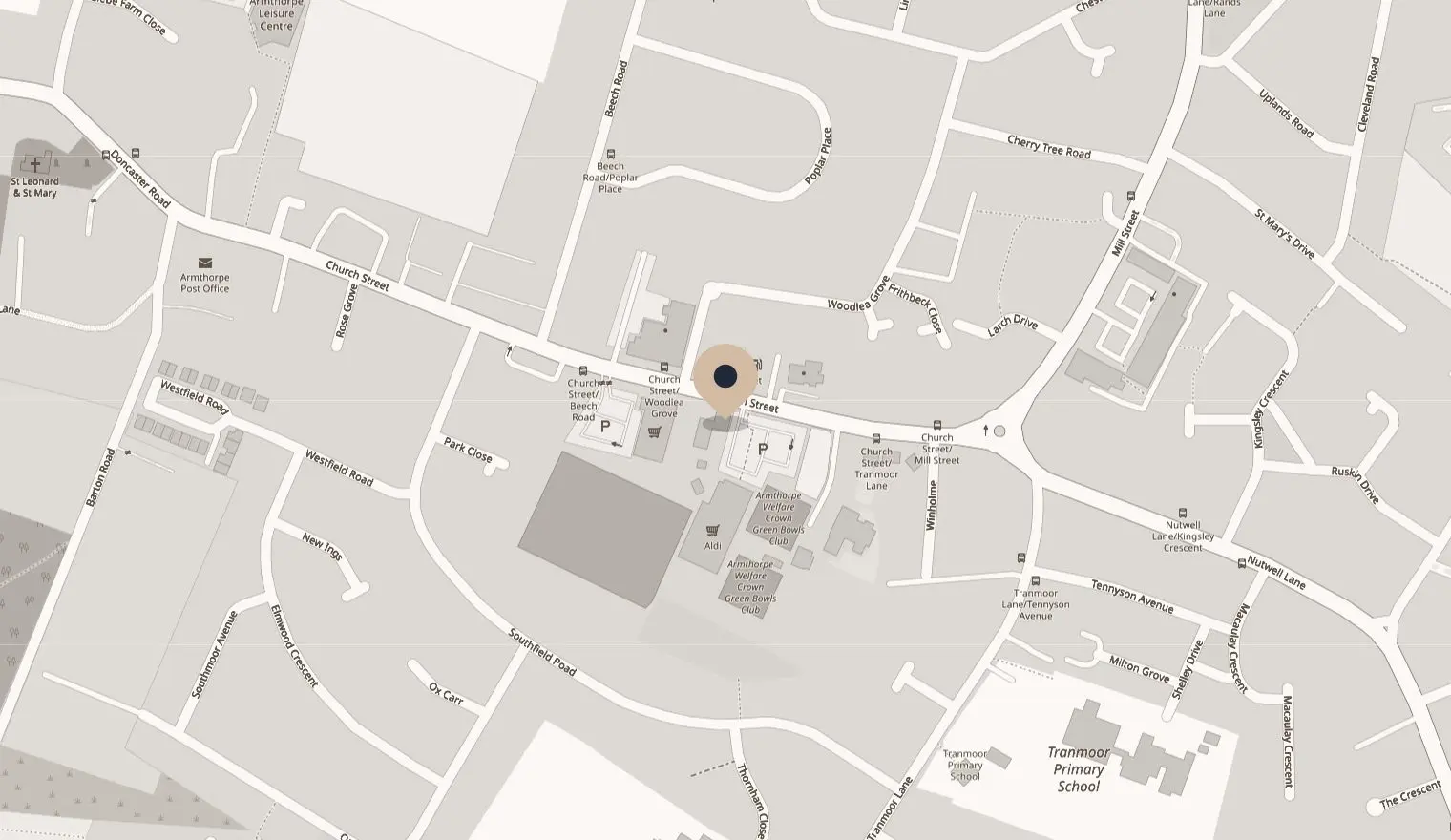
Dermacy Clinic is a skin, laser and aesthetic clinic in Armthorpe, Doncaster, South Yorkshire. If you are weighing up laser hair removal, the place to start is our laser hair removal page, where area prices start from £25 and you can book your next step. Which areas suit you, how your skin looks on the day, and whether any recent sun or tanning product means we should wait, are all decided individually. If you want to know whether treatment is open to men too, see our page on laser hair removal for men.
We cannot promise permanent removal or a set number of sessions, and results vary from person to person.
FAQ
Can I have laser hair removal if I only have a very light tan?
You may be turned away. NHS guidance says you will generally be deferred if you arrive with a tan, and even subtle natural tans count. Your practitioner will look at your skin on the day and decide whether it is safe to go ahead.
Can I use fake tan between laser hair removal sessions?
Not on the area being treated. Fake tan colours the skin surface and can absorb laser light, so it is usually avoided for a period before each session. Ask your clinic how long it wants you to wait and what to do if you have already applied it.
What happens if I get sun after laser hair removal?
Treated skin is more sensitive to UV, and sun exposure raises the chance of pigment changes. NHS aftercare advice is to use SPF50 with 5-star UVA protection daily from two days after treatment, and to cover the area where possible. If your skin blisters, darkens or looks unusual, contact your clinic or a healthcare professional rather than treating it yourself.
Is a tan-safe laser really safe on tanned skin?
Some wavelengths are better suited to deeper skin tones, and practitioners adjust settings accordingly. That does not make a fresh tan risk-free. A reputable clinic will still assess your skin, patch test and defer treatment if your skin is not ready.
Sources
- Laser Hair Reduction, Leeds Teaching Hospitals NHS Trust
- After your laser treatment, Leeds Teaching Hospitals NHS Trust
- Laser hair removal patient leaflet, Sandwell and West Birmingham NHS Trust
- Hair Removal leaflet, Sandwell and West Birmingham NHS Trust
- Hair removal, North Bristol NHS Trust
- Questions, North Bristol NHS Trust
- Hirsutism, British Association of Dermatologists
- Standard conditions for special treatment premises, Royal Borough of Kensington and Chelsea
Recommended
- Why You Need Laser Hair Removal Treatment
- How to Choose a Laser Hair Removal Clinic | 7 Questions
- Laser Hair Removal for Men Doncaster
This article provides general information and is not a diagnosis or personalised medical advice. Treatment suitability, risks and expected outcomes require an individual consultation. Results vary.