For your first bikini laser session, shave the area about 24 hours beforehand, keep it out of the sun and off fake tan, stop waxing and plucking, and arrive with clean, product-free skin. Then settle three things before you lie down: exactly which area is included, what you have told the practitioner about your health and medicines, and what has been agreed about privacy and consent. This guide covers all of that, in the order you will meet it.
It is written for adults in Armthorpe, Doncaster and the wider South Yorkshire area who are booking a first session at a clinic such as ours. Individual advice always comes from your own practitioner after your consultation, and results vary from person to person.
TL;DR
- Shave 24 hours before, not on the day, and do not wax, pluck or use hair removal creams in the run-up, because the laser needs the hair root in place.
- Avoid sun, sunbeds and fake tan on the area. A tan can mean your session is postponed for safety reasons.
- Tell the practitioner about every medicine, recent illness and skin change, and repeat it at each session.
- Agree the treatment boundary in words before you start: “bikini line”, “extended bikini” and “Brazilian” do not mean the same thing everywhere.
- Expect a consultation, consent and usually a test patch. You can ask questions and stop at any point.
Table of Contents
- Start with the boundary: what “bikini” actually covers
- Shaving: when, how short, and what to avoid
- Sun, tan and fake tan
- What to tell your practitioner
- Privacy, dignity and consent
- Consultation and patch testing
- Your day-of checklist
- After the session, briefly
- Booking your first session at Dermacy Clinic
- FAQ
- Sources
Start with the boundary: what “bikini” actually covers
The most common surprise at a first appointment is not pain. It is finding that the area you pictured is not the area you booked.
Clinics use the same words differently. A basic bikini line usually means hair that would show outside swimwear. Larger options extend inward and upward, and the fullest option includes everything at the front, sides and back. Whether the buttocks or the area between them are included is a question to ask the clinic directly, because the answer is not universal. It is a fair question to have been the top “people also ask” for this topic.
Before you book or on the day of your consultation, ask:
- Which exact areas are included in the option I have chosen?
- If I want more later, can I add it, and is it treated as a separate area?
- Will the practitioner mark or describe the boundary before treating?
- Are there parts of this area they would not treat, and why?
Write down the answers or ask for them in your booking confirmation. If you are comparing area options, the laser hair removal page at Dermacy Clinic is where current area details and booking sit, so you do not need to rely on a blog post for them.
What laser hair removal is not
Laser hair removal is for reducing unwanted hair. It is not a treatment for wrinkles, pigmentation or marks on the skin. If you have darker patches in the bikini area, such as post-inflammatory marks from shaving or waxing, mention them in your consultation. They need a separate assessment, and the practitioner may suggest a different route first. The British Cosmetic Dermatology Group explains in its guidance on light-based treatments that a consultation reviews your medical history, skin type and goals before anything is done.
It also helps to have realistic expectations. The aim is long-lasting hair reduction, not a guarantee of permanent or total removal. Most people notice hair becoming finer and lighter over a course of sessions, but outcomes vary and nobody can promise a specific result.
Shaving: when, how short, and what to avoid
The laser targets pigment in the hair beneath the skin, so the hair root must be present, but the hair above the surface should be short. That is why the advice looks contradictory at first: do not remove the root, but do remove the length.
The 24-hour rule
The Leeds Teaching Hospitals NHS Trust laser hair reduction guidance tells patients who choose to shave to do so the day before treatment. Shaving closer to the appointment, or on the day itself, can leave the skin more irritated, which matters in a sensitive area like the bikini line.
Practical steps:
- Let the hair grow for a few days beforehand so there is something for the razor to take off cleanly, and so your practitioner can see the pattern of growth.
- Use a clean, sharp razor, moving gently. Skip heavily perfumed foams and gels if your skin reacts easily.
- Rinse well and moisturise lightly with something plain, then leave the area alone. Do not apply anything else on the day of treatment.
- If you nick the skin or develop a rash or razor burn, tell the clinic before your visit rather than arriving without mentioning it. They may want to reschedule.
What if I shave only two hours before?
This is another common search. A very recent shave is not the aim. The NHS guidance points to the day before as the sensible window, and fresh irritation is the reason. If you forgot, or the hair is still long, say so at the start. In some clinics the practitioner will trim or shave the area for you, which takes time out of your appointment. Do not shave in a rush in the car park.
Hair removal methods to stop
Waxing, plucking, epilating and depilatory creams all remove the hair or damage the root, which undercuts the treatment. The Leeds guidance asks patients not to wax, pluck or use hair removal creams in the weeks before treatment. Stopping for at least two weeks is the minimum given in the guidance we reviewed, though clinics may ask for longer, so follow whatever your own clinic tells you in writing. Do not bleach the hair either, as lightening the pigment gives the laser less to target.
Between sessions, the same logic applies. Shaving or trimming is fine, as hospital guidance from Sandwell and West Birmingham NHS Trust notes. Do not pick at the skin or hairs as they shed.
Sun, tan and fake tan
The bikini area often feels safe from sun, but holidays, sunbeds and self-tan all reach it.
The NHS reason is simple. The laser is attracted to pigment, and a tan adds pigment to the skin, which raises the risk of side effects such as burns or pigment changes. The Leeds guidance states that if you have a suntan, the clinic may need to defer your treatment for safety reasons. North Bristol NHS Trust’s laser centre questions page says the same about fake tan: you should not have either in the area being treated.
What that means for you:
- Plan your first session away from a holiday, either well before or well after, not the week you fly home.
- Cover or protect the area when you are outdoors and use sun protection on exposed skin nearby.
- Avoid sunbeds completely during your course.
- Stop fake tan and tanning drops on the area until your practitioner says it is clear.
We have written two more detailed guides on this: one on laser hair removal and sun exposure, which helps you plan around a holiday, and one on laser hair removal on tanned skin. Read those if your situation is not simple.
What to tell your practitioner
Your consultation is not a formality. It is where the practitioner decides whether treatment is suitable for you and with what settings. Be specific, and be honest, even where it feels private.
Medicines and skin products
Some medicines make skin more sensitive to light. The Leeds guidance names certain antibiotics as an example of medicines that can make you over-sensitive to laser light. Bring a list, or the boxes, of everything you take, including:
- prescription medicines, and any recent course of antibiotics
- over-the-counter products and herbal remedies
- skincare actives, particularly retinoids. The BCDG guidance mentioned above lists retinoids among products you may be asked to avoid before light-based treatment, and your clinic will tell you what applies to you
Do not stop a prescribed medicine just because you are booking laser. Raise it with the practitioner, or with your GP or prescriber if you are unsure.
Health, skin and personal history
Mention anything that affects your skin or healing, such as skin conditions in the area (eczema, folliculitis, cold sores or genital herpes history, ingrowing hairs), recent infections, pregnancy or trying to conceive, recent sun, and any scarring tendency. Say if you have noticed a mole or mark that has changed. A laser practitioner is not diagnosing it, and a changing mole should be looked at by your GP, not treated over.
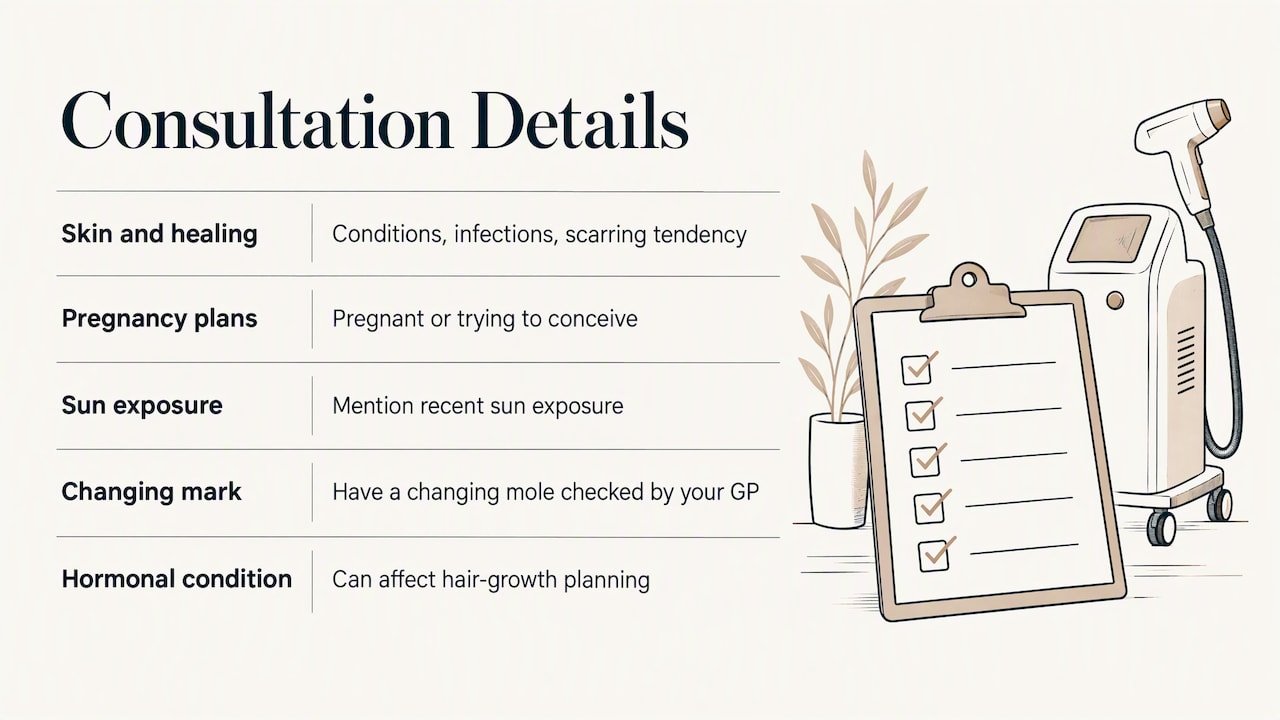
If you have a hormonal condition that causes extra hair growth, tell the practitioner too, as it can influence how you plan a course. Individual suitability is decided by a qualified professional, not by an article.
Repeat it every time
Changes between sessions matter: a new medicine, a recent holiday, a new skincare product, a flare of a skin condition. Tell the practitioner at every appointment, not just the first one.
Privacy, dignity and consent
The bikini area is among the most personal places to have treated, and it is reasonable to want to know how the appointment works before you arrive.
What you can ask for
- A private treatment room with a door that closes.
- A clear explanation of what you will need to remove or move, and how you will be covered while you wait or while other areas are treated.
- The practitioner’s name and a chance to ask who will perform your treatment.
- Whether you can be accompanied. The Leeds guidance says that, under laser safety rules, friends or relatives cannot be in the treatment room during treatment. Ask how your clinic handles questions about support or a chaperone.
Those are questions to put to the clinic, not promises we are making on its behalf in this article. If something about the arrangement worries you, say so before you are on the couch.
Consent is ongoing
Consent is not a form you sign once. You should be told what will happen, the likely effects, the risks and the limits of the treatment, and you can say no or ask to pause at any point. You should also be given time to read before signing, not hurried at the desk. Ask for the clinic’s aftercare and complaints information too.
Eye protection is part of this. Laser light is very bright, and the Leeds guidance explains that goggles are worn during treatment. Keep them on until told otherwise.
Consultation and patch testing
A proper first visit tends to follow this order:
- Consultation. Questions about your health, medicines, hair growth, skin type and sun exposure, plus a look at the area.
- Suitability decision. Not everyone is suitable for every laser, and sometimes the right answer is to wait, for example after a tan.
- Consent. Risks and limitations are explained and you agree, or you do not.
- Test patch. A small area is treated so the practitioner can check how your skin reacts and choose settings. Patch testing is common practice across UK clinics, though how your clinic sequences it is something to confirm when you book.
- Treatment. Only after the above.
A patch test is not a promise that nothing will happen later, and it is not a guarantee of how your skin will respond in a larger area. It is a sensible safety step. Be wary of anywhere that skips it entirely, never asks about your health or does not mention risks.
If you are still choosing a provider, our guide on how to choose a laser hair removal clinic lists seven questions worth asking.
Your day-of checklist
The day before
- Shave the treatment area gently, as above.
- Check for rashes, cuts or irritation, and tell the clinic if you find any.
- Confirm that you have not been in the sun, on a sunbed or using fake tan on the area.
On the day
- Wash the area. It should be clean and dry, with no lotions, perfume, deodorant or make-up on it, as the Leeds guidance advises.
- Wear loose, comfortable clothing that will not rub the area afterwards. Cotton underwear is a sensible choice.
- Bring your list of medicines and any questions you have written down.
- Arrive a few minutes early so you do not feel rushed during the consultation.
What you may notice
In the NHS guidance, the sensation is described as similar to a snap of an elastic band. People differ, and the bikini area is a sensitive one, so ask your clinic about comfort measures when you book. We are not repeating a comfort guide here: our main laser page is the place to start for what to expect.
A smell of singed hair can happen when the laser works on short hairs near the skin. It does not by itself mean your skin has burnt, but if anything feels wrong during treatment, say so straight away.
After the session, briefly
This is not an aftercare guide, so the essentials only. Redness and mild swelling in the first day or two is common, according to NHS guidance, and hospital leaflets advise avoiding saunas, hot baths, swimming and heavy exercise for around 24 hours to avoid overheating the area. Follow the written aftercare from your clinic. If you develop blistering, severe pain, signs of infection or anything that worries you, contact the clinic or seek medical advice, for example from your GP or NHS 111, and do not try to manage it yourself.
If your hair is stubborn in a few spots after a course, or very light, laser may not be the full answer. Our article on laser versus electrolysis in UK clinics explains where each method fits.
Booking your first session at Dermacy Clinic
Dermacy Clinic is a skin, laser and aesthetic clinic in Armthorpe, Doncaster, South Yorkshire. Our laser hair removal page sets out the areas offered, current prices and how to book. Once you have read it, booking is the next step, and your consultation is the place to settle suitability, the treatment boundary and any questions from this article. Recommendations depend on individual assessment, and results vary.
FAQ
Should I shave before my first bikini laser appointment?
Yes, if you are shaving, do it about 24 hours before rather than on the day, which is the timing given in NHS guidance. Do not wax, pluck or use hair removal cream. If you are unsure how short the hair should be, your clinic will tell you at booking.
What happens if I shave just before laser hair removal?
Shaving very close to your appointment can irritate sensitive skin, so it is not recommended. If the hair is too long when you arrive, the practitioner may have to trim it, which uses up appointment time. Tell them if you have a rash or razor burn, as they may decide to postpone.
Does bikini laser include the bum?
It depends on the clinic and the option you choose. Names such as bikini line, extended bikini and Brazilian are not standardised. Ask exactly which areas are covered before you book, and confirm it again at your consultation.
Can I have bikini laser if I have a tan or have used fake tan?
Usually not until it has faded. NHS laser services explain that a tan raises the risk of side effects, and clinics may defer treatment. Tell your practitioner honestly about recent sun, sunbeds and self-tan so they can advise on timing.
Do I need a patch test first?
Patch testing is common in UK laser clinics and lets the practitioner check your skin’s reaction and choose settings before treating a larger area. Confirm with your clinic how it works for your first session.
Sources
- Laser Hair Reduction, Leeds Teaching Hospitals NHS Trust
- Hair Removal, Sandwell and West Birmingham NHS Trust
- Questions, North Bristol NHS Trust laser centre
- Intense Pulsed Light (IPL), British Cosmetic Dermatology Group
Recommended
- Laser Hair Removal and Sun: Let Your Holiday Set the 4–6 Week Plan
- Laser Hair Removal on Tanned Skin: What to Know First
- How to Choose a Laser Hair Removal Clinic | 7 Questions
- Bikini Extended
This article provides general information and is not a diagnosis or personalised medical advice. Treatment suitability, risks and expected outcomes require an individual consultation. Results vary.