Yes, treated hair usually falls out after laser hair removal. The hairs the laser has damaged stay in the follicle for a short time, then work their way out on their own. NHS laser services describe this as starting within 5 to 7 days and, for most people, finishing within 2 to 3 weeks. It can look like stubble, tiny dark dots or hairs that seem to be growing. This guide covers that one question: what shedding is, how to tell it from regrowth, why it differs from person to person and when to ask your practitioner.
TL;DR
- Shedding is the treated hair leaving the follicle. It usually starts around 5 to 7 days after a session and is normally finished within 2 to 3 weeks, though it varies between people.
- Hairs that look like they are growing in the first fortnight are often the damaged hairs on their way out, not new growth.
- Let them fall away naturally. Do not pick, pull or scrub at them.
- Shedding, or the lack of it, is not a reliable measure of success. Results vary and no treatment can promise permanent removal.
- Blistering, scabbing, crusting or a change in skin colour should be reported to your practitioner, not managed at home.
Table of Contents
- What shedding actually is
- When does shedding start and how long does it last?
- Shedding or regrowth: how to tell the difference
- Why shedding looks different from person to person
- What to do while hairs are shedding
- Does shedding mean it has worked?
- When to speak to your practitioner
- Questions to ask at your next appointment
- Seeing a practitioner in Doncaster
- FAQ
- Sources
What shedding actually is
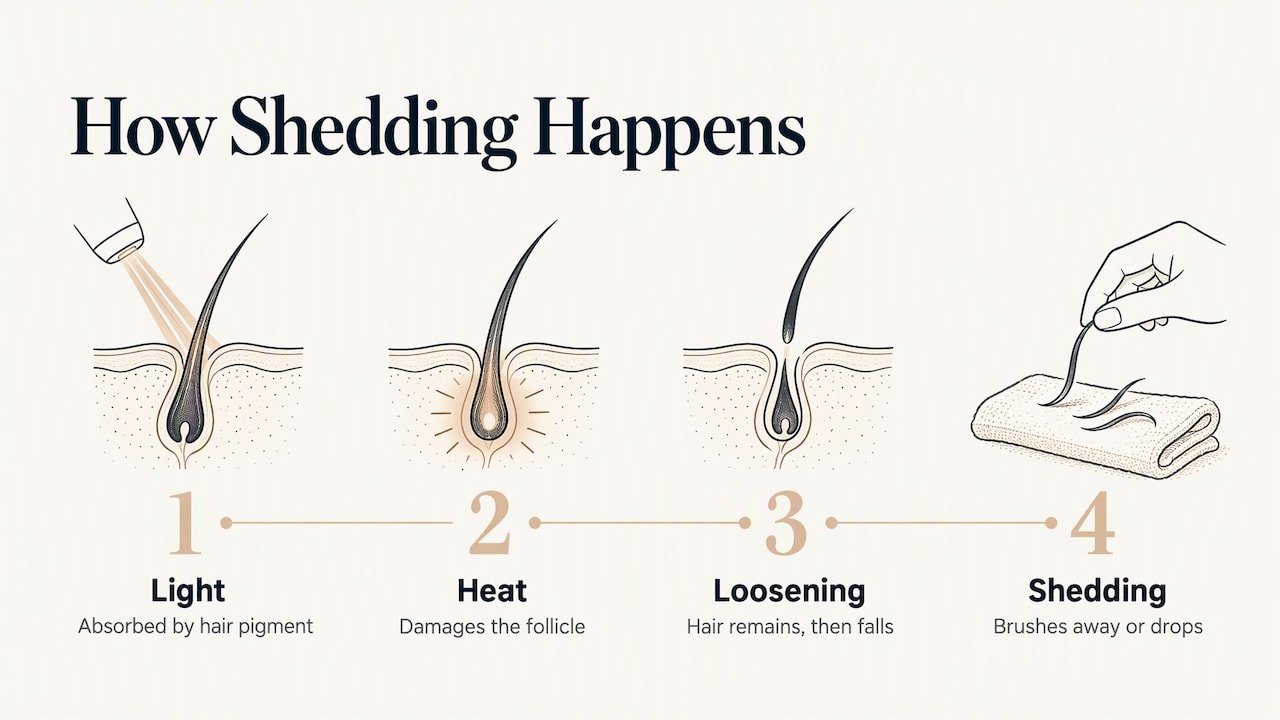
Laser hair removal uses light that is absorbed by the pigment (melanin) in the hair. That energy becomes heat and damages the follicle that makes the hair. A published clinical study describes the heat spreading to the stem cells in the follicle, which is what reduces the follicle’s ability to produce thick, dark hair.
The damaged hair shaft does not vanish at the moment of treatment. Hospital patient information explains that some hairs remain in the follicles but fall out naturally with time. That slow exit is shedding. Because the hair is no longer anchored well, it can be brushed away in the shower, come off on a towel or simply loosen and drop.
Shedding is a sign that the hair has been affected by the treatment, but it is not a verdict on the whole course. It describes what is happening to hairs that were present on the day.
When does shedding start and how long does it last?
The timing most often quoted by NHS services is short and fairly specific:
| Stage | What NHS patient information says |
|---|---|
| Days 1 to 7 | Damaged hairs stay visible in the skin for a few days before shedding begins, within 5 to 7 days |
| Around weeks 1 to 3 | Shedding time varies between individuals but is usually complete within 2 to 3 weeks |
Private clinics and online guides sometimes quote slightly different windows, such as a few days up to a month. That is not a contradiction so much as a reflection of how individual the process is. Treat the NHS range as a typical pattern, not a deadline. If your hairs are still lingering at week four, that alone is not a cause for alarm, but it is a fair thing to mention at your next appointment.
A rough picture of the first fortnight
This is a general illustration of what people commonly notice, not a schedule you should expect to match exactly:
- The first few days. The treated area may look pink or slightly raised around the follicles. The hairs are still there, and the area can look much as it did before treatment.
- Around the end of the first week. The hairs start to feel looser. Some people see tiny dark specks on the skin surface.
- Weeks two and three. The hairs rub off or fall away, often during washing. The skin begins to feel smoother.
Pinkness in the skin is separate from shedding. The same hospital guidance says patchy redness may last for 7 to 10 days or occasionally longer, so the two can overlap.
Shedding or regrowth: how to tell the difference
This is the point that causes most confusion. Two weeks after treatment, many people look in the mirror, see hair and assume the laser has not worked. Often it is the old hair, not a new one.
| Shedding | Regrowth | |
|---|---|---|
| When | Typically within the first 2 to 3 weeks | Usually later, once the follicle has produced a new hair |
| Where the hair comes from | The same hair that was in the follicle at treatment | A new hair grown from the follicle |
| What it feels like | Loose; can come away with gentle washing | Firmly attached, like normal growth |
| Look | Often short, dark and stubble-like, sitting on the surface | Gradually lengthening, sometimes finer or lighter than before |
If the hair is coming away easily and you are within a few weeks of the session, it is most likely shedding. If hairs are firmly rooted and slowly getting longer well after the shedding window, that is regrowth. Regrowth is expected between sessions in many people. This is why a course normally involves several appointments, and why your practitioner will adjust the plan after looking at how your skin and hair have responded.
What the laser does to hair growth over time is also more than a simple on or off. The clinical study mentioned earlier notes that temporary hair loss can occur when the growth cycle is altered and follicles enter a resting state, while repeated treatment tends to leave fewer thick, dark hairs and more fine hairs that are barely visible. That is why most reputable sources talk about hair reduction, not guaranteed permanent removal.
A short note on the word “hair” here: this article is about unwanted body or facial hair treated by laser. Thinning of the hair on your head is a different matter with different causes. If that is your concern, a hair restoration peptide guide covers one area people read about, and your GP can advise on the underlying cause.
Why shedding looks different from person to person
Two people can have the same treatment on the same day and notice quite different things afterwards. Several ordinary factors can explain it.
Hair thickness and colour
Lasers target pigment. Darker, coarser hairs absorb more energy, so they tend to respond more visibly. Finer or lighter hairs may be affected less, and you may notice less shedding simply because there is less to see. Very light, grey or white hairs contain little pigment and generally do not respond well to this kind of treatment.
Where each hair is in its growth cycle
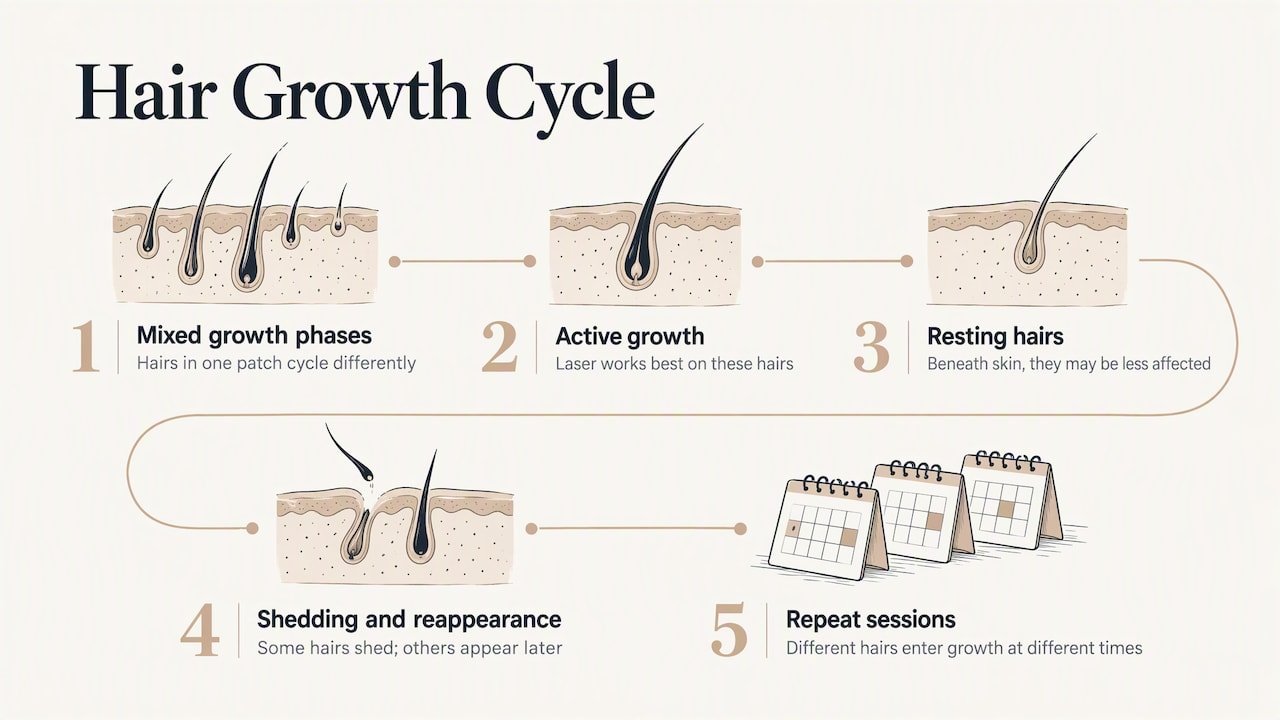
Hair does not grow all at once. At any moment, hairs in one patch of skin sit at different points of a cycle. Laser treatment is generally most effective on hairs that are actively growing, while those resting beneath the skin may be affected less. Some hairs are therefore damaged and shed soon after treatment, while others only appear later when they enter their growth phase. That is one practical reason a course involves repeat sessions rather than one visit.
The area treated
Hair on the legs, underarms, bikini line and face grows on different cycles and at different densities. Shedding on a dense, coarse area may be very noticeable. On a sparse area you may barely register it.
How you look after the skin
Gentle handling matters. Hairs that are rubbed or scrubbed off early do not tell you more than hairs that fall out on their own. Following your practitioner’s plan, which may include avoiding sunbathing, sunless tanning products and any hair removal other than shaving or trimming, keeps the picture clear and protects your skin.
Your skin tone and the settings used
Your practitioner chooses a laser and settings according to your skin and hair. That choice affects both how the treated area looks and how it settles. It is one of the reasons a patch test is useful: NHS guidance says a test patch is essential before full treatment to see how your skin reacts and to judge how effective the treatment may be.
What to do while hairs are shedding
This is not a full aftercare list, which sits in our laser hair removal aftercare guide. Here is only what applies to the shedding itself.
- Leave the hairs alone. NHS laser guidance says not to remove damaged hairs, because they fall out naturally after 5 to 7 days.
- Do not pick at the hair or skin. Hospital patient information is explicit that it is important not to pick at the hair or the skin.
- Do not pull, wax or tweeze. Pulling removes hair from the follicle and interferes with the treatment course. Follow the hair-removal method your practitioner tells you to use between sessions, which is commonly shaving or trimming.
- Avoid harsh scrubbing. Do not use aggressive exfoliation to hurry hairs along. The skin is already sensitive after treatment and rubbing can irritate it.
- Be gentle in the first two days. Hospital guidance advises avoiding moisturiser, sun protection, camouflage or make-up for two days after treatment to prevent rubbing or friction. Your own practitioner may give slightly different instructions for your skin, and those take priority.
If stubble bothers you before it has gone, ask your practitioner what is acceptable for your area and your skin. Do not improvise with razors on skin that is sore or broken.
Does shedding mean it has worked?
It is tempting to treat shedding as a scorecard. Plenty of hair coming out feels like success, and little shedding feels like failure. Neither reading is reliable.
- Lots of shedding shows that many treated hairs were affected. It does not guarantee how many will return, or how thin the regrowth will be.
- Little or no visible shedding does not mean nothing happened. Fine hairs, hairs that were resting or hairs on a sparse area may simply give you nothing obvious to see.
- Hair that returns later is not necessarily a sign of a failed session. Regrowth between sessions is common, and results are judged across a course, not from one appointment.
Some sources do describe laser as destroying the follicle so that hair typically does not return. That is a more confident claim than the cautious wording you will find from NHS services and dermatologists, who talk about reducing hair and say outcomes vary. We stay with the cautious version. Laser hair removal can greatly reduce hair growth, and a published study of a combined-laser course reported an average reduction of about 75% across treated areas six months after the last session. That was a single study of 60 patients and a particular protocol, so it shows what is possible in a research setting, not what you should expect for yourself.
The better measure is progress over the course, judged with your practitioner: how thick the regrowth is, how dense it is, and how it compares with where you started.
When to speak to your practitioner
Shedding itself is not a reason to call. Some other things you notice at the same time are.
Contact the clinic that treated you if you have:
- Blistering. NHS guidance says to report blistering, scab formation or changes in skin pigmentation. A hospital leaflet describes blistering as uncommon and, when it occurs in the first three days, as normally settling within 3 to 7 days. Still tell the practitioner who treated you, and do not burst blisters or pick at them.
- Scabbing or crusting. Hospital advice is to contact the laser service if blistering, scabbing or crusting occurs.
- A change in skin colour. Darkening, known as hyperpigmentation, is a recognised effect. One NHS trust leaflet from 2012 put it at around 17% of patients, particularly those with darker skin tones. Report any patchy darkening or lightening so your practitioner can assess it and adjust future treatment.
- Redness that is not easing. Patchy pinkness can last 7 to 10 days or occasionally longer. If it is getting worse, or is accompanied by pain, tell your practitioner.
- Hair that has not shed at all after several weeks, or a patch that looks very different from the rest. This is usually benign, but it is worth a conversation before your next session.
If you cannot reach the clinic and the reaction cannot wait, NHS guidance says to contact your GP or call NHS 111. For anything that feels severe or frightening, use urgent NHS services rather than waiting for a callback.
It also helps to know who is treating you. The British Association of Dermatologists says laser treatment should be carried out by properly qualified practitioners registered with bodies such as the Care Quality Commission or the British Medical Laser Association. If you are unsure how to judge a clinic, our guide on how to choose a laser hair removal clinic lists what to ask.
Questions to ask at your next appointment
Bring these to your practitioner instead of guessing from the mirror:
- Is what I am seeing consistent with shedding at this stage?
- Which hair removal method is safe for me between sessions?
- How has my skin responded, and do any settings need adjusting?
- Is the amount of regrowth what you would expect at this point in my course?
- Is there anything about my skin tone, tan or medication that changes how I should look after the area?
Tan, sun exposure and holidays all affect treatment planning, so it is worth reading about them separately in our pages on laser hair removal and sun exposure and laser hair removal on tanned skin.
Seeing a practitioner in Doncaster
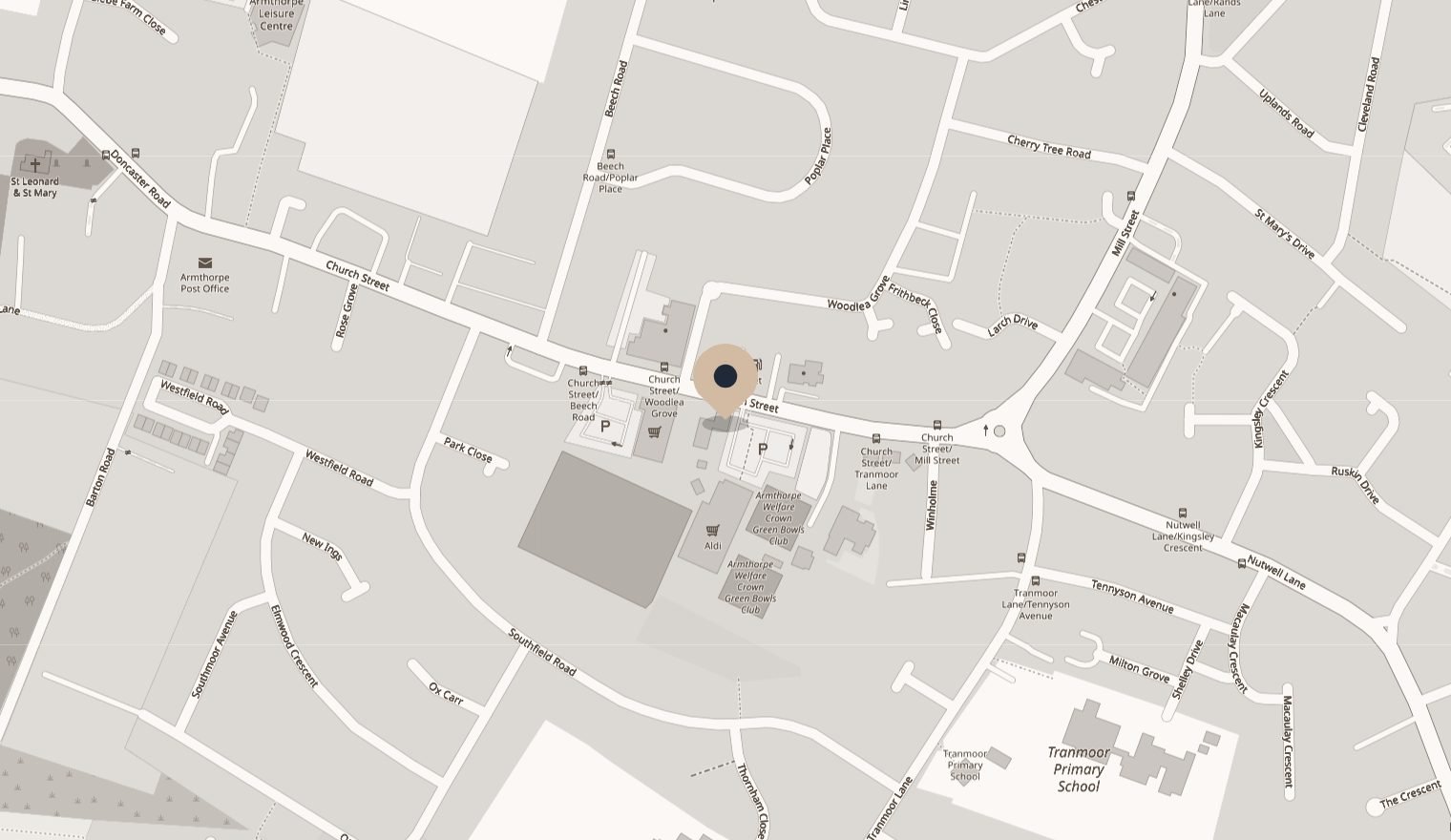
If you are thinking about laser hair removal, or you have started and want your progress looked at by someone who can see your skin, Dermacy Clinic is a skin, laser and aesthetic clinic in Armthorpe, Doncaster, South Yorkshire. Suitability is decided individually at consultation, and results vary from person to person. You can read how the treatment works and find current details and booking on our laser hair removal in Doncaster page.
FAQ
Does hair fall out after laser hair removal?
Yes, in most people the treated hairs fall out over the days and weeks after a session. NHS patient information says some hairs stay in the follicle and then fall out naturally with time. How much you notice depends on your hair, the area and where the hairs were in their growth cycle.
How long does shedding last after laser hair removal?
It typically begins within 5 to 7 days and is usually complete within 2 to 3 weeks. It varies between individuals, so a little sooner or later is not unusual. If you are still seeing loose hairs well past that, mention it at your next appointment.
Can I pull out or scrub off the hairs that are shedding?
No. NHS guidance says not to remove the damaged hairs and not to pick at the hair or skin, because they will fall out naturally. Pulling or aggressive exfoliation can irritate the skin and interfere with your course. Ask your practitioner which method is acceptable between sessions.
Does shedding mean my hair has been removed permanently?
No. Shedding shows that treated hairs were affected, but it does not tell you how much will grow back. Laser treatment aims to reduce hair growth, outcomes vary, and the result is judged across a course with your practitioner. No reputable provider can promise permanent removal.
Is it a problem if I do not see any shedding?
Usually not. Fine, light or sparse hairs may give you little to see, and some hairs shed later when they reach their growth phase. If you are worried, ask your practitioner to check the area, especially if you also have unexplained redness, blistering or a change in skin colour.
Sources
- Laser Hair Reduction, Leeds Teaching Hospitals NHS Trust
- Hair Removal, Sandwell and West Birmingham NHS Trust (2024)
- Laser Hair Reduction patient leaflet, Leeds Teaching Hospitals NHS Trust (2026)
- After your laser treatment, Leeds Teaching Hospitals NHS Trust
- Laser hair removal, Sandwell and West Birmingham NHS Trust (2012)
- Hirsutism, British Association of Dermatologists (2021)
- Medical laser hair removal: a new rotational approach, PubMed Central
Recommended
- Laser Hair Removal Aftercare: What to Do and When to Call
- Laser Hair Removal on Tanned Skin: What to Know First
- Laser vs IPL Hair Removal: Which Suits You Better?
- Laser Hair Removal and Sun: Let Your Holiday Set the 4–6 Week Plan
This article provides general information and is not a diagnosis or personalised medical advice. Treatment suitability, risks and expected outcomes require an individual consultation. Results vary.