If the tiny dots on your nose are flat, grey, tan or yellowish and sit evenly spaced in each pore, they are most likely sebaceous filaments, a normal part of your skin. If they are raised, dark and look like a plug sitting in the pore opening, they are more likely blackheads, which are a mild form of acne. The two look alike from a mirror’s distance, but they behave differently and they call for different handling.
This guide helps you identify what you are looking at, set realistic expectations and avoid the habit that causes the most trouble: squeezing. It is general skin education, not a diagnosis. If you are unsure about a mark on your skin, ask a qualified professional.
TL;DR
- Sebaceous filaments are normal, harmless structures that channel oil to the skin’s surface. Blackheads are a type of acne, with a plug blocking the pore.
- Filaments are usually flat and grey, tan or yellow. Blackheads are typically darker and more raised.
- Squeezing does not remove either for good. Pores refill with sebum, and nails can irritate or damage the skin.
- Filaments never disappear completely, but they can look less obvious with sensible skincare and professional care.
- See your GP if self-care is not helping, spots are deep or painful, or acne is affecting your mood.
Table of Contents
- What sebaceous filaments actually are
- What blackheads are
- How to tell them apart
- Can a filament turn into a blackhead?
- Should you squeeze them?
- Will sebaceous filaments ever go away?
- What may help reduce their appearance
- Professional options to consider
- When to see a doctor
- Realistic expectations
- Book a conversation about your skin
- FAQ
- Sources
What sebaceous filaments actually are
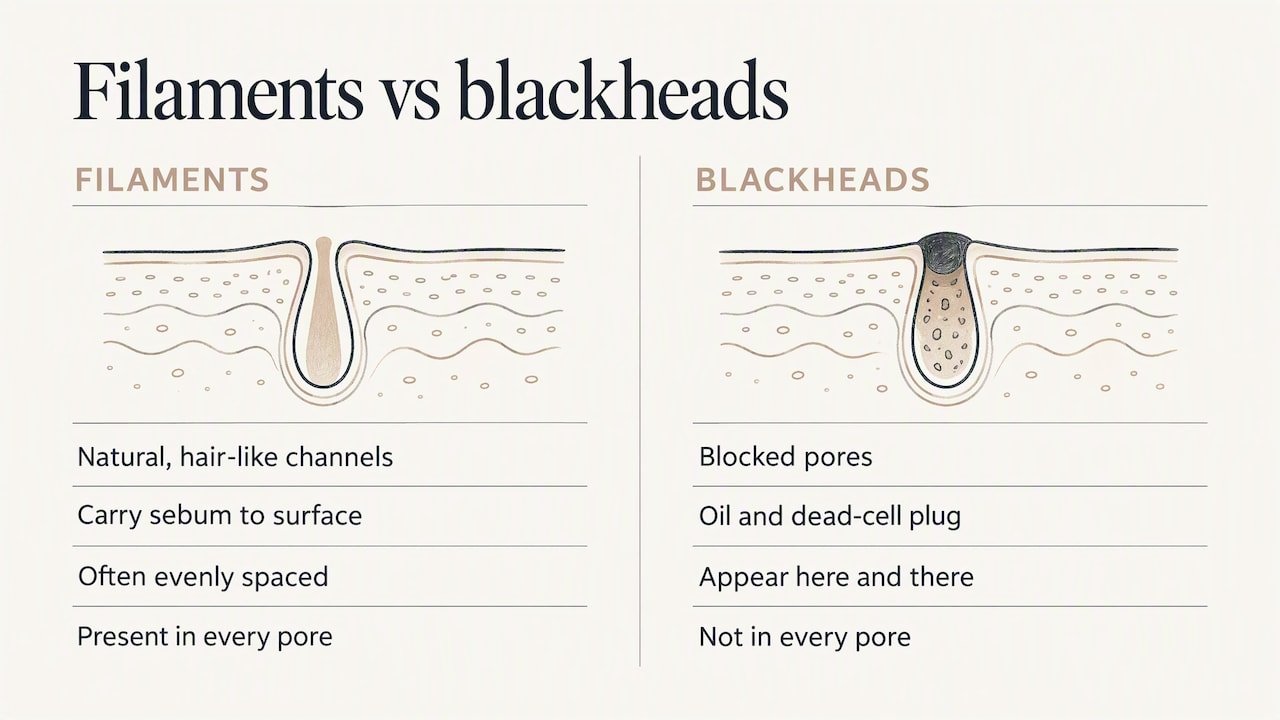
Every pore on your face holds a hair follicle with a sebaceous gland attached. The gland makes sebum, the oily substance that keeps skin supple. Sebaceous filaments are natural, hair-like structures inside the pore that help channel sebum from the gland to the skin’s surface. In other words, they are part of how your skin keeps itself hydrated, not a sign that something has gone wrong.
Because sebum flows along them, they are most visible where you have the most oil glands: the nose, the centre of the chin and the forehead. Many people notice them for the first time under bright bathroom lighting or in a magnifying mirror. Look closely and you will see they are often evenly spaced across the nose, almost like a pattern, because every pore has one.
That even spacing is a useful clue. A true blackhead is a blocked pore, and blocked pores tend to appear here and there rather than in every pore on the nose.
What blackheads are
A blackhead is a type of acne. It is an open comedo: a pore that has filled with excess oil and dead skin cells, forming a plug at the surface of the skin. Blackheads form when sebum, dead skin cells and bacteria collect around the pore opening and the contents are exposed to air. The dark colour is not trapped dirt, which is why scrubbing harder rarely helps.
Because a blackhead is a blockage, sebum cannot flow out normally. That is the central difference. A filament lets oil travel freely, while a blackhead obstructs it.
Blackheads often begin small and can become larger and more noticeable over time. They can appear on the nose, but also on the chin, forehead, cheeks, shoulders and back, wherever there are active oil glands.
How to tell them apart
No single feature settles it every time, so look at several clues together.
| Feature | Sebaceous filament | Blackhead |
|---|---|---|
| What it is | Normal structure that channels sebum | A type of acne, a blocked pore |
| Colour | Usually grey, light brown, tan or yellow | Black or very dark brown |
| Surface | Flat, level with the skin | Often slightly raised |
| Size | Small and tends to stay small | Can start small and grow |
| Pattern | Evenly spaced, present in most pores of an area | Scattered, in some pores only |
| Plug | No plug, oil flows freely | Plug of sebum and dead skin at the opening |
| What comes out if extracted | Waxy, thread-like strand | Dark, waxy, hardened plug |
The colour, plug and extraction rows reflect guidance on how the two differ, and UK clinical guidance from the Primary Care Dermatology Society also describes what extraction typically reveals: a waxy threadlike structure in one case, a dark hardened plug in the other.
Notice that last row is about extraction, which is not a test to run at home. You do not need to squeeze anything to work out which you have.
A simple, hands-off way to check
- Wash your face with a gentle cleanser and pat it dry. Leave it for a few minutes so any redness settles.
- Look in natural daylight rather than a harsh magnifying mirror, which exaggerates everything.
- Ask whether the dots are flat and evenly spread across the nose, or raised, darker and patchy.
- Run a clean fingertip lightly over the area. A rough, bumpy feel suggests blocked pores. A smooth surface with visible dots suggests filaments.
- Check whether you also have other acne, such as red, tender spots. Blackheads often travel with other types of spot.
If the picture stays unclear, that is normal. Skin is varied, and some pores sit in between. A professional can look at the area in good light and tell you what they see.
Can a filament turn into a blackhead?
They are different things, but there is overlap. Sebaceous filaments are harmless and naturally occurring, and they may sometimes form blackheads when sebum, dead skin and bacteria gather and the pore opening is exposed to air. That is one reason a nose can show both at once.
In practice, it means the line between them is not always sharp. A pore that looked like a pale filament last month might look darker and more plugged this month if oil production rises or dead skin builds up. Hormonal changes, heat, humidity and heavy, pore-clogging products can all play a part in how congested pores look, though the effect differs from person to person.
Should you squeeze them?
No. This is the question most people really want answered, and the answer is consistent across clinical sources.
Pressure from fingernails can irritate or seriously damage your skin, and the pores refill with sebum within about 30 days. So even a “successful” squeeze gives you a short-lived result, and the cost can be red marks, broken skin, infection or, for some skin tones, lingering dark marks after the skin heals.
There is a second problem. Squeezing a filament does not remove anything harmful, because there is nothing harmful there. You are emptying a structure that your skin will simply rebuild.
The same applies to the usual shortcuts:
- Fingernails and metal tools: high risk of scarring and infection, and no lasting benefit.
- Pore strips: they may lift the top of a filament, but the pore refills, and they can irritate sensitive skin.
- Harsh scrubs: they cannot dislodge what sits within the pore and can leave the skin barrier sore.
If a blackhead or a congested area really bothers you, it is safer to have it assessed than to dig at it. We do not describe self-extraction methods here, because getting it wrong can damage skin.
Will sebaceous filaments ever go away?
Not entirely. They are a permanent, natural component of your pores and will not disappear completely. What changes is how noticeable they are. That depends on how much sebum your glands produce, how you look after your skin and your age.
This is worth knowing before you spend money chasing perfectly smooth, empty-looking pores. No treatment, whether at home or in a clinic, can promise permanently empty pores. A realistic goal is skin that looks clearer and feels smoother, with less visible congestion, rather than the absence of pores.
If you tend towards oily skin, filaments will probably be more visible than on drier skin. That is a trait, not a flaw.
What may help reduce their appearance
Sensible daily care is the foundation, whether you have filaments, blackheads or both.
Cleanse gently, not aggressively
UK clinical guidance for acne-prone skin recommends a non-alkaline, pH-neutral or slightly acidic syndet cleanser used twice daily. NICE notes that syndet cleansers are less irritating than traditional soaps and do not leave a residue layer. More than twice a day is not better, and over-washing can leave skin irritated.
Choose products that will not add to the blockage
NICE guidance advises avoiding oil-based and comedogenic products, including moisturisers, sunscreens and makeup, because they can worsen pore blockage. To be fair, NICE also says the evidence on skin care products was very limited, so treat labels such as “non-comedogenic” as a sensible starting point rather than a guarantee. If a product seems to bring on more congestion, stop using it.
Do not skip sun protection to avoid greasiness. Look for a light, non-greasy formula that suits your skin.
Retinoids, introduced slowly
Retinoids help prevent clogged pores. UK guidance says topical retinoids can be introduced gradually, with short contact at first or less frequent application, to limit irritation. Some retinoid products are available over the counter and others are prescribed, so ask a pharmacist or GP what suits you, particularly if you are pregnant or planning a pregnancy. Do not start strong products without advice, and never combine several active ingredients at once.
The less glamorous basics
Practitioners often suggest stress management and consistent sleep as supportive measures for regulating sebum. They are not a cure, but they cost nothing and sit alongside the rest of your routine.
Note that acne care often needs long-term maintenance. Clearer skin tends to stay that way only while you keep up the routine that got you there.
Professional options to consider
There is a middle ground between doing nothing and picking at your nose. A professional skin assessment can tell you whether you have mostly filaments, true blackheads or a mix, and what is realistic for your skin. From there, options generally include:
- Targeted skincare advice: a routine built around your skin type, sensitivities and any medicines you take.
- Professional chemical peels: these use exfoliating acids to help loosen dead skin cells at the surface. Suitability depends on your skin and any conditions you have.
- Professional facial treatments with cleansing and exfoliation steps: these can help make congested skin look and feel fresher.
- Medical care for acne: if blackheads sit with inflamed or painful spots, your GP or a dermatology service may be the right first stop.
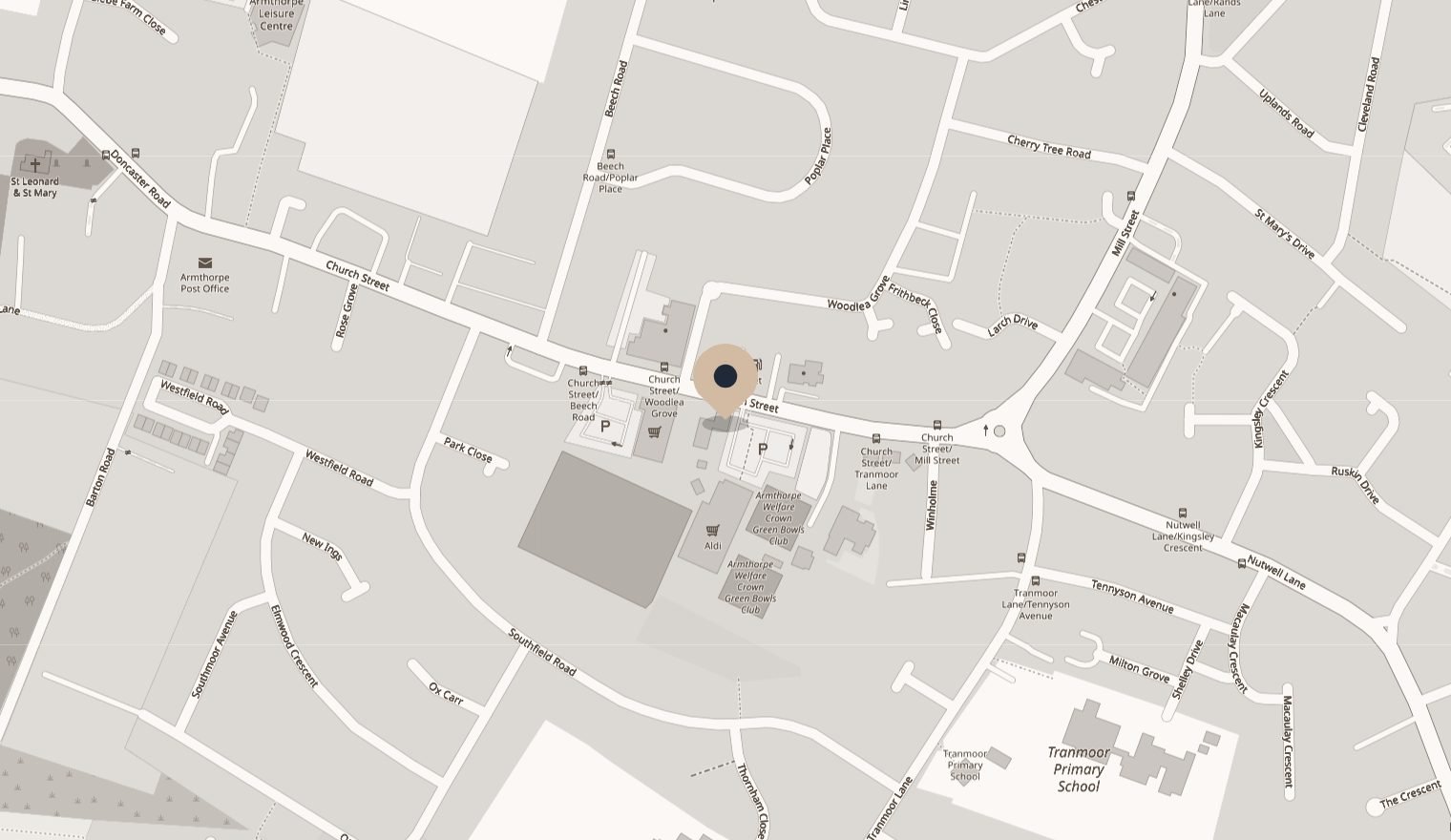
At Dermacy Clinic in Armthorpe, Doncaster, one option people ask about for congested, dull-looking skin is a HydraFacial. It is a professional treatment, so it can fit alongside a home routine, but it is not a way to remove filaments for good and results vary from person to person. Whether it suits you depends on your skin, which is why we start with a conversation. If you would like to understand how a HydraFacial works, read our HydraFacial treatment page for current service details and booking.
If your skin is reactive, our guide on whether sensitive skin can have a HydraFacial covers what to ask first. Many people also wonder about the days afterwards, and our piece on wearing makeup after a HydraFacial answers that.
A note on visual skin analysis
We offer visual skin analysis to support a consultation. It helps us look at your skin more closely and keep progress photographs, but it is not a diagnostic test and it does not detect disease. It simply gives you and your practitioner something concrete to discuss.
When to see a doctor
Not every bump on the nose is a filament or a blackhead. Speak to your GP if self-treatment is not helping, spots are deep or painful or causing scars, or acne is affecting your mental health. The same goes for any mark that is changing, bleeding, itching or looks different from the others, which needs medical assessment rather than cosmetic treatment.
If acne is the bigger worry, our acne treatment page explains how we approach it, and our article on what causes adult acne gives useful background on why it can appear later in life. Prescription treatment decisions belong with a GP or a suitably qualified prescriber.
Realistic expectations
Here is the honest summary of what to expect:
- Filaments will always be there. You are aiming for less visible, not gone.
- Blackheads can often be improved, but they may return if the underlying oil and dead skin pattern is unchanged.
- Any improvement from skincare takes weeks, not days, and acne-type changes are usually judged over a longer period.
- A treatment that looks dramatic on day one does not mean a lasting change. Pores refill.
- Outcomes vary with skin type, age, hormones, products and habits.
The most useful change for most people is not a new product. It is stopping the squeezing, which lets irritation settle and often makes pores look better within a few weeks on its own.
Book a conversation about your skin
If you are in Armthorpe, Doncaster or elsewhere in South Yorkshire and want a professional view of what is going on with your pores, Dermacy Clinic can help you understand your options and what is realistic. Start with the HydraFacial page for current details and booking, or see the Dermacy Clinic home page for our wider range of skin treatments and skin analysis. Recommendations depend on individual assessment and suitability.
FAQ
Are sebaceous filaments bad for your skin?
No. They are a normal, harmless part of your pores and help move oil to the surface, which keeps skin hydrated. They only become a concern if you irritate the skin by picking at them. If a dot is painful, inflamed or changing, have it checked by a professional.
Can I get rid of sebaceous filaments permanently?
No. They are a natural, permanent part of your pores, so they cannot be removed for good. Squeezing only clears them temporarily, as pores refill with sebum within around 30 days. You can make them look less noticeable with gentle care, suitable products and professional treatment, though results vary.
What is the quickest way to tell a blackhead from a sebaceous filament?
Look at colour, height and pattern. Filaments are usually flat, grey, tan or yellow and spread evenly across the nose. Blackheads are typically darker, more raised and found in some pores rather than all of them. Do not squeeze to test it.
Do pore strips work on sebaceous filaments?
They may lift the top of a filament for a moment, but the pore refills, so the effect does not last. They can also irritate sensitive or acne-prone skin. Gentle daily cleansing and a suitable routine are a calmer approach.
Is a HydraFacial a cure for blackheads?
No. A HydraFacial is a professional treatment that can fit into a plan for congested skin, but it does not cure blackheads or remove filaments permanently. Suitability and results vary, so book a consultation to discuss your skin.
Sources
- Sebaceous Filaments: Difference From Blackheads and Treatment, Cleveland Clinic
- Sebaceous Filaments vs Blackheads, Healthline
- Acne vulgaris, Primary Care Dermatology Society
- Acne Primary Care Treatment Pathway, Primary Care Dermatology Society
- Acne vulgaris: management, NICE
- Rationale and impact, Acne vulgaris: management, NICE
- Acne, NHS
Recommended
- Acne Marks vs Acne Scars: What to Know Before Microneedling
- Acne Treatment Doncaster | Acne & Scar Clinic | Dermacy
This article provides general information and is not a diagnosis or personalised medical advice. Treatment suitability, risks and expected outcomes require an individual consultation. Results vary.